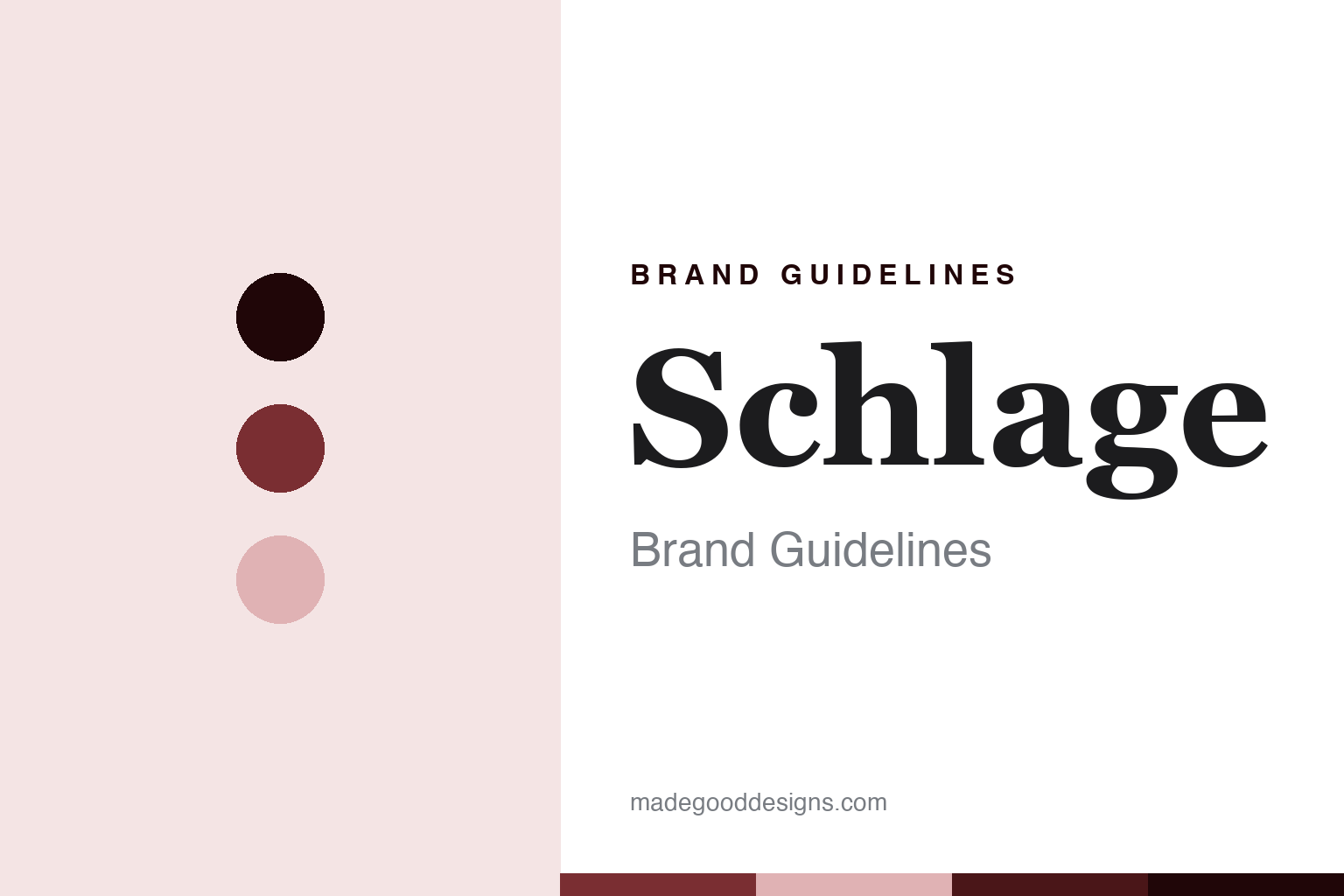
Schlage Brand Guidelines
The American lock giant under Allegion.
Aa
Two constants: a security-maroon palette and a security-serif register. Abstract homage — not a Schlage product or mark; no lock, keypad or logo is reproduced.
The American lock giant under Allegion
Schlage is the 1920 San Francisco lock maker, now an Allegion brand, that still leans on US manufacturing.
Schlage brings the smart-lock round its American-giant node — the heritage US lock maker on the other side of the industry’s divide, owned not by ASSA ABLOY but by its great rival. It was founded in 1920 by Walter Schlage in San Francisco, and it makes and sells smart locks. Its answer to a round about who owns these devices is the counterweight: Schlage belongs to Allegion, the American conglomerate that faces ASSA ABLOY.
Its identity is the American lock giant under Allegion. The American heritage, the Allegion ownership and the US manufacturing emphasis are the story here. A maker, American. The American lock giant under Allegion.
(Honest notes, so the heritage, the ownership and the manufacturing are framed accurately. Schlage sells smart locks as its heroes — the Wi-Fi Encode and the Encode Plus with Apple Home Key, alongside older Sense and Connect models — and we report its language as the brand’s own. On heritage: Schlage was founded in 1920 by Walter Schlage, a German-born inventor, in San Francisco, known for the push-button-in-the-knob cylindrical lock, with headquarters later moving to Colorado Springs. On ownership: Schlage is a brand of Allegion, a public company listed on the New York Stock Exchange and incorporated in Ireland, which was spun off from Ingersoll Rand in 2013, so the two lock giants of this round are ASSA ABLOY and Allegion, and Schlage sits under Allegion. On the manufacturing, honestly: Allegion runs US plants in Colorado Springs and Indianapolis, with a strong US and Buy-American story for mechanical and government lines, though “made in USA” is not uniform across every product and some electronics are sourced from Asia, so we frame it as a US emphasis rather than a blanket claim. Its designs, the Schlage name and the push-button-knob styling are IP we describe but do not reproduce; there is no official brand hex; these tones are an unofficial interpretation.)
Colour
Schlage lives in a security maroon. Click a swatch to copy the hex.
Schlage’s identity is American, security-first and heritage — a security maroon, an ink, a pale rose, a deep maroon, and a paper. The palette leans security maroon and pale rose: a deep, serious register that nods to security and a century of locks rather than a loud logo colour. It signals the American lock giant — secure, established and made-here-minded. The honest caveat: with no published brand hex, these values are an original, unofficial interpretation, not first-party colours.
The lesson is a security maroon signals an American, security-first identity. Schlage’s world is a serious lock trusted by builders and homeowners. For designers, it is a reminder that a deep security maroon and a soft pale rose can carry a maker brand — a serious tone held as colour, not a product shot. Because these tones can fail as small text, keep type dark and let the colour live in the accents, palette and band. The takeaways: date it to 1920; name Allegion as the NYSE-listed parent; frame the two-giants rivalry; qualify the US-made claim; and treat the styling as trade dress.
Typography
The register is a security serif — secure, established, American.
Schlage’s identity carries a secure, established, American spirit — a heritage security giant, not a startup. A security serif captures the mood: confident, serious and established, the register of a lock built to be trusted. Set in a security-maroon palette, the security serif feels secure and established — exactly the personality Schlage carries. It behaves like an established name rather than a loud logo, mirroring a deadbolt-cylinder ring and a keypad-dot grid. (Schlage’s real locks and the knob styling are things we describe but do not reproduce, and the exact typeface is not ours to use.) Because it is not ours to use, the honest description is “a security-serif brand,” shown here in a stand-in. The type behaves like the brand: secure, established and American.
Aa
A security-serif brand — secure and established. (Specimen set in Playfair Display, a security-serif STAND-IN; NOT the Schlage logo or any product.)
The smart lock
Schlage stands for the American lock giant under Allegion.
Schlage brings the round its American-giant node. A security-maroon palette, a security serif and a 1920 founding make one thing — the American lock giant under Allegion — the whole identity: American, security-first and heritage. The American heritage is the pitch, and the US-manufacturing emphasis is the proof. The point is the heritage US lock maker owned by ASSA ABLOY’s great rival, in a round about who owns these devices.
Put to work, the identity is the brand told straight, ownership named and manufacturing qualified. A maker in this spirit would date it to 1920, name Allegion as the NYSE-listed parent, and frame the two-giants rivalry. A reader in this spirit would keep the facts right: Schlage sells the Encode and Encode Plus as its heroes; it was founded in 1920 by Walter Schlage in San Francisco; it is a brand of Allegion, spun off from Ingersoll Rand in 2013 and listed on the NYSE; and it leans on US manufacturing for mechanical and government lines, though not for every product. Schlage sits fourth in the round, after Level. The honest editorial moves are to date it to 1920, to name Allegion, to frame the two-giants rivalry, to qualify the US-made claim, and to treat the styling as trade dress.
For designers and brand-builders, Schlage continues the smart lock: own the American-heritage-and-security position — and qualify a “made in USA” claim honestly. The lessons: hold a security-first heritage position against a design-led field; name a listed parent and the rival it faces; qualify a made-here claim that is true for some lines and not others; treat distinctive product styling as trade dress; and never reproduce a logo. It is also a reminder to stay precise: Schlage is the 1920 San Francisco lock maker, now an Allegion brand, that still leans on US manufacturing — with the palette here an unofficial interpretation. The hook is that counterweight: while ASSA ABLOY and Fortune Brands trade Yale, August and Level between them, Schlage sits under the other giant, Allegion — the American security name that still stamps a Buy-American story on its mechanical lines, even as its smart locks join the same connected race. Read that way, Schlage is less a startup rival than an established giant: secure, established, American. The lesson for a brand is that a heritage-security position and honest qualification reinforce each other, and qualifying the made-here claim keeps the story earned. Schlage made the-American-lock-giant-under-Allegion the identity — proof that heritage security carries a round.
Explore & save
Keep Schlage’s identity on hand — save it to a board in the Made Good inspiration library.
Schlage identity set
Pin the security-maroon palette and the security-serif register to your own board.


