Spotlight Brand Guidelines
A Queen Victoria Market fabric stall and a 1973 Malvern store.
Aa
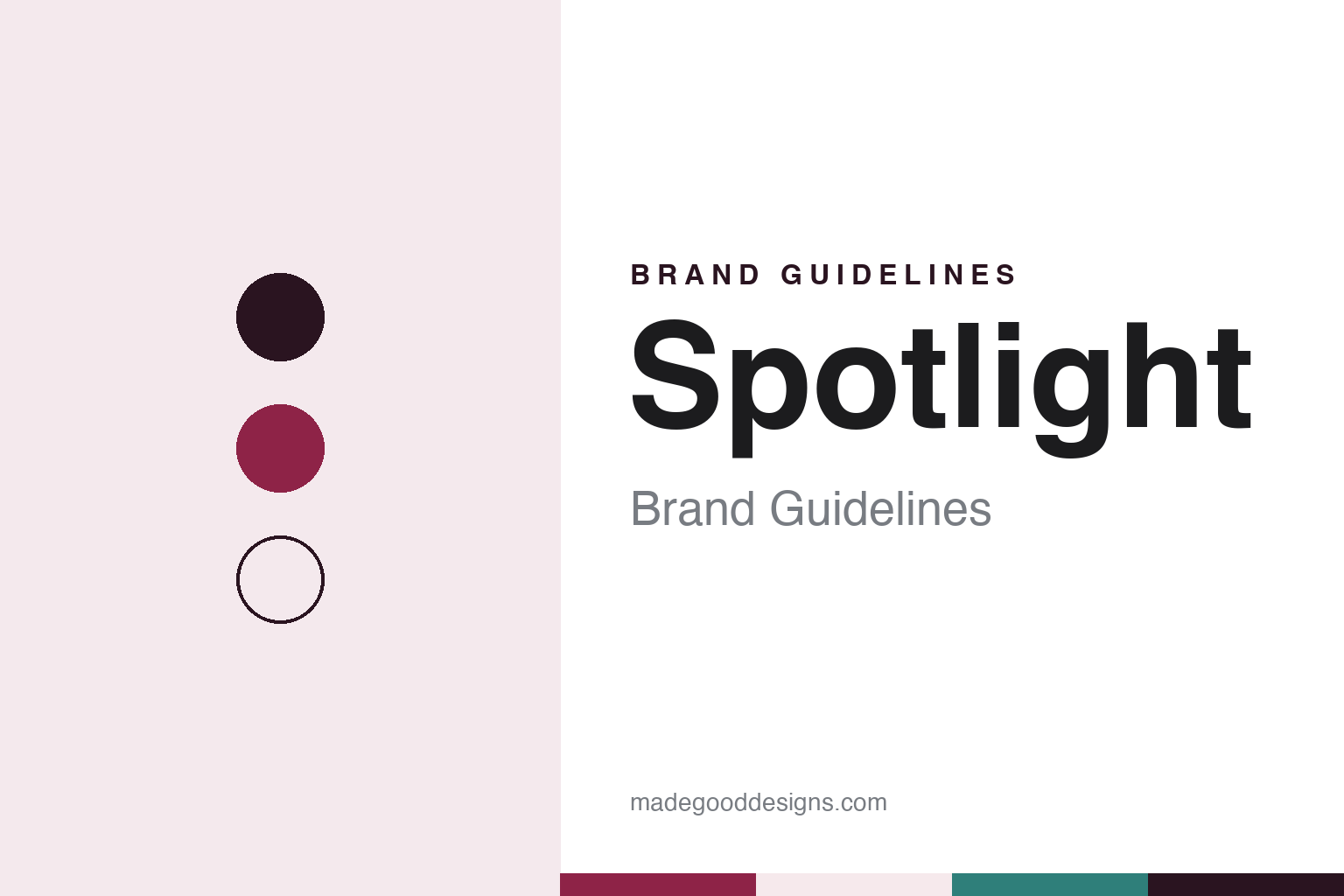
Two constants: a Spotlight berry and thread teal palette and a Warm serif register. Abstract homage — not a Spotlight asset or mark; no logo, sign or product is reproduced.
Malvern, 1973
From a market stall to a fabric store.
Spotlight’s story starts at a market stall. The Spotlight Group website says the business traces its roots to a stall selling fabric at Melbourne’s Queen Victoria Market, and the Spotlight stores website says its founders learned about fabrics working on that family stall in the early 1970s. English Wikipedia says the family had come to Australia from Israel in 1956 and that the parents set up the fabric stall.
The first store opened in 1973 in the Melbourne suburb of Malvern; the Spotlight stores website gives the month as September 1973, and the group website says it traded under the Spotlight name with the promise of “Bargains Galore.” A second store followed at Box Hill in 1976, the group says.
The founding is told in slightly different ways. English Wikipedia’s summary names the brothers Morry Fraid and Ruben Fried as founders, while its history section says the business was founded by Ruben and Vivienne Fried in 1973 and that Morry Fraid joined in 1976. The Age in June 2004 described Spotlight as the business of Morry Fraid and his brother Ruben Fried, noting that their different surnames reportedly came from a mix-up at school. In March 2021 The Age and The Sydney Morning Herald reported that Ruben Fried’s son Zac Fried, executive deputy chairman of the Spotlight Group, ran the group alongside his uncle Morry Fraid.
The company has stayed in private hands. The group website describes Spotlight Group as a privately owned, Melbourne-based business, and the stores website calls Spotlight family owned and operated.
Colour
Fabric, craft, party and home.
Spotlight sells to people who make things. The group website lists its ranges as fabrics, home furnishings, sewing, home decorating, craft and party supplies, and the stores website groups them under fabrics, craft and homewares, with bedding, towels and window furnishings among its home lines. Its typical store is large: Inside Retail reported in December 2019 that a standard Spotlight occupied more than 2,000 square metres, usually in homemaker centres, which the chain’s chief executive called its “bread and butter” for their easy access, parking and lower rents.
That report covered a smaller format, Spotlight Creative. The first opened at Westfield Carindale in Queensland in June 2019 and the second, an 815-square-metre store, at The Glen in Glen Waverley, Melbourne, in December 2019; the stores focused on the “creative” categories of craft, sewing and party, left out window furnishings, manchester and home decor, and used their front windows for a class room and a balloon “inflation station.” The chief executive told Inside Retail that the company had debated how far to depart from the usual Spotlight look and had chosen to keep it.
The idea came from Asia. Spotlight opened in Singapore in 1995 and in New Zealand in 1996, according to the group website; NZBusiness reported in March 2016 that New Zealand’s Spotlight stores were marking their 20th anniversary that month. English Wikipedia dates the first Malaysian store to 2014, and Inside Retail reported in 2019 that the chain’s shopping-centre stores in Singapore and Kuala Lumpur, where there is no big-box format, had shown the company how a smaller store could work.
As of November 2026, the group website described a Spotlight network of approximately 150 stores, while another page on the same site gave 130 sew, craft, party and home decorating stores across four countries.
Typography
Retail identity in Australia and New Zealand.
Australian and New Zealand department, discount and specialty retailers present themselves first through the shop front. Many chains grew by buying older local stores and then putting their own name over the door, so a single fascia in a city mall or a regional town often carries several earlier businesses behind it. Myer, for example, renamed the Grace Bros stores of New South Wales in 2004, two decades after buying the chain. Store names are usually plain: a founder’s surname, a description of what is sold, or a short set of initials.
The calendar does much of the talking. Department stores mark Christmas with window displays, and in Melbourne the Myer windows on Bourke Street have been documented by State Library Victoria since their start in 1956. Discount and specialty chains lean instead on printed and online catalogues, seasonal sales with their own names and colour-coded sale signs, published on the companies’ own channels. Loyalty programmes, cards and apps carry the same name and colours as the stores.
Own-label ranges sit beside the brands a retailer stocks. Many groups sell products under house names, or own fashion and homewares labels that also trade as separate shops, and present them in their own sections of the store and website. A pattern, a single colour or a capitalised wordmark often does the work of recognition: David Jones adopted a black-and-white houndstooth in 1967 so that its packaging would not need the name.
Behind the fascias sit corporate pages. These usually give a founding story and name the founders, the parent group and, for listed companies, the exchange and investor pages with dated announcements. Changes of owner, administrations and store closures appear there and in the business press, which is often the clearest record of how a shop name has passed from one owner to the next.
Aa
A warm serif for a fabric and craft store. (Specimen set in Fraunces, a serif STAND-IN; NOT the Spotlight logo.)
Spotlight
The chain behind a retail group.
Spotlight is now one brand inside a wider group. The group website describes Spotlight Group as controlling the Spotlight Retail Group, which runs its store brands; the Spotlight Property Group, which manages its retail and commercial property in Australia and New Zealand; the Alara investment business; and a charitable foundation.
The first new brand was Anaconda. The group website says it launched the outdoor and camping chain in 2004, using the big-box retailing skills built up at Spotlight, and English Wikipedia dates Anaconda’s founding to November 2004. As of November 2026, the group website described Anaconda as a network of about 90 stores in every Australian state.
Acquisitions followed. In March 2018 SmartCompany reported that Spotlight Group Holdings, owner of the Spotlight craft brand and Anaconda, had bought Mountain Designs, the outdoor brand founded in Brisbane in 1975 by the climber Rick White, weeks after Mountain Designs said it was moving to online-only trading; the group website says the brand is now sold online and in Anaconda stores. In 2020 the group bought Harris Scarfe, the Adelaide department store business founded in 1849. The Age reported in March 2021 that Harris Scarfe had entered administration in December 2019 and had been bought by Spotlight in March 2020, making the group its fourth owner in seven years, and that the new owner was refreshing its signage and store designs to bring it to the same level as Spotlight and Anaconda.
Across those brands, the Spotlight name stays tied to its origin: a fabric business that moved from a market stall to suburban stores, and then from Melbourne to Singapore, New Zealand and Malaysia.
For a design guide, Spotlight shows how a family retailer can keep one store look while adding formats and sister brands around it. Compare Big W, the discount department store chain that The Age set beside Harris Scarfe in its 2021 report, and Kathmandu, an outdoor brand in the same field as Anaconda. For this guide we use a berry, a deep plum ink and a thread teal with a serif, an unofficial interpretation; no product or logo is reproduced.
Explore & save
Keep Spotlight’s identity on hand — save it to a board in the Made Good inspiration library.
Spotlight identity set
Pin the Spotlight berry and thread teal palette and the Warm serif register to your own board.