Stihl Brand Guidelines
The private chainsaw giant’s mower.
Aa
Two constants: a heritage-oxblood palette and a heritage-serif register. Abstract homage — not a Stihl product or mark; no mower, chainsaw or logo is reproduced, and the protected orange-and-grey is deliberately not used.
The private chainsaw giant’s mower
Stihl is the family-owned German chainsaw giant whose iMOW robotic mower is designed in Waiblingen and built in Austria.
Stihl brings the robot-mower round its private, heritage node — the world’s best-known chainsaw maker, family-owned and unlisted, extending into robotic mowing. It was founded in 1926 by Andreas Stihl in the Stuttgart region and is headquartered in Waiblingen, Germany. Stihl makes and sells the mower, and its answer to a round about where robot mowers are made and who owns them is distinctive: a company you cannot buy shares in, a German brand whose mower is made in Austria.
Its identity is the private chainsaw giant’s mower. The chainsaw heritage, the strict family ownership and the iMOW line are the story here. A maker, private. The private chainsaw giant’s mower.
(Honest notes, so the ownership, the technology and the origin are framed accurately. Stihl sells the mower as its hero — the iMOW line — and we report its performance language as the brand’s own. On heritage: Stihl was founded in 1926 as a chainsaw maker, its founder is often called the father of the chainsaw, and it has been the world’s top-selling chainsaw brand since 1971, marking its centenary in 2026. On ownership, the standout fact: Stihl is one hundred per cent family-owned and not listed on any stock exchange, held through Stihl Holding AG & Co. KG, with a non-family management board since 2002. On the technology, an important correction: the iMOW is still a buried-boundary-wire mower with GPS-assisted navigation, not a wire-free machine, though the newest iMOW 7 EVO adds RTK precision, so we do not call it wire-free. On the line’s history: it launched in Europe around 2013, originally under Stihl’s VIKING sub-brand, which was rebranded to Stihl by 2019, and reached North America in 2017; the current EVO generation was refreshed in 2023, so the line is active, not discontinued. On where it is made: the iMOW is built in Austria, at STIHL Tirol in Langkampfen, the former VIKING plant, so it is a German company with an Austrian-made mower. Its designs, the Stihl name and the orange-and-grey livery are IP we describe but do not reproduce; there is no official brand hex; these tones are an unofficial interpretation.)
Colour
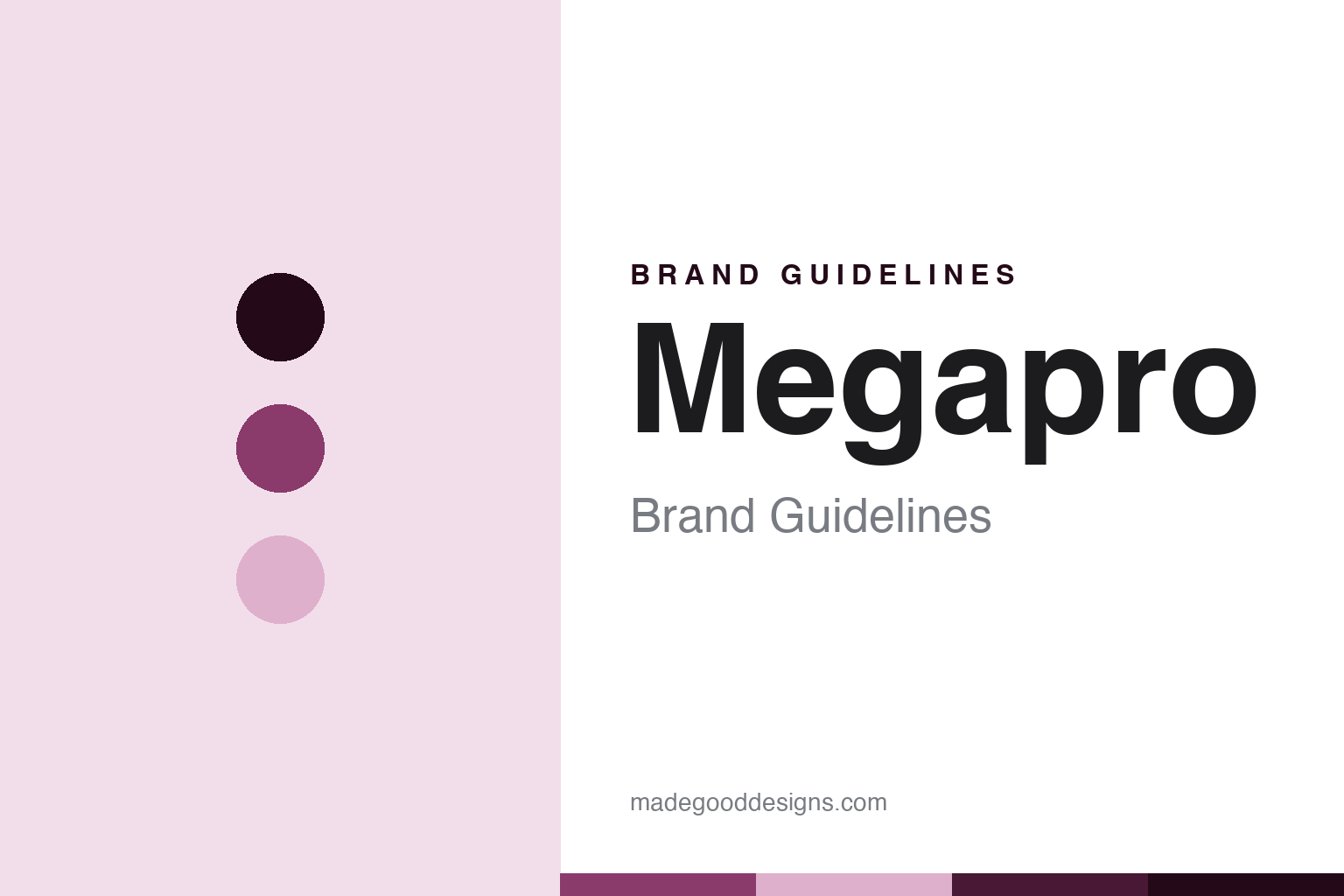
Stihl lives in a heritage oxblood. Click a swatch to copy the hex.
Stihl’s identity is heritage, private and engineered — a heritage oxblood, an ink, a pale rose, a deep maroon, and a paper. The palette leans heritage oxblood and pale rose: a deep, serious register that nods to a century-old family firm rather than a loud logo colour, and — importantly — deliberately not to the brand’s own orange-and-grey. It signals the private chainsaw giant’s mower — established, independent and built. The honest caveat, which matters more here than usual: Stihl’s orange-and-grey is a registered colour-combination trademark that the company has defended in court, so our palette must avoid it entirely, and these values are an original, unofficial interpretation, not first-party colours.
The lesson is a heritage oxblood signals a private, established identity. Stihl’s world is a servicing dealer, a century of chainsaws and a robot mower off to one side. For designers, it is a reminder that a deep heritage oxblood and a soft pale rose can carry a maker brand — a serious tone held as colour, never the protected orange-and-grey. Because these tones can fail as small text, keep type dark and let the colour live in the accents, palette and band. The takeaways: date it to 1926; stress the private, unlisted ownership; correct “wire-free” to wire-plus-GPS; place the mower in Austria; and treat the orange-and-grey as a registered mark to avoid.
Typography
The register is a heritage serif — established, independent, built.
Stihl’s identity carries an established, independent, built spirit — a century-old family firm, not a startup or a public company. A heritage serif captures the mood: serious, warm and confident, the register of a private house that answers to a family, not a market. Set in a heritage-oxblood palette, the heritage serif feels established and independent — exactly the personality Stihl carries. It behaves like a made, engineered thing rather than a loud logo, mirroring a chain link and a cut-grass stripe. (Stihl’s real mower, the iMOW name and the orange-and-grey are things we describe but do not reproduce, and the exact typeface is not ours to use.) Because it is not ours to use, the honest description is “a heritage-serif brand,” shown here in a stand-in. The type behaves like the brand: established, independent and built.
Aa
A heritage-serif brand — established and independent. (Specimen set in Cormorant Garamond, a heritage-serif STAND-IN; NOT the Stihl logo or its registered orange-and-grey mark.)
The robot mower
Stihl stands for the private chainsaw giant’s mower.
Stihl brings the round its private, heritage node. A heritage-oxblood palette, a heritage serif and a 1926 founding make one thing — the private chainsaw giant’s mower — the whole identity: heritage, private and engineered. The chainsaw heritage is the pitch, and the strict family ownership is the character. The point is a century-old, unlisted family firm extending into robotic mowing, in a round about where these machines are made and who owns them.
Put to work, the identity is the brand told straight, ownership stressed and technology corrected. A maker in this spirit would date it to 1926, stress the private ownership, and correct “wire-free” to wire-plus-GPS. A reader in this spirit would keep the facts right: Stihl sells the iMOW as its hero; it was founded in 1926 as a chainsaw maker and is headquartered in Waiblingen; it is one hundred per cent family-owned and unlisted; its iMOW is a boundary-wire, GPS-assisted line, refreshed as the EVO generation in 2023; and the mower is built in Austria at STIHL Tirol. Stihl sits second in the round, after Husqvarna. The honest editorial moves are to date it to 1926, to stress the unlisted family ownership, to correct the wire-free assumption, to place the mower in Austria, and to treat the orange-and-grey as a registered mark.
For designers and brand-builders, Stihl continues the robot mower: let private, family ownership be the identity — and respect a registered colour mark and the real technology. The lessons: make independence and family control the story a public rival cannot tell; keep a country of manufacture honest even when it is not the home country; correct a flattering technical assumption rather than repeat it; treat a registered colour combination as untouchable IP; and never reproduce a logo. It is also a reminder to stay precise: Stihl is the family-owned German chainsaw giant whose iMOW robotic mower is designed in Waiblingen and built in Austria — with the palette here an unofficial interpretation. The hook is that ownership: while most of this round is public companies, listed groups and VC-backed startups, Stihl is a century-old firm you simply cannot buy shares in — the chainsaw giant whose robot mower is a German design made in Austria, sold through servicing dealers rather than a checkout button. Read that way, Stihl is less a mower than a private house: established, independent, built. The lesson for a brand is that private ownership and honest engineering reinforce each other, and respecting the colour mark keeps the story earned. Stihl made the-private-chainsaw-giant’s-mower the identity — proof that ownership can carry a round.
Explore & save
Keep Stihl’s identity on hand — save it to a board in the Made Good inspiration library.
Stihl identity set
Pin the heritage-oxblood palette and the heritage-serif register to your own board.