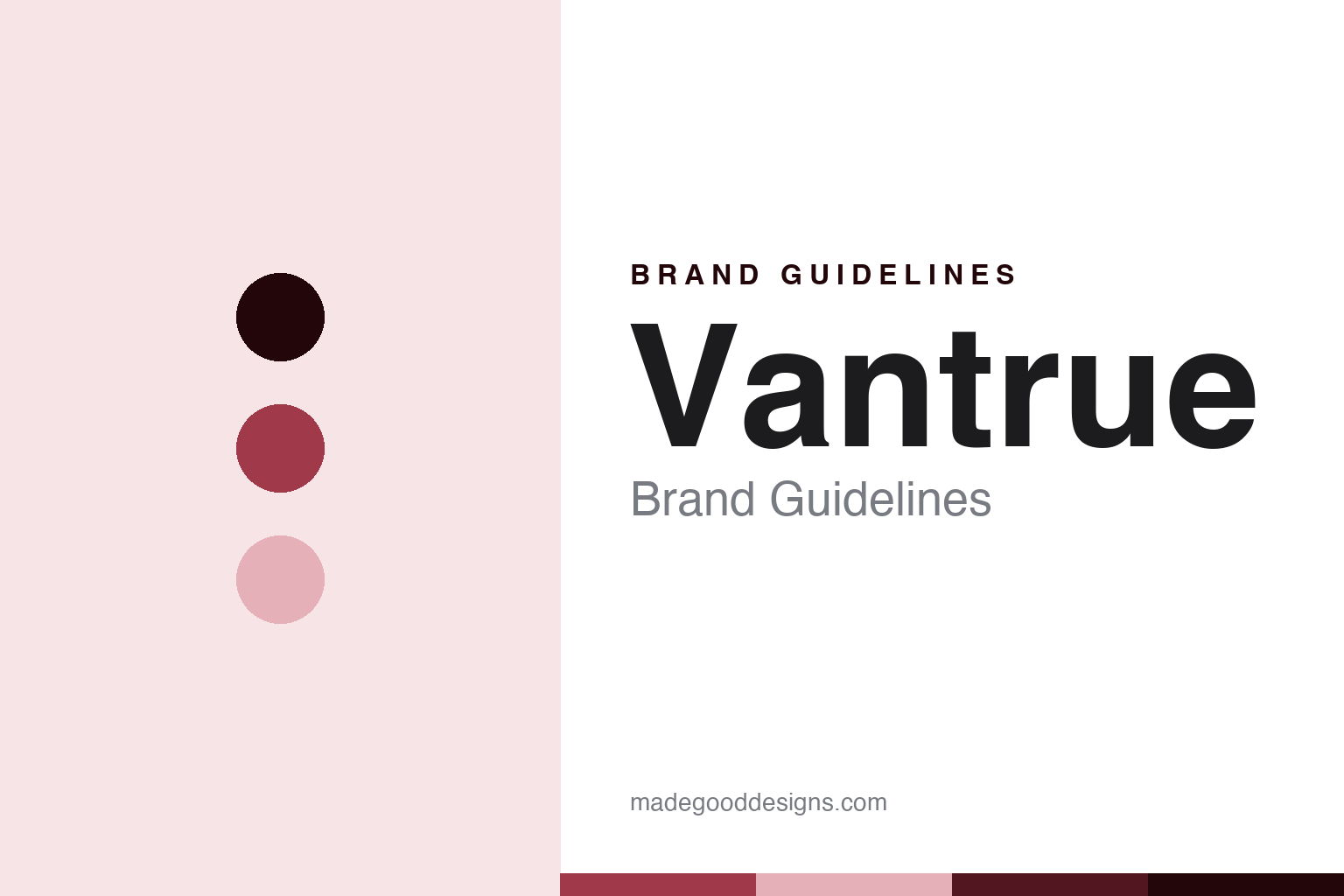
Vantrue Brand Guidelines
The multi-channel specialist.
Aa
Two constants: a rideshare-crimson palette and a multi-channel-sans register. Abstract homage — not a Vantrue product or mark; no dash cam, lens or logo is reproduced, and the orange livery is deliberately not used.
The multi-channel specialist
Vantrue is the Chinese-owned, US-facing brand that specialised in multi-channel dash cams for rideshare drivers.
Vantrue brings the dash cam round its multi-channel node — the brand that specialised in cameras that record front, cabin and rear at once, aimed squarely at rideshare drivers. It is owned by the Chinese company Shenzhen Yidian Zhuoyue Technology, and it makes and sells the cameras. Its answer to a round about where dash cams are made and who owns them needs one correction stated up front: it is Chinese-owned and China-based, with a strong US sales presence, not an American brand.
Its identity is the multi-channel specialist. The multi-channel recording, the rideshare focus and the US-facing sales are the story here. A brand, multi-channel. The multi-channel specialist.
(Honest notes, so the ownership, the models and the positioning are framed accurately, because the ownership is the easy thing to get wrong. Vantrue sells the cameras as its heroes — the multi-channel N-series, including the three-channel N4 and its successor the N4 Pro, and the four-channel N5, plus its E-series and Element lines — and we report its language as the brand’s own. On ownership, the central point: Vantrue is owned by Shenzhen Yidian Zhuoyue Technology, a Chinese company, and its US-facing storefronts, free US shipping and US support are a sales presence, not evidence of American ownership, so we never call it American. On founding: it dates to 2015. On the models, precisely: the original N4 is discontinued, replaced by the N4 Pro, and the N5 is a four-channel system, not three. On the focus: it is a multi-channel specialist marketed to Uber, Lyft and taxi drivers who need front, cabin and rear coverage. On where it is made: China, in Shenzhen. Its designs, the Vantrue name and its orange branding are IP we describe but do not reproduce; there is no official brand hex; these tones are an unofficial interpretation.)
Colour
Vantrue lives in a rideshare crimson. Click a swatch to copy the hex.
Vantrue’s identity is practical, multi-angle and driver-focused — a rideshare crimson, an ink, a pale rose, a deep maroon, and a paper. The palette leans rideshare crimson and pale rose: a warm, working register that nods to drivers and full coverage rather than a loud logo colour, and deliberately not to the brand’s own orange. It signals the multi-channel specialist — practical, multi-angle and driver-first. The honest caveat: with no published brand hex, and with the orange treated as trade dress, these values are an original, unofficial interpretation, not first-party colours.
The lesson is a rideshare crimson signals a practical, driver-focused identity. Vantrue’s world is a working driver covered front, cabin and rear. For designers, it is a reminder that a warm rideshare crimson and a soft pale rose can carry a hardware brand — a working tone held as colour, not the signature orange. Because these tones can fail as small text, keep type dark and let the colour live in the accents, palette and band. The takeaways: correct the ownership to Chinese with a US sales front; date it to 2015; keep the N5 as four-channel and the N4 as discontinued; place it in Shenzhen; and treat the orange as trade dress.
Typography
The register is a multi-channel sans — practical, multi-angle, driver-first.
Vantrue’s identity carries a practical, multi-angle, driver-first spirit — a working-driver specialist, not a lifestyle brand. A multi-channel sans captures the mood: clean, plain and functional, the register of a camera built to cover every angle. Set in a rideshare-crimson palette, the multi-channel sans feels practical and driver-first — exactly the personality Vantrue carries. It behaves like a made, functional thing rather than a loud logo, mirroring three sensor-lens rings and a road-lane stripe. (Vantrue’s real cameras, the orange and the Vantrue name are things we describe but do not reproduce, and the exact typeface is not ours to use.) Because it is not ours to use, the honest description is “a multi-channel-sans brand,” shown here in a stand-in. The type behaves like the brand: practical, multi-angle and driver-first.
Aa
A multi-channel-sans brand — practical and driver-first. (Specimen set in Work Sans, a multi-channel-sans STAND-IN; NOT the Vantrue logo or its orange livery.)
The dash cam
Vantrue stands for the multi-channel specialist.
Vantrue brings the round its multi-channel node. A rideshare-crimson palette, a multi-channel sans and a 2015 founding make one thing — the multi-channel specialist — the whole identity: practical, multi-angle and driver-focused. The multi-channel recording is the pitch, and the rideshare focus is the proof. The point is the brand that covers front, cabin and rear for working drivers, in a round about where dash cams are made and who owns them.
Put to work, the identity is the brand told straight, ownership corrected and models kept accurate. A maker in this spirit would correct the ownership to Chinese with a US sales front, date it to 2015, and keep the N5 as four-channel. A reader in this spirit would keep the facts right: Vantrue sells the multi-channel N-series as its heroes; it is owned by Shenzhen Yidian Zhuoyue Technology, a Chinese company; it has a strong US sales presence but is not American; the N5 is four-channel and the original N4 is discontinued; and it is made in China. Vantrue sits fifth in the round, after Viofo. The honest editorial moves are to correct the ownership, to date it to 2015, to keep the models accurate, to place it in Shenzhen, and to treat the orange as trade dress.
For designers and brand-builders, Vantrue continues the dash cam: own a specific use case — and correct a US-front-versus-Chinese-ownership assumption honestly. The lessons: specialise in a real use case, here rideshare multi-channel; separate a US sales presence from ownership; keep a model line accurate as products are discontinued and replaced; describe a brand’s true base; and never reproduce a logo or a signature colour. It is also a reminder to stay precise: Vantrue is the Chinese-owned, US-facing brand that specialised in multi-channel dash cams for rideshare drivers — with the palette here an unofficial interpretation. The hook is that specialism with a correction: Vantrue found its lane covering the working driver front, cabin and rear at once, and sells hard into the US market — but the US storefronts and support are a sales front over a Shenzhen owner, not an American company. Read that way, Vantrue is less a US brand than a use-case specialist: practical, multi-angle, driver-first. The lesson for a brand is that a clear specialism and honest ownership reinforce each other, and correcting the assumption keeps the story earned. Vantrue made the-multi-channel-specialist the identity — proof that a use case carries a round.
Explore & save
Keep Vantrue’s identity on hand — save it to a board in the Made Good inspiration library.
Vantrue identity set
Pin the rideshare-crimson palette and the multi-channel-sans register to your own board.