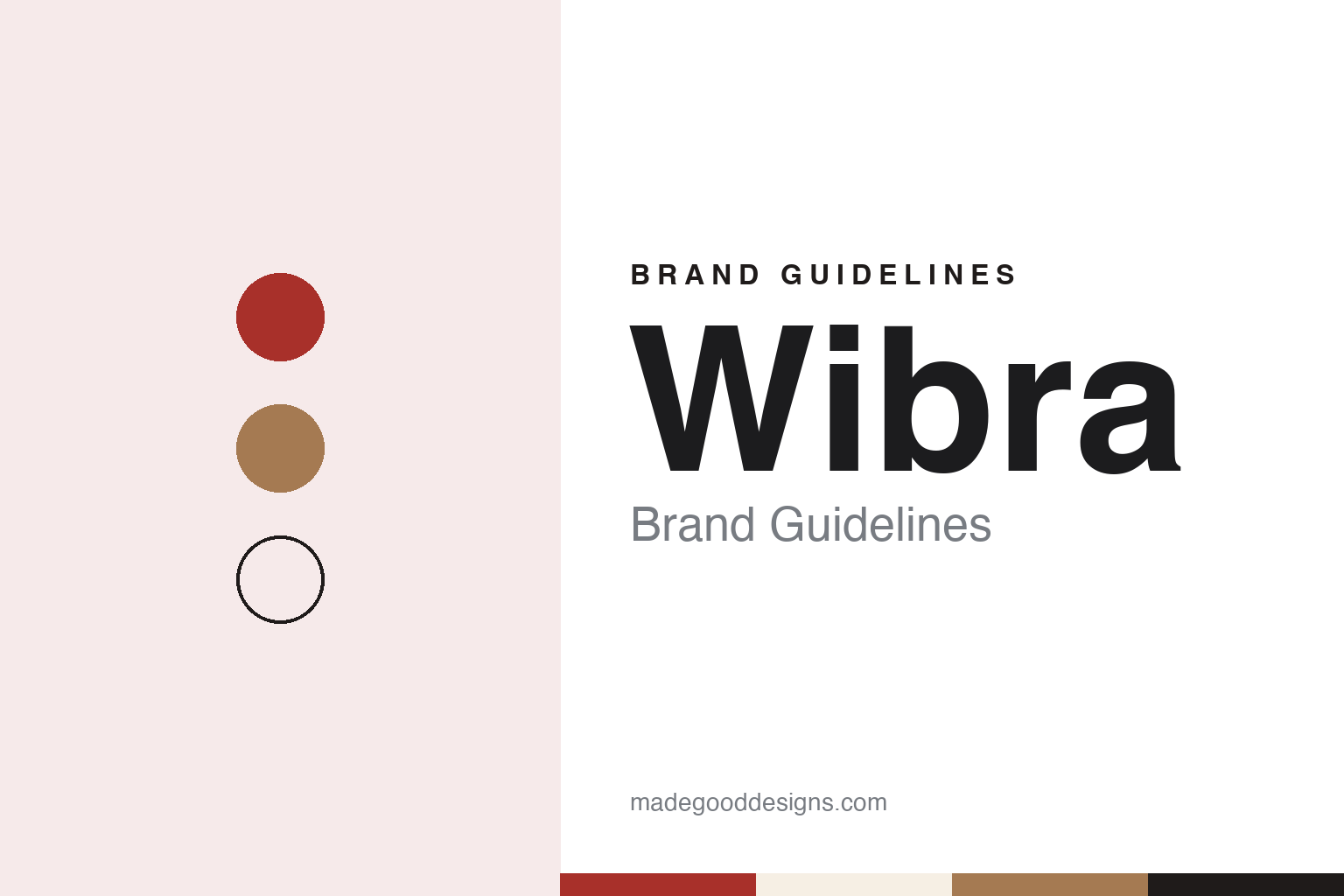
Wibra Brand Guidelines
The 1956 Epe discounter named after Wierdsma and Braam.
Aa
Two constants: a red, cream and oak palette and a rounded sans register. Abstract homage — not a Wibra product or mark; no logo, shopfront or pack is reproduced.
Wierdsma and Braam
A shop taken over from the in-laws.
Wibra began in 1956 in Epe, when Jo Wierdsma took over a small shop from his parents-in-law, the Braam family, Dutch Wikipedia says. The name joins the two families: Wierdsma and Braam. RetailDetail, reporting in February 2022, gives the same founder and the same year, and places the head office in Epe.
From the start the shop sold textiles and clothing at the low end of the market, and Dutch Wikipedia says it soon added other goods. English Wikipedia lists cleaning tools, writing materials, sweets, toys and cosmetics in that mixed section, which it says grew to about half of the turnover. By the 1960s Wibra had eleven stores. Both encyclopaedias describe a “club of nine,” a loose group of similar discount retailers including Scholten, Ter Stal and Zeeman, whose members divided the market between them so that they did not compete; that arrangement ended as Wibra and Zeeman bought some of the others. English Wikipedia dates Wibra’s takeover of Scholten to 1998.
The family kept control for decades. The founder’s sons Arnoud, René and Ron later took over the chain, and in 2018 Ron Wierdsma handed day-to-day management to Bas Duijsens, Dutch Wikipedia says. In February 2022 the three board members — Duijsens as managing director, Wim Smit as commercial director and Per Eriks as financial director — took a majority stake in a management buy-out, RetailDetail reported on 7 February 2022, with Ron Wierdsma keeping a minority stake in the background. That ended Wibra’s long run as a family business.
Colour
A Belgian restart and a new store concept.
Wibra’s hardest period came in Belgium. In 2020 Wibra Belgium applied for a judicial reorganisation, aiming to cut its network from 81 to 36 stores, RetailDetail reported in September 2026; the business court rejected the plan, bankruptcy followed, and a day later Wibra restarted with 36 stores. All 439 Belgian employees initially lost their jobs and 183 were given new contracts, the same report says.
The Belgian chain then rebuilt. On 19 February 2026 Wibra opened its 72nd Belgian store, in Wavre, a shop of more than 700 square metres; RetailDetail said that doubled the network since the restart at the end of 2020, though it was still below the 81 stores Wibra had before the bankruptcy. Earlier that month Wibra had also refitted and reopened its biggest Belgian shop, on the Chazallaan in Schaerbeek, according to the same report. In October 2024 the company opened its first shop in France, at Lambersart near Lille: a 540-square-metre unit with a wide frontage, close to Action, Zeeman and several supermarkets, and almost identical in layout and range to the Dutch and Belgian shops, RetailDetail reported. The same year the chain opened its 300th store, in the Mall of the Netherlands at Leidschendam, according to RetailDetail in October 2024.
The renewal also changed how Wibra looks. When the management buy-out was announced in February 2022, RetailDetail described a new store concept that was “warmer and cosy,” with more wood and a layout organised into “worlds,” built around a shopper the company calls the “family manager.” In July 2026 RetailDetail wrote that, since a brand renewal begun about six years earlier, Wibra had gradually revamped its stores, range and communications, and that in 2025 it opened or relocated 63 stores in the Netherlands, Belgium and France.
Typography
Design and documentation.
The Netherlands and Belgium have a dense network of discount, home, fashion and grocery chains, and many of them present themselves first through the shop front. A fascia on a shopping street is often the most visible part of the brand: when Blokker restarted in 2025, NOS reported that the old logo, in block capitals and without its full stop, went back up on the fronts of the reopened shops, and in April 2024 RetailDetail reported that Xenos would put its logo on eight former Casa shops it had taken back.
Websites carry the rest of the identity. Xenos groups its range online into departments such as furniture, garden, cooking and table, household and party goods, with trend pages and a customer club called Xtra Xenos; both Blokker and Xenos publish a folder, the retail leaflet, on their sites next to a shop finder. Xenos says it follows trends closely and buys new ranges in large volumes, so the assortment changes quickly.
Ownership is part of the story, and the companies describe it plainly. Some of these chains grew up inside family groups: Blokker Holding, built by the descendants of a couple who opened a shop in Hoorn in 1896, once owned Xenos, Leen Bakker, Bart Smit and Intertoys before selling them off between 2017 and 2019, and Xenos now describes its owner, Nieuwgeluk Group, as a Dutch family office. Restructurings, bankruptcies and restarts have reshaped several familiar names, and corporate pages and the trade press record those changes with dates.
This guide sets out what can be checked about each brand: who founded it, who owns it, how its shops, ranges and logos have changed, and what has happened to it. Company statements are marked as such, and counts of shops and countries are given with the date of the source.
Aa
A friendly, rounded sans for a discount shelf. (Specimen set in Nunito, a sans STAND-IN; NOT the Wibra logo.)
Wibra
Other people’s brands, and now its own.
Much of what Wibra sells carries other names. RetailDetail reported in September 2026 that the chain sells many branded goods alongside unbranded lines and little-known brands, and that Dasty, the cleaning and laundry range most associated with its shelves, is sold by Wibra exclusively but is not owned by it. That month Wibra launched W-care, a laundry detergent line for white, coloured and dark washes and, according to RetailDetail, the discounter’s first real own label; the company says scent, packaging and ease of use were considered alongside price.
Online selling came late. Wibra opened a business-to-business webshop in 2020 and began delivering to consumers in 2021, when its stores had to close, Twinkle reported in July 2023 in an interview with the chain’s e-commerce manager. A new platform launched in Belgium in early 2022 and in the Netherlands in June 2022, with an e-commerce department set up at the Epe head office in December 2021. At first the webshop carried mostly fast-selling lines such as Dasty; by mid-2023, the manager said, about nine-tenths of the household, personal-care and DIY range in the shops was also online, while clothing stayed limited.
Logistics followed the store count. In February 2026 Wibra opened a new distribution centre in Apeldoorn, and RetailDetail reported that the chain had grown from 210 to 360 stores in recent years, including a doubling in Belgium and the first French branches.
For a design guide, Wibra shows how a discount chain can refit its stores, range and communications while keeping a name built from two family names. Compare Zeeman, its old partner in the “club of nine,” and Xenos, another Dutch discount home chain. For this guide we use a warm red, cream and an oak brown with a rounded sans, an unofficial interpretation; no product or logo is reproduced.
Explore & save
Keep Wibra’s identity on hand — save it to a board in the Made Good inspiration library.
Wibra identity set
Pin the Wibra red, cream and oak palette and the rounded sans register to your own board.
Source & notes
Frequently Asked Questions
What font can I use to match the Wibra look?
This guide describes Wibra’s type as “A friendly, rounded sans for a discount shelf”. Its type specimen is set in Nunito from Google Fonts as a stand-in; Nunito is not Wibra’s own lettering.
What colours are in the Wibra palette?
This guide’s Wibra palette is Basket red #A8302A, Ink #1F1B1A, Cream #F6EFE4, Shelf oak #A57A52 and Paper #FBF8F3. The tones are the guide’s own unofficial interpretation, not official Wibra hex codes.
When was Wibra founded?
Wibra was founded in 1956, in Epe, Netherlands. Wibra is known for Household goods, textiles, Dasty cleaning range.
Who founded Wibra?
Wibra was founded by Jo Wierdsma in 1956. Wibra is known for Household goods, textiles, Dasty cleaning range.
Who owns Wibra?
Wibra today: Management-owned since 2022, head office in Epe. Wibra is known for Household goods, textiles, Dasty cleaning range.


