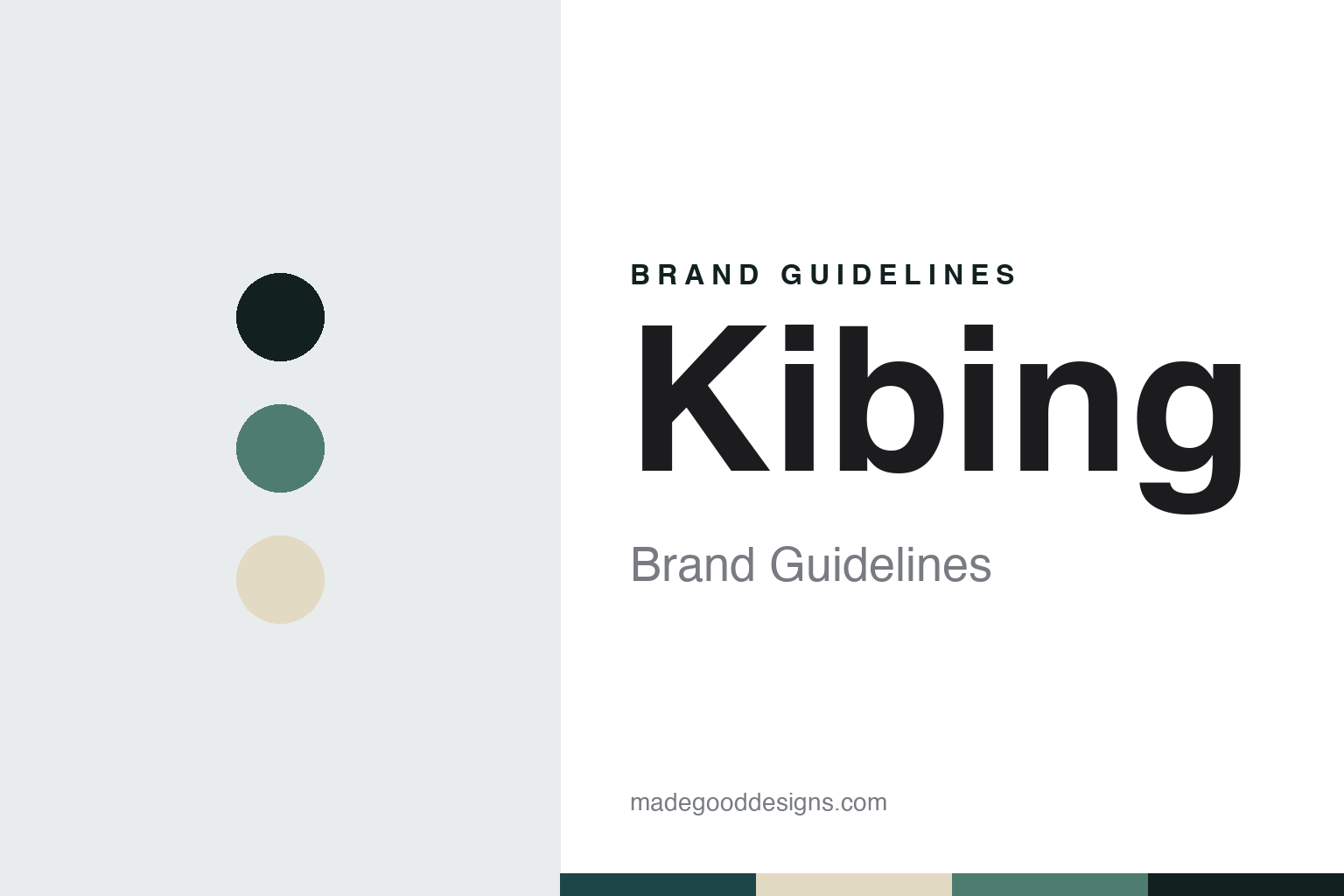
Kibing Brand Guidelines
The Hunan float and solar glass group listed in Shanghai in 2011.
Aa
Two constants: a Kibing float green and deep teal palette and a Plain geometric sans register. Abstract homage — not a Kibing product or mark; no glass, logo or nameplate is reproduced.
Ningbo founders, Hunan seat
A 2005 company with two home bases.
Kibing is the English trading name of Zhuzhou Kibing Group Co., Ltd., known in Chinese as 旗滨集团, a glass maker founded in mainland China. Its company profile on Sina Finance gives its date of establishment as 8 July 2005 and records that it was set up by Ningbo Kibing Group together with several companies of the Ningbo Yongda group, all based in the coastal city of Ningbo in Zhejiang province, before being converted from Zhuzhou Kibing Glass Group into a joint-stock company. Sina classifies it as a privately owned enterprise, and lists its main business simply as the production and sale of glass and glass products.
The company keeps two home bases. Its registered seat, the same profile shows, is in the economic development zone of Liling, a city administered by Zhuzhou in Hunan province, which explains the Zhuzhou at the start of its formal name; its office headquarters is a Kibing Group building in the Bao’an district of Shenzhen, in Guangdong.
Kibing has been a listed company since 12 August 2011, when its shares began trading on the Shanghai Stock Exchange, according to Sina Finance. Its chairman is Yu Qibing, as named in a November 2023 release from the Malaysian Investment Development Authority (MIDA); a January 2025 report by the Shanghai Metals Market (SMM) news service, citing the Chinese financial outlet CLS, describes him as the group’s actual controller. In December 2025 the Malaysian daily The Star called Kibing Group “a Chinese conglomerate specialising in glass and high-tech solar materials.”
Colour
Float glass and solar glass.
Kibing’s business rests on two kinds of flat glass. SMM’s January 2025 report names float glass, the flat glass used in windows and building facades, and photovoltaic glass, the glass that is assembled with solar cells into solar modules, as the two businesses that weighed most on the group’s results in 2024. It reported that the company had linked weaker float glass demand to a downturn in the property cycle, and a temporary surplus of photovoltaic glass to slower growth in solar installations from the second half of that year.
The solar side has grown quickly. According to the same report, executives told a briefing on third-quarter 2024 results that the group had gone from one photovoltaic glass production line in 2021 to eleven, nine of them operating at the time and two under construction. That business is run through a subsidiary, Kibing Solar, which SMM described as the core platform for the group’s photovoltaic glass; Kibing Group held about 71 per cent of it at the time of the report, after stake transfers in 2023.
New plants carry the group’s name into other provinces. In October 2026 the Xinhua news agency, in pictures published by People’s Daily Online, showed the workshops of Zhaotong Kibing Photovoltaic Technology in Zhaotong, in Yunnan province, with photovoltaic glass lines in a city that Xinhua said had built an industrial chain running from silicon mining and washing to photovoltaic glass and modules.
The group has also set out where it wants to go next. On 26 June 2026 its board approved a plan to raise funds through a share placement to specific investors, the Chinese business daily Every Day Economic News reported, for projects including an ultra-thin flexible glass (UTG) manufacturing platform and glass substrates, an upgrade of high-transmittance conductive glass coated on the production line, glass substrates for new-energy vehicles and a digital upgrade of the group. The plan was approved by the board in June 2026 and was not completed at the time of writing.
Typography
Design and documentation.
Glass makers sell mainly to builders, carmakers and bottlers rather than to shoppers, and their brand pages are written for those buyers. The material does much of the visual work. Many of the large producers fill their websites and annual reports with photographs of their own float lines, furnaces and forming machines, shot and published the way each company chooses, next to close-ups of finished sheets, windscreens and bottles.
Product pages tend to follow the three big markets. Architectural ranges cover clear and tinted float glass, coated glass for solar control and insulation, laminated glass and mirrors, each usually with a range name and a technical data sheet. Automotive pages describe windscreens, side and roof glass, and glass with heating, acoustic layers or head-up-display areas. Container makers show bottles and jars by capacity, colour and finish, often with catalogue pages of standard shapes for wine, beer, spirits and food.
Colour belongs to the catalogue as much as to the logo. Flat-glass makers publish swatches for body tints and reflective coatings, and packaging makers name their glass colours, such as flint, amber and green, and show the same bottle shape in each. Corporate pages carry a second kind of identity: maps of plants, lists of countries, ownership histories and stock-market listings, which matter in an industry where many groups have grown by buying or merging with other glassworks.
The guides in this group read those public materials: founding records, owners, plants and product families, as the companies and independent sources describe them. The colours and type samples shown here are our own interpretation, not official brand assets, and no product or mark is reproduced.
Aa
A plain geometric sans — one word, Kibing, across every subsidiary. (Specimen set in Manrope, a sans STAND-IN; NOT the Kibing logo.)
Kibing
Malaysia and Sabah sand.
Kibing’s main documented move abroad is in Malaysia. MIDA said in November 2023 that the group’s first Malaysian plant, in Negeri Sembilan, had been producing float, ultra-clear and coated glass since 2017. On 31 October 2023 its subsidiary SBH Kibing Solar New Materials held a launching ceremony for a second Malaysian plant, at the Kota Kinabalu Industrial Park in Sabah, on a 130-acre site, to make solar photovoltaic glass; MIDA said the subsidiary had been incorporated in 2022. The group also mines and processes silica sand at Sikuati, near Kudat in northern Sabah, and MIDA said Sabah was chosen for its high-quality sand, its access to markets and the support of the Malaysian government.
A further Sabah project followed. In November 2024 The Star reported that Kibing Group had committed to building a new solar glass plant at Kimanis, about 40 kilometres south of Kota Kinabalu, through its subsidiary SBH Kibing Solar New Energy, with a sublease agreement signed with a company of the state-linked Sawit Kinabalu Group and heads of agreement for a natural gas supply from Sabah Energy Corporation. In December 2025 the same paper reported a visit by the state’s industry minister to the Kota Kinabalu Industrial Park plant, where he said more than 84 per cent of the workforce came from Sabah.
The name itself does much of the identity work. The English word Kibing appears in the names of the group’s subsidiaries — Kibing Solar, Zhaotong Kibing Photovoltaic Technology, SBH Kibing Solar New Materials — so a single word links a company registered in Hunan and run from Shenzhen with plants in Yunnan and on the island of Borneo.
For a design guide, Kibing shows how an industrial group can carry one short name across float glass, solar glass and new ventures in several countries. Compare Xinyi Glass, another Chinese glass maker, and Fuyao, another Chinese glass maker, from Fuqing. For this guide we use a float green and a deep teal with a sans, an unofficial interpretation; no product or logo is reproduced.
Explore & save
Keep Kibing’s identity on hand — save it to a board in the Made Good inspiration library.
Kibing identity set
Pin the Kibing float green and deep teal palette and the Plain geometric sans register to your own board.