Queen Elisabeth Competition Brand Guidelines
Brussels, a royal name and a week in seclusion.
Aa
Two constants: a navy, ivory and gilt palette and a Royal serif register. Abstract homage — not a Queen Elisabeth Competition asset; no logo, medal or emblem is reproduced.
The Ysaÿe Competition
A queen, a violinist and an idea from 1900.
The Queen Elisabeth Competition began in Brussels in 1937, under another name. The competition’s own history says it was founded at the instigation of Queen Elisabeth, queen of the Belgians, and the Belgian violinist Eugène Ysaÿe, and that it was originally called the Eugène Ysaÿe Competition. Its account of the royal patronage dates the idea much earlier: the queen, herself a violinist, met Ysaÿe in 1900, and together they conceived an international violin competition.
Ysaÿe’s plan had a particular shape. The Belgian public broadcaster RTBF, in a history of the contest published in May 2014, describes a competition for young virtuosos with a very wide programme that included contemporary music, and an unpublished piece that candidates had to learn alone, without help from anyone and above all not from their teacher. The first edition, for violinists, took place in 1937 and was relayed by radio, RTBF says; a second edition, for pianists, followed in 1938.
The contest did not continue during the war years, the organiser says. In the spring of 1950 its relaunch was decided, according to RTBF, and Marcel Cuvelier, director of the Brussels Philharmonic Society, persuaded Queen Elisabeth to lend her name to it. The first edition under the new name took place in the spring of 1951, organised along the same lines as the Ysaÿe Competition; the queen also became its honorary president. RTBF adds that the competition was a founding member of the World Federation of International Music Competitions in 1957.
The two dates still sit side by side. The organiser marked the 50th anniversary of the Queen Elisabeth Competition in 2001 and the 75th anniversary of the Ysaÿe Competition in 2012, and it presented the 2026 edition as the 75th anniversary of the competition under its present name, alongside the 150th anniversary of the queen’s birth in 1876, a pairing the Flemish broadcaster VRT NWS also reported in May 2026.
Colour
Four disciplines, four phases, one hall.
The programme is built on rotation. Every year in May the competition holds an international contest in Brussels for young, classically trained musicians, and in successive years it turns to violinists (since 1937), pianists (since 1938), singers (since 1988) and cellists (since 2017), the organiser says. For half a century each discipline returned every four years, RTBF reported in 2014, and the contest has been held every year since 2007. Until 2012 there was also a composition competition. The 2020 edition did not take place, and the piano session was held in 2021, French Wikipedia records.
Each edition runs in four phases, as the organiser describes them: a preselection behind closed doors, based on videos sent with online applications, and three public rounds. In the first round instrumentalists give a recital of 20 minutes and singers one of about ten. Twenty-four go through to the semi-final, where instrumentalists play a longer recital and a concerto with a chamber orchestra on separate days. The first two public rounds, held at the Brussels Conservatory until 2011, now take place at Flagey. Twelve finalists then perform with a symphony orchestra at the Brussels Centre for Fine Arts, the Palais des Beaux-Arts, where the Bozar programme for 2026 placed the finals in the Henry Le Boeuf Hall.
The organiser calls one stage a highlight for finalists: a week of seclusion. After the semi-final, finalists in the instrumental disciplines stay at the Queen Elisabeth Music Chapel, where they study, without any outside help, a new work to be performed with an orchestra; a new work is also set for the semi-final recital. At times these pieces came from the composition competition, and since 2015 both have been commissioned, the organiser says. The voice edition has no such week: for 2027 it set an age range of 18 to 32 and a final of three to five works with orchestra, sung in at least two languages and including at least one opera aria.
Judging follows its own procedure. The chair of the jury sits on the executive committee and does not vote, and also chairs the artistic committee that sets each edition’s repertoire, the organiser says; a Belgian court officer observes the proceedings. All twelve finalists receive the title of laureate, but since 1995 only the first six have been ranked. The first laureate receives the International Queen Elisabeth Grand Prize, presented by the queen. All performances are streamed, and the semi-final and final are broadcast live on radio and television.
Typography
Cities, cycles and halls.
Classical music and dance competitions tend to introduce themselves through a small set of names. Many carry the name of a musician, a composer or a founding patron; the Van Cliburn International Piano Competition is named for an American pianist, and the Warsaw competition for the composer Fryderyk Chopin. Most are also tied to a city, and to the body that runs them, whether a foundation, a national institute, a broadcaster or a school.
Time is measured in years rather than seasons. A competition may run every two, three, four or five years, and each edition is usually known by its number as well as its date. The rules for an edition set out who may enter, most often through an age limit or a range of birth years, and what must be played: a free choice within a time limit, set lists, a newly commissioned piece, or, in Warsaw, the works of a single composer.
The rounds narrow step by step. Recorded applications or screening auditions lead to preliminary rounds, then to one or more further stages, and finally to a small group of finalists. In piano competitions the last stages often bring in an orchestra, with each finalist playing a concerto alongside the solo recitals of earlier rounds. Juries are appointed for each edition, and some organisers publish their scoring rules or the scores themselves.
The hall is often part of the identity. A competition may return to the same stage edition after edition, and its programmes, webcasts and printed material repeat the city, the venue, the namesake and the edition number. This guide looks at how each organiser presents those constants, using what the organisers and independent sources document.
Aa
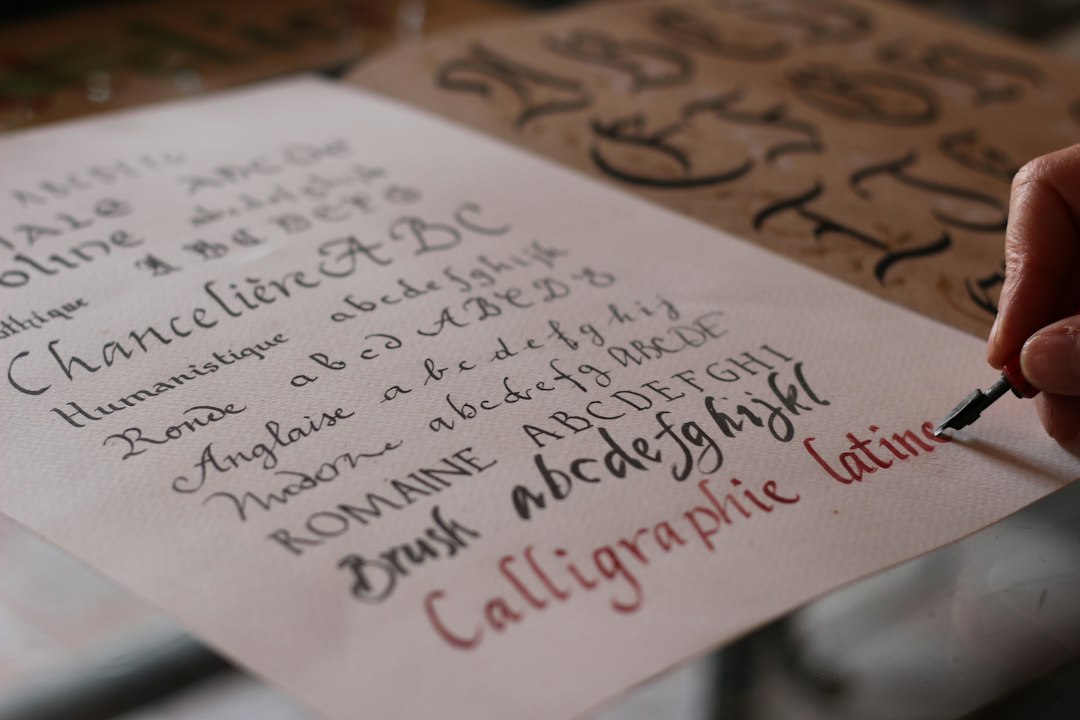
A royal serif for a contest named after a queen. (Specimen set in Cormorant Garamond, a serif STAND-IN; NOT the Queen Elisabeth Competition logo.)
Queen Elisabeth Competition
A non-profit association with a royal patron.
The competition is run today by an independent non-profit association, an asbl/vzw under Belgian law, with a board of directors, an executive committee and a permanent team of nine, according to its website. It says its main resources come from ticket sales and subscriptions, that it receives no ongoing institutional subsidy, and that it is supported by the National Lottery and by corporate sponsors it names as BNP Paribas Fortis, Proximus, the TotalEnergies Foundation and Rolex, together with private patrons, host families and volunteers.
The royal link is part of the name and of the routine. A member of the Belgian royal family has served as patron and honorary president since the queen herself, and the organiser describes the king and queen receiving the jury each year and the queen meeting the twelve laureates after the results are announced on the last evening of the final. In 2026 the Belgian postal service issued a stamp showing Queen Elisabeth with her violin for the competition’s anniversary, the organiser says.
The calendar gives the identity its rhythm. The 2026 edition, for cellists, opened at Flagey on 4 May, VRT NWS reported, and its six final evenings ran from 25 to 30 May at the Centre for Fine Arts, according to Bozar. Applications for the 2027 voice edition closed in the autumn of 2026, the organiser says. Recordings of the finalists are issued on CD and on streaming platforms soon after each edition, and the organiser’s archive lets viewers search past performances by year, discipline and round.
For a design guide, the Queen Elisabeth Competition shows how a contest can carry two founding names, a fixed month and a rotating instrument, and still read as one programme. Compare the Leeds International Piano Competition, another contest with a long-standing home hall, and the Chopin Competition, which also dates from before the Second World War. For this guide we use a deep navy, a warm ivory and a muted gilt with a serif, an unofficial interpretation; no product or logo is reproduced.
Explore & save
Keep Queen Elisabeth Competition’s identity on hand — save it to a board in the Made Good inspiration library.
Queen Elisabeth Competition identity set
Pin the navy, ivory and gilt palette and the Royal serif register to your own board.
Source & notes
Frequently Asked Questions
What font can I use to match the Queen Elisabeth Competition look?
This guide describes Queen Elisabeth Competition’s type as “A royal serif for a contest named after a queen”. Its type specimen is set in Cormorant Garamond from Google Fonts as a stand-in; Cormorant Garamond is not Queen Elisabeth Competition’s own lettering.
What colours are in the Queen Elisabeth Competition palette?
This guide’s Queen Elisabeth Competition palette is Brussels navy #24304F, Night ink #10131C, Chapel ivory #F2EDE3, Laureate gilt #A9843F and Paper #F9F7F2. The tones are the guide’s own unofficial interpretation, not official Queen Elisabeth Competition hex codes.
When was Queen Elisabeth Competition founded?
Queen Elisabeth Competition was founded in 1937 (as the Eugène Ysaÿe Competition), in Brussels, Belgium.