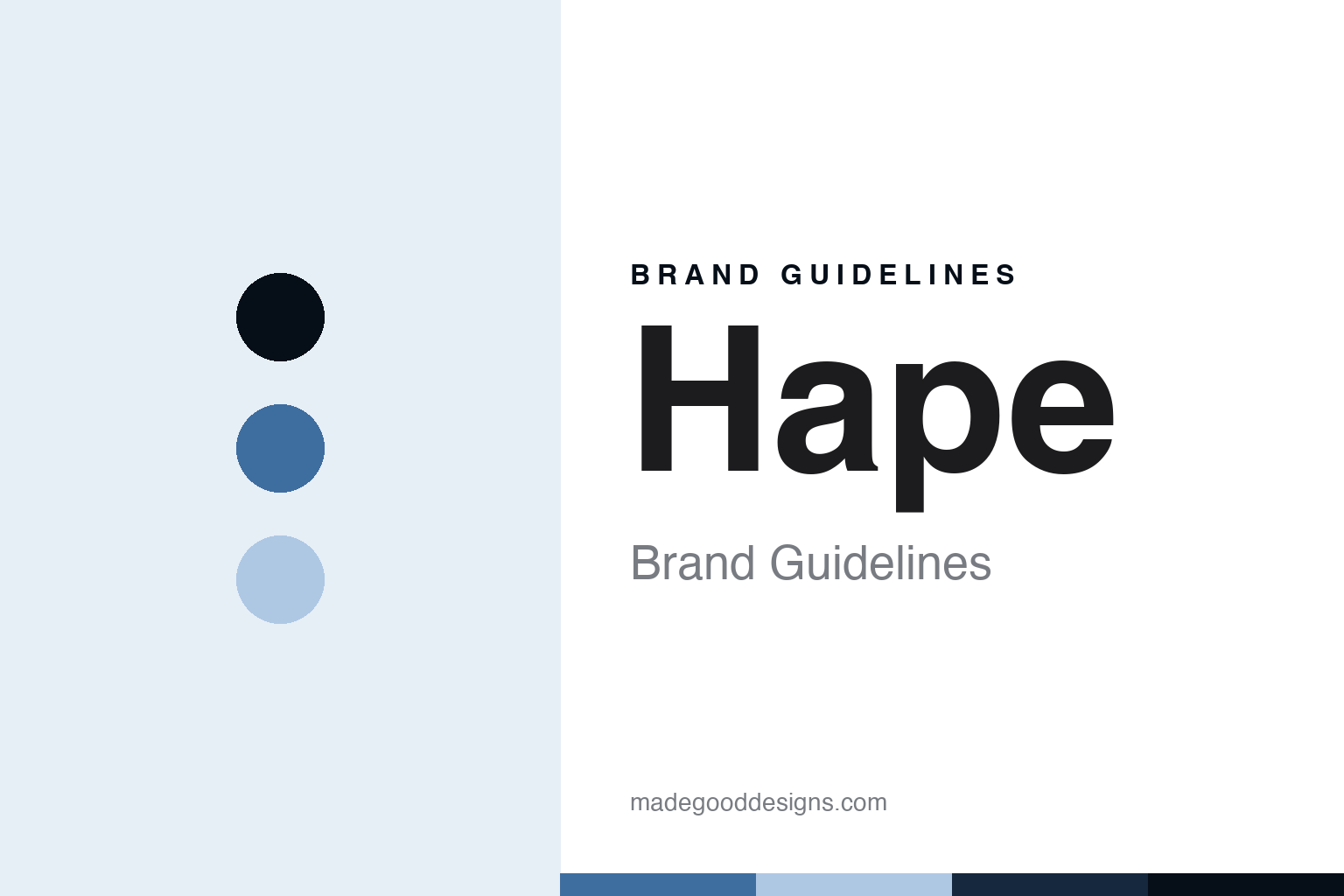
Hape Brand Guidelines
The design-led bamboo toy maker, made mainly in China.
Aa
Two constants: a bright-blue palette and a design-toy-sans register. Abstract homage — not a Hape product or mark; no toy or logo is reproduced.
The design-led bamboo toy maker
Hape is the German-founded, Swiss-based maker of design-led wooden and bamboo toys, made mainly in China.
Hape brings the round its scale-and-design maker — the German-founded, Swiss-based company that grew into one of the largest wooden-toy makers in the world, known for design-led wooden and bamboo toys, made mainly in China. Hape makes wooden and bamboo toys, and its answer to a round about the wooden shelf is design at scale — a large, design-forward range, honestly made across several countries. A brand, design-led.
Its identity is the design-led bamboo toy maker. The design, the multi-country making and the independence are the story here. A brand, design-led. The design-led bamboo toy maker, made mainly in China.
(Honest notes, so the story stays precise, and the making stays honest. Hape, at hape.com, makes design-led wooden and bamboo toys across a very large range, and we report its design and sustainability language as the brand’s own marketing. It was founded in 1986 by Peter Handstein, a German former blacksmith, and is headquartered in Stansstad, Switzerland — a German-Swiss company. On where it is made, the star theme of this round, its toys are made mainly in Ningbo, China, with additional making in Latvia, Romania and Germany — an honest designed-in-Europe, made-in-China-plus split. On who owns it, a theme of this round, it is independent, under Hape Holding, and it owns the German doll house Käthe Kruse, which we cross-reference rather than treat as a rival. Its toy designs are IP we describe but do not reproduce; there is no official brand hex; these tones are an unofficial interpretation.)
Colour
Hape lives in a bright blue. Click a swatch to copy the hex.
Hape’s identity is design-led, bright and made — a bright blue, an ink, a pale blue, a deep navy, and a paper. The palette leans bright blue and pale blue: a modern, primary register that nods to a design-forward toy rather than a muted palette. It signals a design-led toy maker. The honest caveat: with no published brand hex, these values are an original, unofficial interpretation, not first-party colours.
The lesson is a bright blue signals a design-led, modern identity. Hape’s world is a designed, made object. For designers, it is a reminder that a bright blue and a soft pale blue can carry a toy brand — the tone of modern play. Because these tones can fail as small text, keep type dark and let the colour live in the accents, palette and band. The takeaways: design at scale; report the making honestly; report claims as marketing; and treat any single hex as unofficial.
Typography
The register is a design-toy sans — design-led, plain, modern.
Hape’s identity carries a design-led, plain, modern spirit — a design brand, not a graphics label. A design-toy sans captures the mood: clean, modern and confident, the register of a design-forward toy. Set in a bright-blue palette, the design-toy sans feels design-led and modern — exactly the personality Hape carries. It is a designed object rather than a logo, mirroring bamboo and grain. (Hape’s real toys are things we describe but do not reproduce, and the exact typeface is not ours to use.) Because it is not ours to use, the honest description is “a design-toy-sans maker,” shown here in a stand-in. The type behaves like the brand: design-led, plain and modern.
Aa
A design-toy-sans maker — design-led and modern. (Specimen set in Space Grotesk, a design-toy-sans STAND-IN; NOT the Hape logo or any toy.)
The wooden shelf
Hape stands for the design-led bamboo toy maker, made mainly in China.
Hape brings the round its scale-and-design maker. A bright-blue palette, a design-toy sans and a Swiss headquarters make one thing — the design-led bamboo toy maker — the whole identity: design-led, bright and made. The design is the pitch, and the multi-country making is the honest half. The point is a large, design-forward range, honestly made across several countries.
Put to work, the identity is design at scale told straight, as making — with the split reported honestly and the ownership named. A maker in this spirit would design at scale, report the making honestly, and report claims as marketing. A reader in this spirit would keep the facts right: Hape makes design-led wooden and bamboo toys across a very large range; it was founded in 1986 by Peter Handstein, a German former blacksmith, headquartered in Stansstad, Switzerland; its toys are made mainly in Ningbo, China, with making also in Latvia, Romania and Germany; and it is independent under Hape Holding, and owns Käthe Kruse. Hape joins BRIO and Melissa & Doug on the designed-in-Europe, made-in-China side of the round’s where-made thread, and stands on the independent side of the who-owns thread while itself owning another heritage name. The honest editorial moves are to date it to 1986, to place its headquarters in Switzerland, to report the China-plus making split, and to cross-reference its ownership of Käthe Kruse. The lesson Hape teaches is that design at scale can be a whole identity, and reporting the making split honestly keeps it credible.
For designers and brand-builders, Hape continues the wooden shelf: design at scale — and report the making honestly. The lessons: make design-led scale the brand; report a designed-in-Europe, made-in-China-plus split honestly; report design and sustainability language as marketing; cross-reference a brand you own rather than treat it as a rival; and never reproduce a toy. It is also a reminder to stay precise: Hape is the German-founded, Swiss-based maker of design-led wooden and bamboo toys, made mainly in China — with the palette here an unofficial interpretation. Read that way, Hape is less a toy than a design practice at scale: design-led, made mainly in China. The lesson for a brand is that design and honest making reinforce each other, and reporting the multi-country split keeps the story earned. Hape made the-design-led-bamboo-toy-maker the identity — proof that design at scale can carry a brand. And it is a reminder that scale and honesty are not opposites, that a maker can run one of the largest wooden-toy ranges in the world and still report its Ningbo making plainly, and that owning another heritage name is a fact to cross-reference rather than to hide.
Explore & save
Keep Hape’s identity on hand — save it to a board in the Made Good inspiration library.
Hape identity set
Pin the bright-blue palette and the design-toy-sans register to your own board.