Aspall Brand Guidelines
The Suffolk cyder made at Aspall Hall since 1728.
Aa
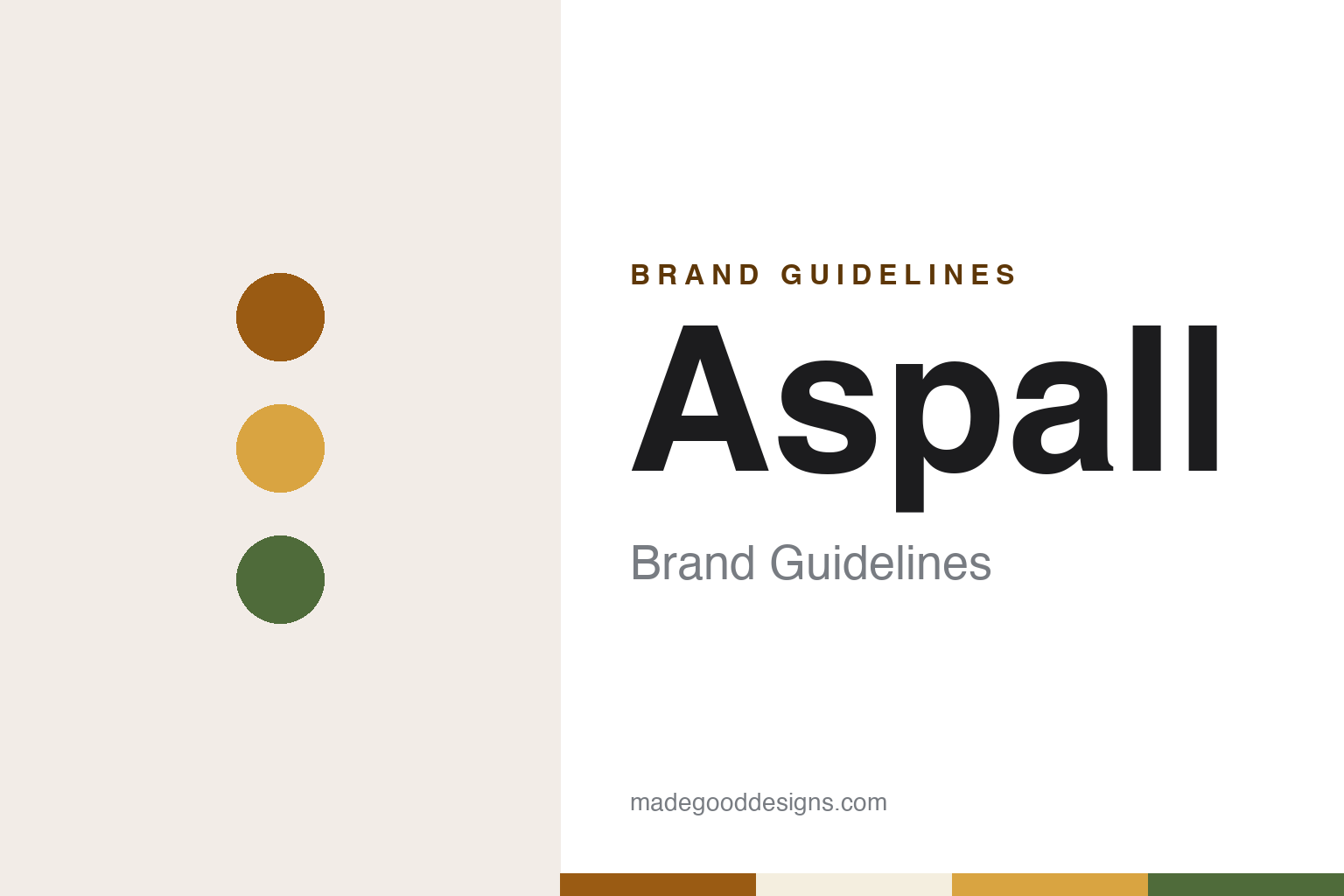
Two constants: an amber glass, sunrise gold and Suffolk green palette and a Garalde book serif register. Abstract homage — not an Aspall product or mark; no label, logo or bottle is reproduced.
A Jersey family at a Suffolk hall
Temple Chevallier’s estate, Clement’s cyder house and a mill from the Norman coast.
Aspall makes its cyder — the brand spells the word with a y — at Aspall Hall in the village of Aspall in Mid Suffolk, near Debenham. English Wikipedia describes the business as established in the early eighteenth century, with apple trees first brought in by the Chevalliers of Aspall Hall from their native Jersey in the Channel Islands.
The family story is told on the company’s own site. Aspall says the Chevalliers have lived and farmed there since 1702, when Temple Chevallier bought the hall and its land, having come to Aspall from Jersey with his Suffolk-born mother. In 1722 he left the estate to his nephew, Clement Chevallier, whom the company credits as the founder of the cyder business. Molson Coors, in its January 2018 announcement, likewise gave the founding as 1728 by Clement Chevallier.
The company says the Cyder House was built by local craftsmen in 1728 and still holds Clement’s original mill and press. The granite wheel and trough of the mill came by sea to Ipswich from the Îles Chausey, off the coast of Normandy, and were then hauled to Aspall by horse in a journey of three days logged in what the family calls “Clement’s book.” Aspall says the wooden press, made from estate timber, stayed in use until 1971. On its main history page the company also says Clement planted the first large-scale cyder orchards in Suffolk.
The spelling with a y became a family signature. Family accounts, including a 2004 obituary of Perronelle Guild, née Chevallier, credit her father, John Barrington Chevallier, with introducing it to set Aspall’s drink apart from the ciders of the West Country. The company says JB Chevallier, whom it calls its fifth-generation cyder maker, is also the source of the Aspall bottle design. English Wikipedia records that in 1946 the business was a founding member of the Soil Association, the organic-farming charity, and Perronelle Guild’s obituary names her as the founder member.
Colour
Family portraits in 2014, a rising sun in 2020.
Aspall’s look has been redrawn twice in little more than a decade. In 2014 the family worked with the London studio NB Studio. Richard Baird, reviewing the work on BP&O in October 2014, described a new logo and packaging for retail and trade, plus website, point-of-sale and livery design, built from the family’s archive of documents, marks and photographs. He noted a logotype with a gold shadow printed in foil and the date of establishment, a vector-drawn knight, botanical illustration by Rosie Sanders, and etched-style portraits and signatures of family members across the bottles.
Six years later the brand changed direction under its new owner. Design Week reported in June 2020 that BrandOpus, a long-standing agency of Molson Coors, had spent twelve months on a rebrand that included a bespoke typeface, a redrawn wordmark, new packaging and rethought brand communications. The agency’s design director, Ian Ritch, framed the idea as “choosing the road less travelled” — Clement Chevallier settling in Suffolk, in the east of England, rather than the West Country. A rising eastern sun replaced the etched family portraits at the centre of the labels, an “easterly” ribbon device signals the different ciders, and a calligraphic script runs around the bottle neck. Transform magazine reported in June 2020 that the design is sealed with the knight, inspired by a Chevallier family memorial.
Packaging had shifted before then, too: the Morning Advertiser reported in April 2010 that Aspall was moving its Suffolk cyders from green to amber glass. For more on the lettering, see our note on the font Aspall uses.
Typography
Design and documentation.
The seven brands in this group are all cider and spirits names: Westons, Aspall, Angry Orchard, Moutai, Wuliangye, Kavalan and Amrut. Cider and spirits brands in general sit at many different points in the trade, from family houses that still carry a founder’s name to labels that now belong to much larger drinks groups, and a single brand can be sold everywhere from a corner shop to a bar list.
A cider or spirits brand’s identity is usually carried less by a single bottle than by a label, a name and the place it promises, because the company behind the name may have changed hands, moved its production or grown far beyond the place where it started. That makes the questions behind each name worth asking plainly: who started it, who owns it now, and where its cider or spirit is actually made and bottled.
Each guide separates what independent sources record from what the company says about itself — its founding story, its owners over time, where its cider or spirit is made and how its labels have changed — and marks plainly what rests only on the company’s own word.
Aa
A Garalde book serif for a Suffolk cyder with three centuries of family papers behind it. (Specimen set in EB Garamond, a serif STAND-IN; NOT the Aspall logo or its bespoke typeface.)
Aspall
From eight generations of Chevalliers to Molson Coors.
The family sold the business in January 2018. Molson Coors announced on 7 January 2018 that it had acquired Aspall Cyder Limited, describing it as founded in 1728 by Clement Chevallier and run by the eighth generation of his family; The Daily Telegraph reported the same day that the deal ended eight generations of family ownership. The release said family members would remain part of the business, that Aspall would sit within Molson Coors UK & Ireland, and that it would continue to press, ferment, keg and bottle at its single site in Aspall. It quoted the brothers Henry and Barry Chevallier Guild, the latter as chairman.
Molson Coors has since invested in the site. BBC News reported in January 2019 on plans for a new processing building, a weighbridge and extra storage tanks, and The Drinks Business reported in May 2022 on further investment that included a new fermentation building at the Cyder House. Beyond cyder, English Wikipedia lists apple juice, organic apple cyder vinegar and apple balsamic vinegar among the company’s products, alongside imported wine vinegars. In August 2024 LBB Online reported that Aspall had appointed the independent agency Impero to its advertising account, with a brief to reach younger drinkers.
The name needs care in searches: Aspall is also the name of the village and parish around the hall; the brand’s own site is aspall.co.uk.
For a design guide, Aspall shows how a heritage brand can trade one kind of heritage for another — from family portraits and signatures to a rising sun that stands for the founder’s choice of the east — while keeping the knight, the date and the y in cyder. Compare Westons, the Herefordshire family cider maker, and Blue Moon, another Molson Coors brand. For this guide we use amber glass, sunrise gold and Suffolk green with a Garalde serif, an unofficial interpretation; no product or logo is reproduced.
Explore & save
Keep Aspall’s identity on hand — save it to a board in the Made Good inspiration library.
Aspall identity set
Pin the Aspall amber glass, sunrise gold and Suffolk green palette and the Garalde book serif register to your own board.