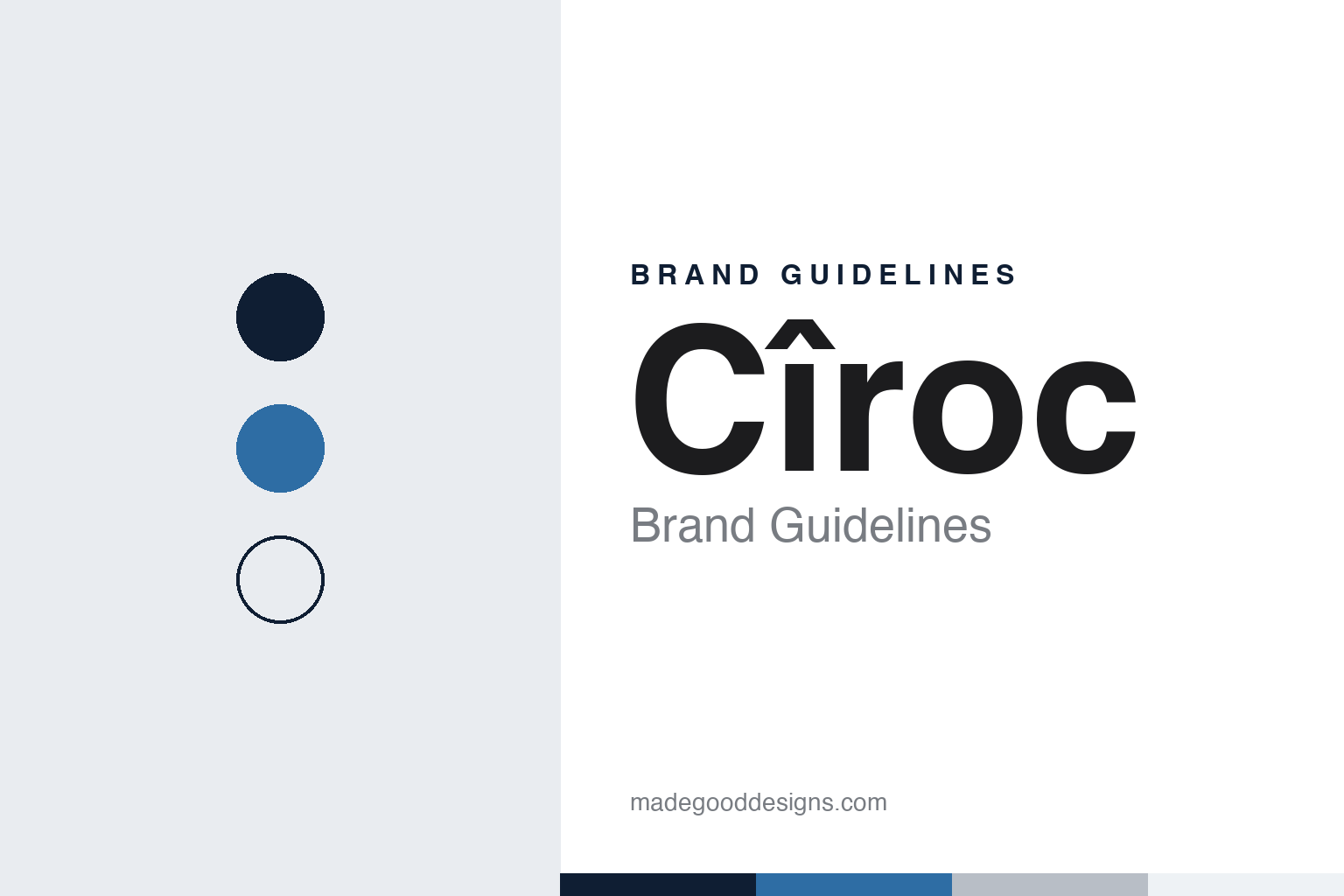
Cîroc Brand Guidelines
The French grape vodka distilled five times since 2003.
Aa
Two constants: a night navy, snap blue and frost white palette and a geometric sans register. Abstract homage — not a Cîroc product or mark; no label, logo or bottle is reproduced.
A vodka from grapes
A Cognac-country distiller and a brief from Diageo.
Cîroc was launched in 2003 and is owned by the British drinks group Diageo, English Wikipedia says. It was created by Jean-Sébastien Robicquet, whose family comes from the wine country around Bordeaux. In a 2013 interview with The Independent, cited by English Wikipedia, Robicquet described his family’s long history in wine and spirits, his training in winemaking and ten years at the Cognac house Hennessy, before Diageo approached him to make a vodka from grapes rather than from grain or potatoes. The company’s US website calls him the master distiller who created Cîroc in 2003 and says his family has owned the Manoir de Villevert for more than 500 years.
The grapes are the point of difference. Diageo’s bar-training site names Mauzac Blanc, a variety associated with Gaillac in south-west France, and Ugni Blanc, the main grape of Cognac. The name follows the vines: according to an archived Diageo page cited by English Wikipedia, “Cîroc” joins the French words cime, peak, and roche, rock, a nod to high vineyards in the Gaillac area, and the circumflex on the i is a real French letter, not decoration.
The company says Cîroc is distilled five times: four times in column stills and a fifth time in a copper pot still at the Maison Villevert distillery in the south of France. Difford’s Guide places the distillery at Villevert, by Cognac, and English Wikipedia names the final stage as taking place at the Distillerie de Chevanceaux. The spirit is distilled to about 96% alcohol, English Wikipedia says, and is bottled at 40% without ageing or flavouring.
Colour
Flavours, a brandy and a New Year sponsorship.
Cîroc began its life in the United States in nightclubs. English Wikipedia, citing Highsnobiety, says the American footballer Earl Little was one of its first US ambassadors at launch in 2003, and that the vodka was pushed especially in cities such as Atlanta and Miami.
The range widened after 2010. Red Berry and Coconut were the first flavoured versions, in 2010, followed by Peach in 2011 and Amaretto, announced in May 2013, English Wikipedia says; Pineapple, Apple, Mango and French Vanilla came later. Each flavour is coded by colour: English Wikipedia lists the unflavoured Snap Frost in blue, Red Berry in red, Coconut in silver, Peach in orange, Pineapple in yellow and Apple in green. In the United States the flavoured bottlings are at 35% abv and labelled as made with vodka rather than as vodka. In June 2018 the brand stepped outside vodka with Cîroc VS, a blend of aged French brandies, The Spirits Business reported.
Advertising leaned on nightlife and celebrity. Cîroc sponsored a New Year’s Eve event in December 2007, and in December 2011 it began airing a “Luck Be a Lady” campaign directed by Anthony Mandler, English Wikipedia says. DJ Khaled joined in 2016 to front Mango, Billboard reported, and French Montana followed in 2017. In 2020 the brand ran a #CÎROCStands initiative encouraging voting in the US elections and promoting Black-owned businesses, Bustle reported in 2021. Behind the scenes, the brand-development agency Colangelo describes Cîroc among its case studies, citing work on the brand’s positioning.
Typography
Design and documentation.
The seven brands in this group are all gin and vodka names: The Botanist, Bulldog, Malfy, Gin Mare, Brockmans, Cîroc and Skyy. Gin and vodka brands in general sit at many different points in the trade, from small distilleries that still carry a founder’s name to labels that now belong to much larger drinks groups, and a single brand can be sold everywhere from a corner shop to a cocktail bar.
A gin or vodka brand’s identity is usually carried less by the spirit itself than by a bottle, a name and the place it promises, because the company behind the name may have changed hands, moved its production or grown far beyond the place where it started. That makes the questions behind each name worth asking plainly: who started it, who owns it now, and where its gin or vodka is actually distilled and bottled.
Each guide separates what independent sources record from what the company says about itself — its founding story, its owners over time, where its spirit is made and how its bottles and labels have changed — and marks plainly what rests only on the company’s own word.
Aa
A geometric sans for a French grape vodka. (Specimen set in Jost, a sans STAND-IN; NOT the Cîroc logo.)
Cîroc
From Combs to a North American joint venture.
The brand’s best-known partnership began in 2007, when the musician and entrepreneur Sean Combs became its ambassador. Bloomberg reported in October 2009 that the US marketing ran as an “equal-share venture” between Combs and Diageo, and in December 2013 the two also bought the DeLeón tequila brand together, The Guardian reported. In June 2023 Diageo said it was ending the relationship, and on 16 January 2024 the two sides settled their legal dispute and issued a joint statement that they had no ongoing business relationship with respect to Cîroc or DeLeón, both now solely owned by Diageo, the BBC reported.
Ownership in North America changed again in 2025. On 7 April 2025 Diageo announced a joint venture with the California investment firm Main Street Advisors that would oversee Cîroc in North America and the Lobos 1707 tequila brand worldwide, Drinks Intel reported, with Nick Tran, formerly TikTok’s global head of marketing, as its president and chief marketing officer. As part of the deal, Diageo took majority ownership of Lobos 1707, the same report said.
Through these changes the name itself, with its French circumflex, has stayed the constant, and the product line, which English Wikipedia lists as vodka, flavoured vodka drinks and brandy, has kept its French grape base. For notes on the lettering, see our guide to the Cîroc font.
For a design guide, Cîroc shows how a single French ingredient story — grapes rather than grain — and one accented letter can position a vodka against grain-based rivals. Compare Ketel One, Diageo’s Dutch copper-pot vodka, and Belvedere, the Polish rye vodka. For this guide we use night navy, snap blue and frost white with a geometric sans, an unofficial interpretation; no product or logo is reproduced.
Explore & save
Keep Cîroc’s identity on hand — save it to a board in the Made Good inspiration library.
Cîroc identity set
Pin the Cîroc night navy, snap blue and frost white palette and the geometric sans register to your own board.