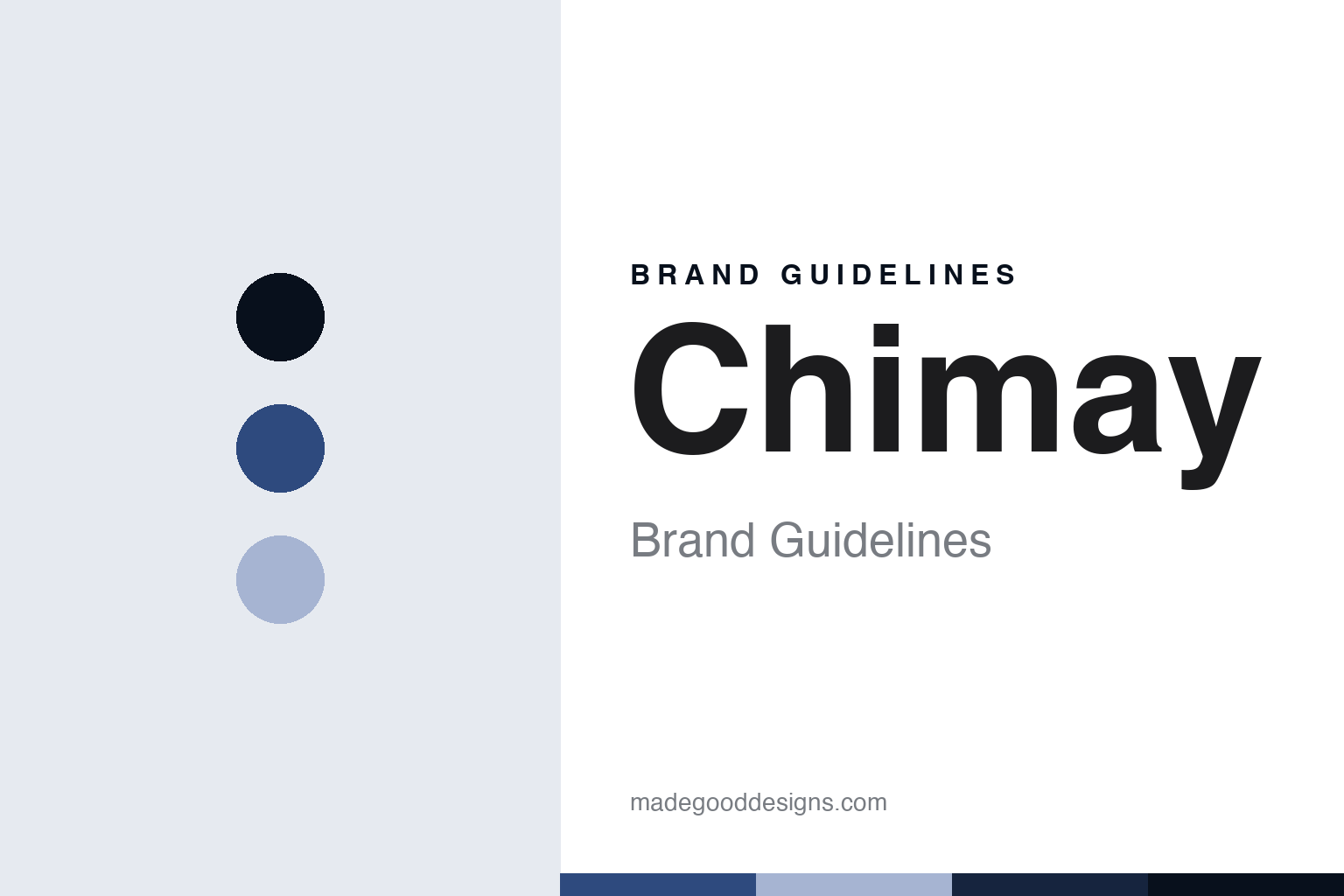
Chimay Brand Guidelines
The Trappist colour code.
Aa
Two constants: a Trappist-blue palette and a Trappist-sans register. Abstract homage — not a Chimay product or mark.
The Trappist colour code
Chimay is the Belgian Trappist brewery whose Red, Blue and White colour-coded caps name the beers.
Chimay brings the round its abbey — the Belgian Trappist brewery at Scourmont whose ales, named by the colour of their caps, Red, Blue and White, are among the classic beers brewed within a monastery. Chimay makes Trappist ales and cheeses, and its answer to a round about beer around the world is a monastic tradition with an elegant branding system: a colour code that lets a drinker name a beer by its cap. A beer, coded by colour.
Its identity is the Trappist colour code. Chimay’s Trappist ales, its Red, Blue and White cap code and its abbey home are the story here. A beer, from a monastery. The Trappist colour code.
(Honest notes, so the story stays precise. Chimay — Bières de Chimay, at chimay.com — is brewed at the Notre-Dame de Scourmont Abbey near Chimay, in Hainaut, Belgium, founded in 1862, and is one of the authentic Trappist breweries, reportedly the first to use the Trappist designation on its labels; its core ales are the Red or Première, the Blue or Grande Réserve and the White or Triple, and it also makes Trappist cheeses. Its signature is a colour-coded cap system, Red, Blue and White, which is how drinkers name the beers. On where it is made — a theme of this round — the beer is brewed at the abbey and bottled at a facility about twelve kilometres away, both in the Chimay region of Belgium. On ownership, it follows the Trappist model, governed by the monastic community, with profits supporting the monastery, the local region and charity, and we frame this as an abbey-directed Trappist enterprise rather than naming a corporate shareholder. Two care notes: the religious and monastic context is treated respectfully and factually, and the Authentic Trappist Product hexagon is a certification mark we describe but do not reproduce, along with no religious iconography. There is no official brand hex; these tones are an unofficial interpretation. This is design commentary, not a promotion — please enjoy responsibly.)
Colour
Chimay lives in a Trappist blue. Click a swatch to copy the hex.
Chimay’s identity is monastic, coded and classic — a Trappist blue, an ink, a haze, a deep blue, and a paper. The palette leans Trappist blue and haze: a calm, considered register that nods to a monastery brewery and its Blue Grande Réserve rather than a loud palette. It signals a classic Trappist house. The honest caveat: with no published brand hex, these values are an original, unofficial interpretation, not first-party colours — and no borrow of the Trappist certification mark is intended.
The lesson is a Trappist blue signals a monastic, coded identity. Chimay’s world is a monastic, brewed object. For designers, it is a reminder that a calm blue and a soft haze can carry a beer brand — and that a colour code, Red, Blue and White, can be a whole naming system. Because these tones can fail as small text, keep type dark and let the colour live in the accents, palette and band. The takeaways: build a colour code; keep a monastic origin respectful; brew where you pray; and treat any single hex as unofficial.
Typography
The register is a Trappist sans — monastic, calm, considered.
Chimay’s identity carries a monastic, calm, considered spirit — a Trappist brewery, not a fashion. A Trappist sans captures the mood: quiet, dignified and unshowy, the register of a beer brewed within an abbey. Set in a Trappist-blue palette, the Trappist sans feels monastic and calm — exactly the personality Chimay carries. It is a monastic tradition rather than a logo, mirroring the colour-cap code. (Chimay’s real wordmark and the Trappist certification mark are things we describe but do not reproduce, and the exact typeface is not ours to use.) Because it is not ours to use, the honest description is “a Trappist-sans spirit,” shown here in a stand-in. The type behaves like the beer: monastic, calm and considered.
Aa
A Trappist-sans spirit — monastic and calm. (Specimen set in Work Sans, a Trappist-sans STAND-IN; NOT the Chimay logo.)
Around the world
Chimay stands for the Trappist colour code.
Chimay brings the round its abbey. A Trappist-blue palette, a Trappist sans and a colour-coded cap make one thing — the Trappist colour code — the whole identity: monastic, coded and classic. The Red, Blue and White cap system is the differentiator, and the monastery brewing is the meaning. The point is a Belgian Trappist brewery at Scourmont Abbey whose ales are named by their caps, and whose profits support the monastery, the region and charity.
Put to work, the identity is a monastic tradition told straight, as design. A maker in this spirit would build a colour code, keep a monastic origin respectful, and brew where it prays. A reader in this spirit would keep the facts right: Chimay is brewed at the Notre-Dame de Scourmont Abbey, founded in 1862, one of the authentic Trappist breweries and reportedly the first to use the Trappist label; its Red, Blue and White ales are named by their caps; it is brewed at the abbey and bottled nearby, in Belgium; and it follows the Trappist model, governed by the monastic community, with profits to the monastery and charity. Chimay sits in the round’s who-owns-heritage spectrum at the abbey-directed point, distinct from state, macro and family ownership, and pairs with Duvel in the Belgian pair. The honest editorial moves are to date the founding to 1862, to frame the Trappist model respectfully, to describe not reproduce the certification mark, and to keep the homage secular. The lesson Chimay teaches is that a colour code and a monastic tradition can be a whole identity, and respectful, honest framing of the religious context keeps the tradition credible.
For designers and brand-builders, Chimay continues around the world: build a colour code — and keep the origin respectful. The lessons: turn a naming problem into a colour system; honour a religious origin factually, not decoratively; describe a certification mark rather than reproduce it; brew where the tradition lives; and never reproduce a logo. It is also a reminder to stay precise: Chimay is the Belgian Trappist brewery whose Red, Blue and White colour-coded caps name the beers — with the palette here an unofficial interpretation, and the piece a respectful design commentary, not a promotion. Read that way, Chimay is less a beer than a code: a monastic tradition organised by cap colour. The lesson for a brand is that a colour code and a respectfully framed origin reinforce each other, and describing the Trappist mark without copying it keeps the tradition earned. Chimay made the-Trappist-colour-code the identity — proof that a cap colour can name a beer.
Explore & save
Keep Chimay’s identity on hand — save it to a board in the Made Good inspiration library.
Chimay identity set
Pin the Trappist-blue palette and the Trappist-sans register to your own board.