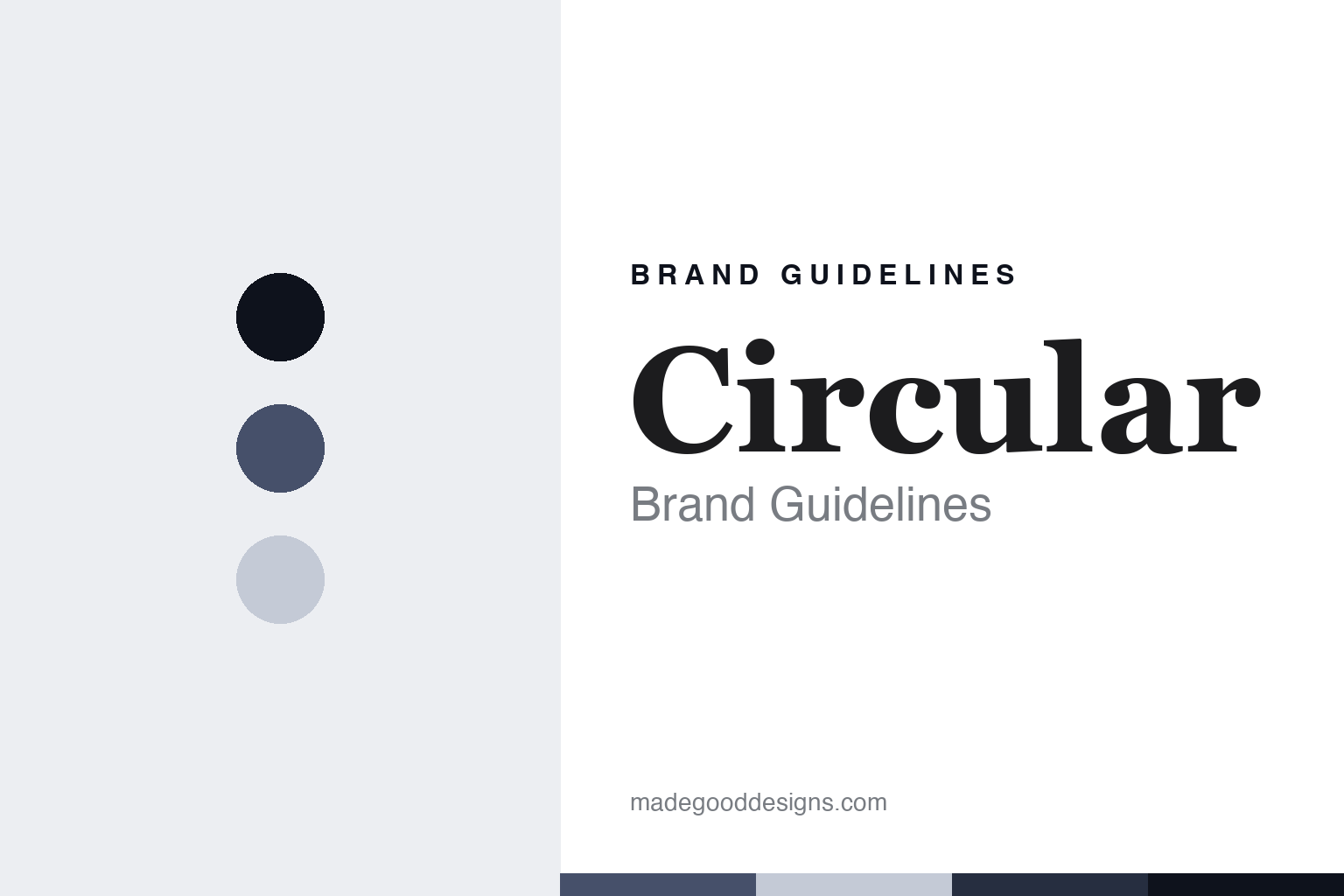
Circular Brand Guidelines
The Paris-designed ECG ring.
Aa
Two constants: a Parisian-slate palette and a designed-serif register. Abstract homage — not a Circular product or mark; no ring, sensor or logo is reproduced.
The Paris-designed ECG ring
Circular is the Paris company whose titanium smart ring adds single-lead ECG and an AI coach, and licenses Oura’s IP.
Circular brings the round its European node — a Paris company whose ring pushes past step-and-sleep tracking into single-lead heart-rhythm sensing and an AI coach. Its answer to a round about who owns the smart ring and where it is made is a French-designed one, honest about a gap: a Paris company, designed in Paris, with its manufacturing location undisclosed.
Its identity is the Paris-designed ECG ring. The Paris design origin, the single-lead ECG capability and the Oura-IP license are the story here. A ring, designed in Paris. The Paris-designed ECG ring.
(Honest notes, so the ownership, the manufacturing and the legal relationship are framed accurately, with hedges. Circular sells its titanium smart ring as its hero — the Circular Ring 2, with seven sensors including a single-lead ECG and cuff-calibrated blood-pressure estimation, around eight days of battery, atrial-fibrillation screening, sleep, HRV readiness and cycle tracking, plus an in-app AI coach called Kira and a Ring 3 on a waitlist — and we report its language as the brand’s own. On ownership: it is a Paris, France company, registered in Paris with a chair named Amaury Kosman, though its entity naming is inconsistent across its own pages and its registration number suggests a recently restructured entity, which we flag; it is founder-funded with angels, with no disclosed venture round, and has crowdfunding origins from 2020. On founding: around 2019 to 2020, exact year unverified, with Kosman the safe attributable name. On manufacturing, honestly: designed in Paris is a design claim, not a manufacturing one, so we do not state where it is made and specifically do not claim China. On the legal relationship, which distinguishes it: Circular holds a multi-year patent license with the pioneer, confirmed on its own IP notice, so we frame it as licensing the pioneer’s IP, not being sued by it. On honesty about history: Circular had multi-year shipping delays after its 2020 crowdfunder, since recovered into a multi-generation line. Its designs, the Circular, Kira and Be More marks are IP we describe but do not reproduce; there is no verified brand hex; these tones are an unofficial interpretation.)
Colour
Circular lives in a Parisian slate. Click a swatch to copy the hex.
Circular’s identity is designed, medical-adjacent and European — a Parisian slate, an ink, a pale steel, a deep slate, and a paper. The palette leans Parisian slate and pale steel: a refined, medical-adjacent register that nods to ECG sensing and clean design rather than a loud logo colour. It signals the Paris-designed ECG ring — designed, medical-adjacent and European. The honest caveat: with no verified brand hex, these values are an original, unofficial interpretation, not first-party colours.
The lesson is a Parisian slate signals a designed, medical-adjacent identity. Circular’s world is a considered French ring that takes a heart-rhythm reading. For designers, it is a reminder that a refined Parisian slate and a soft pale steel can carry a hardware brand — a medical-adjacent tone held as colour, not a product shot. Because these tones can fail as small text, keep type dark and let the colour live in the accents, palette and band. The takeaways: keep it a Paris company and flag the entity inconsistency; say designed-in-Paris with manufacturing undisclosed; frame the Oura relationship as a license; hedge the founding year; and note the past shipping delays honestly.
Typography
The register is a designed serif — designed, medical-adjacent, European.
Circular’s identity carries a designed, medical-adjacent, European spirit — a design-led health brand, not a mass gadget. A designed serif captures the mood: refined, considered and confident, the register of a French-designed medical-adjacent device. Set in a Parisian-slate palette, the designed serif feels designed and medical-adjacent — exactly the personality Circular carries. It behaves like a made, considered thing rather than a loud logo, mirroring a pulse wave and a concentric-ring arc. (Circular’s real products and the names are things we describe but do not reproduce, and the exact typeface is not ours to use.) Because it is not ours to use, the honest description is “a designed-serif brand,” shown here in a stand-in. The type behaves like the brand: designed, medical-adjacent and European.
Aa
A designed-serif brand — designed and medical-adjacent. (Specimen set in Cormorant, a designed-serif STAND-IN; NOT the Circular logo or livery.)
The smart ring
Circular stands for the Paris-designed ECG ring.
Circular brings the round its European node. A Parisian-slate palette, a designed serif and a Paris origin make one thing — the Paris-designed ECG ring — the whole identity: designed, medical-adjacent and European. The Paris design origin is the frame, and the single-lead ECG is the proof. The point is a French design-led ring that pushes into heart-rhythm sensing, in a round about who owns the smart ring and where it is made.
Put to work, the identity is the brand told straight, the manufacturing hedged and the license framed correctly. A brand in this spirit would keep it a Paris company and flag the entity inconsistency, say designed-in-Paris with manufacturing undisclosed, and frame the Oura relationship as a license. A reader in this spirit would keep the facts right: Circular sells the Circular Ring 2 with single-lead ECG and the Kira AI coach as heroes; it is a Paris company chaired by Amaury Kosman, founder-funded, founded around 2019 to 2020; it licenses the pioneer’s IP; it had past shipping delays, since recovered; and its manufacturing is undisclosed. Circular sits third in the round, after RingConn. The honest editorial moves are to keep it a Paris company, to say designed-in-Paris with manufacturing undisclosed, to frame the Oura relationship as a license, to hedge the founding year, and to note the past delays.
For designers and brand-builders, Circular continues the smart ring: push into medical-adjacent sensing — and frame a licensing relationship and a manufacturing gap honestly. The lessons: a design-led brand can differentiate by pushing into higher-order sensing, here single-lead ECG; a licensing relationship with a rival is a distinct, honest framing from being sued; a “designed in Paris” claim is not a manufacturing claim, so where-made should be left undisclosed if it is; and a history of shipping delays is worth telling honestly. It is also a reminder to stay precise: Circular is the Paris company whose titanium smart ring adds single-lead ECG and an AI coach, and licenses Oura’s IP — with the palette here an unofficial interpretation. The hook is that ambition and honesty: Circular pushed a smart ring toward the medical edge — single-lead ECG, blood-pressure estimation, an AI coach — a Paris-designed, design-led brand that, rather than fight the pioneer, licenses its IP, and that is candid its manufacturing location is undisclosed. Read that way, Circular is less a tracker than the Paris-designed ECG ring: designed, medical-adjacent, European. The lesson for a brand is that medical-adjacent ambition and honest licensing-and-manufacturing framing reinforce each other, and calling it a license keeps the story earned. Circular made the-Paris-designed-ECG-ring the identity — proof that design ambition can carry a round.
Explore & save
Keep Circular’s identity on hand — save it to a board in the Made Good inspiration library.
Circular identity set
Pin the Parisian-slate palette and the designed-serif register to your own board.


