City Chic Brand Guidelines
The Sydney plus-size label left standing after a group sale.
Aa
Two constants: a near-black, berry and blush palette and a high-contrast serif register. Abstract homage — not a City Chic product or mark; no garment, logo or shop sign is reproduced.
Big City Chic
A small chain inside a large fashion group.
City Chic’s corporate story begins with a different retailer. Miller’s Retail was founded in 1992 by Gary Perlstein and Ian Miller, English Wikipedia says, and listed on the Australian Securities Exchange in May 1998. It grew into a group of women’s fashion chains, among them Miller’s Fashion Club, Katies, Crossroads and Autograph, and in December 2006 it was renamed Specialty Fashion Group.
That same season the group bought the retail business Chain Reaction. The Australian trade paper Ragtrader reported in January 2007 that the deal brought four names, Chain Reaction, Big Advantage, Girl Mania and Big City Chic, and that only Big City Chic would keep its own name, with its 21 stores; the other shops were to be turned into Autograph, Crossroads, Katies and Miller’s Fashion Club outlets. The trade paper described Big City Chic as aimed at plus-size women aged 20 to 30, while the group’s Autograph label served an older customer, and it reported that all of Chain Reaction’s retail staff kept their positions.
The company’s own account puts the brand’s modern start in the same year. Its annual reports say that in 2006 Phil Ryan, described as City Chic’s original brand director and now its chief executive and managing director, led a team of six people that created the brand. The same reports say his family ran a fashion manufacturing, wholesale and retail business called Ambition in the 1980s and 1990s. The shortened name, City Chic, is the one the company has used since.
For more than a decade City Chic was one brand among several inside Specialty Fashion Group, which also ran Autograph, Crossroads, Katies, Millers and, from November 2013, the Rivers chain, English Wikipedia says.
Colour
From one brand among many to a single-brand company.
The group changed shape in July 2018, when Specialty Fashion Group sold Autograph, Crossroads, Katies, Millers and Rivers to Noni B, later renamed Mosaic Brands, English Wikipedia says. City Chic was the only brand left, and in November 2018 the listed company took the name City Chic Collective. Mosaic Brands, by then a separate company, entered receivership and voluntary administration in late 2024, according to the same encyclopedia entry.
City Chic Collective then bought abroad. It added the US plus-size intimates brand Hips & Curves in April 2019 and, in October 2019, the e-commerce assets of the US retailer Avenue, after Avenue had closed its stores. In December 2020 the administrators of Arcadia Group sold it the Evans brand, e-commerce and wholesale business, but not the Evans store network, FashionUnited reported on 21 December 2020; at that point FashionUnited described City Chic as an ASX-listed specialist in plus-size women’s apparel, footwear and accessories, selling mainly online in Australia, New Zealand and the US, through stores in Australia and New Zealand, and through wholesale and marketplace partners in the US, the UK and Europe. In July 2021 City Chic bought the European online retailer Navabi, English Wikipedia says.
The expansion was reversed within three years. In August 2023 City Chic completed the sale of Evans to AK Retail Holdings, which English Wikipedia identifies as the owner of M&Co., and its 2024 annual report says the Navabi business ceased trading when the company closed its UK warehouse. In June 2024 the ASX suspended trading in City Chic shares ahead of an announcement, Inside Retail reported on 18 June 2024, and on 18 June the company signed an agreement to sell Avenue to the US group FullBeauty Brands. Its 2024 annual report says that sale was completed on 8 July 2024.
The same report describes the outcome as a dedicated single-brand offering in Australia, New Zealand and the United States, sold through City Chic stores, websites and partnership agreements, and says a brand refresh with a new tone of voice formed part of its product and marketing changes that year.
Typography
Shop signs, catalogues and owners.
Plus-size fashion chains in Britain, North America and Australia present themselves through the same tools as any other clothing retailer: a shop sign, a logo, a website, a loyalty scheme and, for some, a printed catalogue. Their size ranges are part of how they describe themselves: Penningtons gives its range as 12 to 32 on its website, and a 2025 trade directory listed Yours Clothing at 14 to 40, up from 16 to 36 in 2018.
The formats vary widely. Some chains grew from a single trading pitch: Yours Clothing began as a market stall in England in 1994 and moved online in 2007, according to the Lincolnshire Free Press. Others are long-established store chains in shopping centres and on high streets, and the category also includes brands that grew out of mail-order catalogues before moving online. Yours Clothing, for example, now sells through its own stores and websites, and also stocks a menswear label from the same owner.
Ownership is just as varied, and it often explains the identity a shopper sees. Some chains are run by their founders, some belong to listed retail groups, and others have passed between owners after administrations or creditor-protection filings. Reitmans, the Montreal group that bought Penningtons in 1995, closed its second plus-size chain, Addition Elle, in 2020 and later revived the name as a range inside its Penningtons stores. The Evans brand moved from Britain’s Arcadia Group to Australia’s City Chic Collective in 2020 and on to the owner of Yours Clothing in 2023, according to TheIndustry.fashion.
Names and logos also change: Penningtons announced a shortened PENN. logo in September 2022, and its website now uses both forms together. This guide sets out what can be checked about each brand, from founders and owners to the ranges they name, and treats every palette and typeface shown here as an unofficial interpretation.
Aa
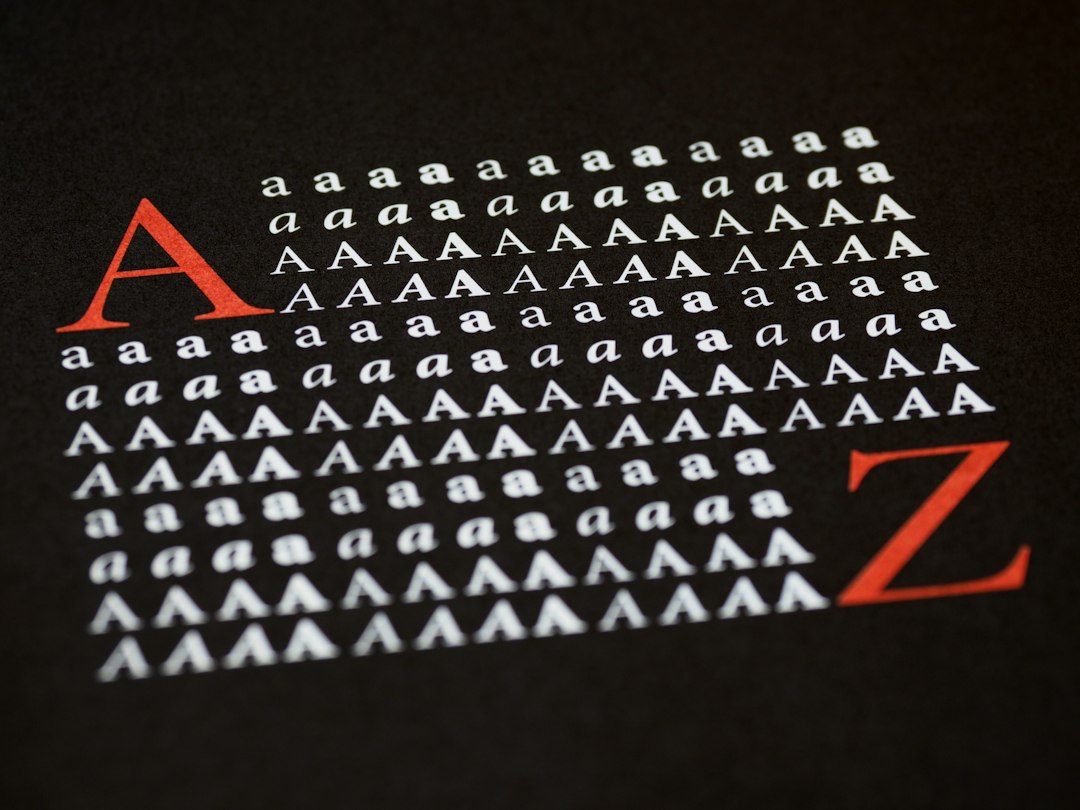
A high-contrast fashion serif for a single-brand label. (Specimen set in Bodoni Moda, a serif STAND-IN; NOT the City Chic logo.)
City Chic
One name, many channels.
Today City Chic Collective is listed on the ASX and based in the Sydney suburb of Alexandria, English Wikipedia says. Its corporate website describes it as a multi-channel retailer selling through stores in Australia and New Zealand, websites in those countries and the United States, and third-party channels. Its 2026 annual report, for the year to 28 June 2026, says City Chic has more than 70 stores across Australia and New Zealand, and describes its range as apparel, occasionwear, lingerie and footwear. English Wikipedia records a bridal line launched in August 2024.
In the United States the brand is now sold without shops. City Chic’s 2024 annual report says that in the US it trades only in a digital capacity, and names partnerships with Nordstrom, Macy’s and Bloomingdale’s. Inside Retail reported on 13 July 2026 that the company had closed its US wholesale business, and on 24 August 2026 that it had moved its Amazon business from a wholesale arrangement to a marketplace model. In New Zealand, Inside Retail reported in July 2026, City Chic runs four stores alongside online and marketplace sales.
The company’s corporate site says it introduced a Vendor Code of Conduct for its suppliers in 2014, and its 2024 report says it extended its worker survey to factories in further regions, including Bangladesh; both are the company’s own statements.
For a design guide, City Chic shows how a single retail name can be carved out of a multi-chain group and become the whole company. Compare Avenue, the US label it owned from 2019 to 2024, and Evans, the English plus-size name it held from 2020 to 2023. For this guide we use a near-black, a deep berry and a soft blush with a high-contrast serif, an unofficial interpretation; no product or logo is reproduced.
Explore & save
Keep City Chic’s identity on hand — save it to a board in the Made Good inspiration library.
City Chic identity set
Pin the City Chic near-black, berry and blush palette and the high-contrast serif register to your own board.
Source & notes
Frequently Asked Questions
What font can I use to match the City Chic look?
This guide describes City Chic’s type as “A high-contrast fashion serif for a single-brand label”. Its type specimen is set in Bodoni Moda from Google Fonts as a stand-in; Bodoni Moda is not City Chic’s own lettering.
What colours are in the City Chic palette?
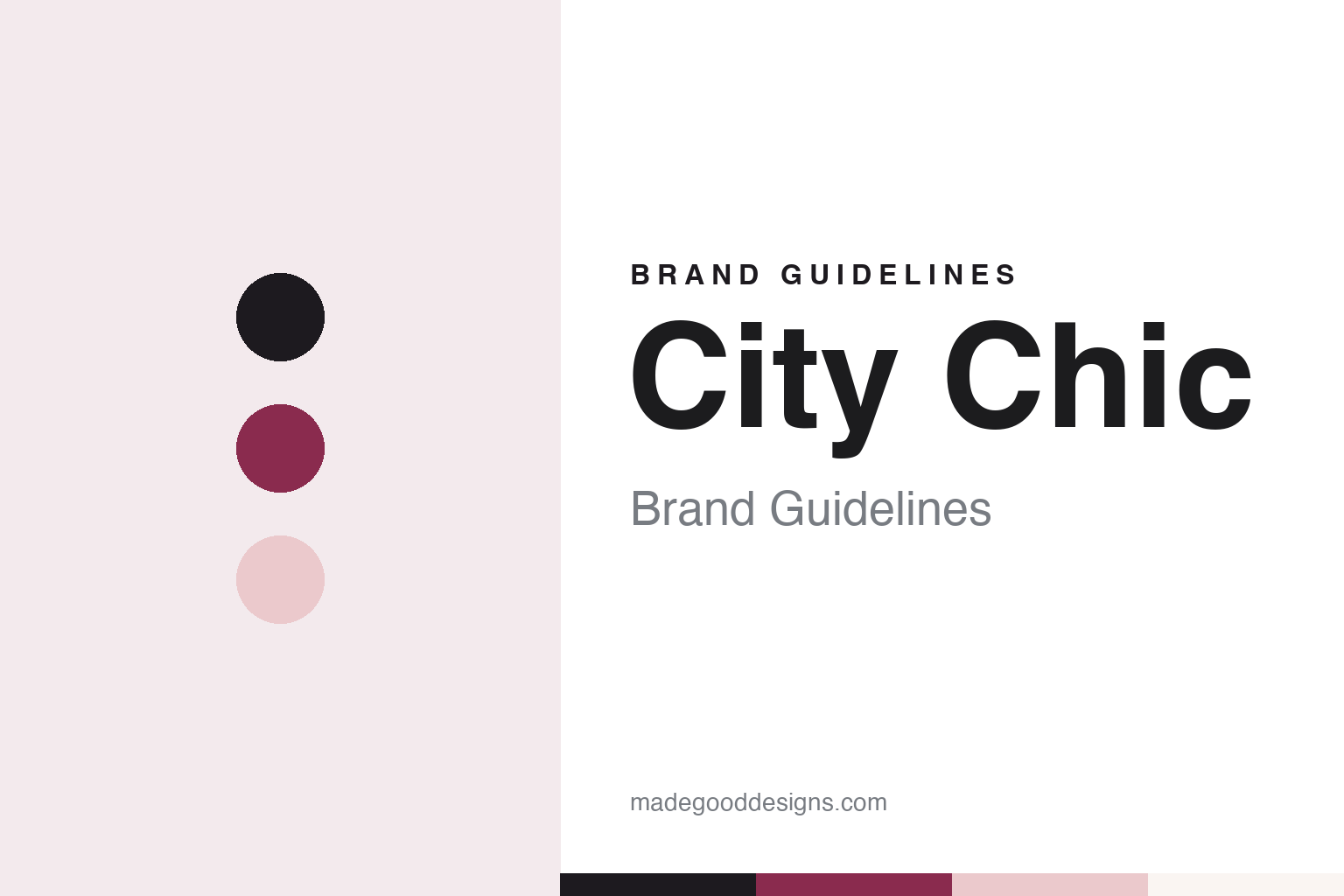
This guide’s City Chic palette is Night ink #1D1A1F, Deep berry #8A2B4E, Soft blush #EBC9CC, Dove grey #6F6A72 and Paper #FAF5F2. The tones are the guide’s own unofficial interpretation, not official City Chic hex codes.
Who owns City Chic?
City Chic is owned by City Chic Collective Limited (ASX).