Fatboy Brand Guidelines
Design with a wink — the oversized Original beanbag and the pump-free Lamzac, in fearless colour.
Aa
Two constants: a bright, playful multi-colour palette and a playful, rounded display. Abstract homage — not the Fatboy wordmark.
Design with a wink
Fatboy made lounging fun.
Fatboy is a lesson in playful, casual, colourful design. Its icon, the Fatboy Original beanbag, was designed by the Finnish designer Jukka Setälä (a lovely, verifiable detail: the name “Fatboy” came from the music Setälä was listening to while designing). The brand was then commercialised by a Dutch entrepreneur — widely credited as Alex Bergman, though Fatboy’s own account keeps him anonymous — who acquired the exclusive selling rights in the early 2000s (around 2002–03) and built the company, based in ’s-Hertogenbosch (Den Bosch), the Netherlands. (An honest note: the design is usually dated to the late 1990s, but Fatboy itself only says the Original has been “renowned since 2002.” Two more notes: no official brand hex is published, and the wordmark typeface is undocumented.)
The Fatboy Original is the hero: an oversized, super-durable nylon beanbag lounger (filled with roughly 3.5 million beads, hand-filled in Den Bosch), in bright, cheerful colours. It’s the definition of casual, fun, un-serious design — “design with a wink.” (An honest note: it’s nylon; “sailcloth” is only an atmospheric description.)
Beyond the beanbag, Fatboy’s cleverest product is the Lamzac — an inflatable air lounger designed by Marijn Oomen that you fill with no pump: you simply sweep it through the air to scoop air in, and it inflates in seconds (an honest note: the Lamzac is made from polyester ripstop TPU, a different material from the Original). Fatboy has expanded into modular sofas, outdoor furniture and playful lighting (the Edison and Transloetje lamps by De Makers Van). It’s an independent Dutch company, “Fatboy the original B.V.” Design with a wink.
Colour
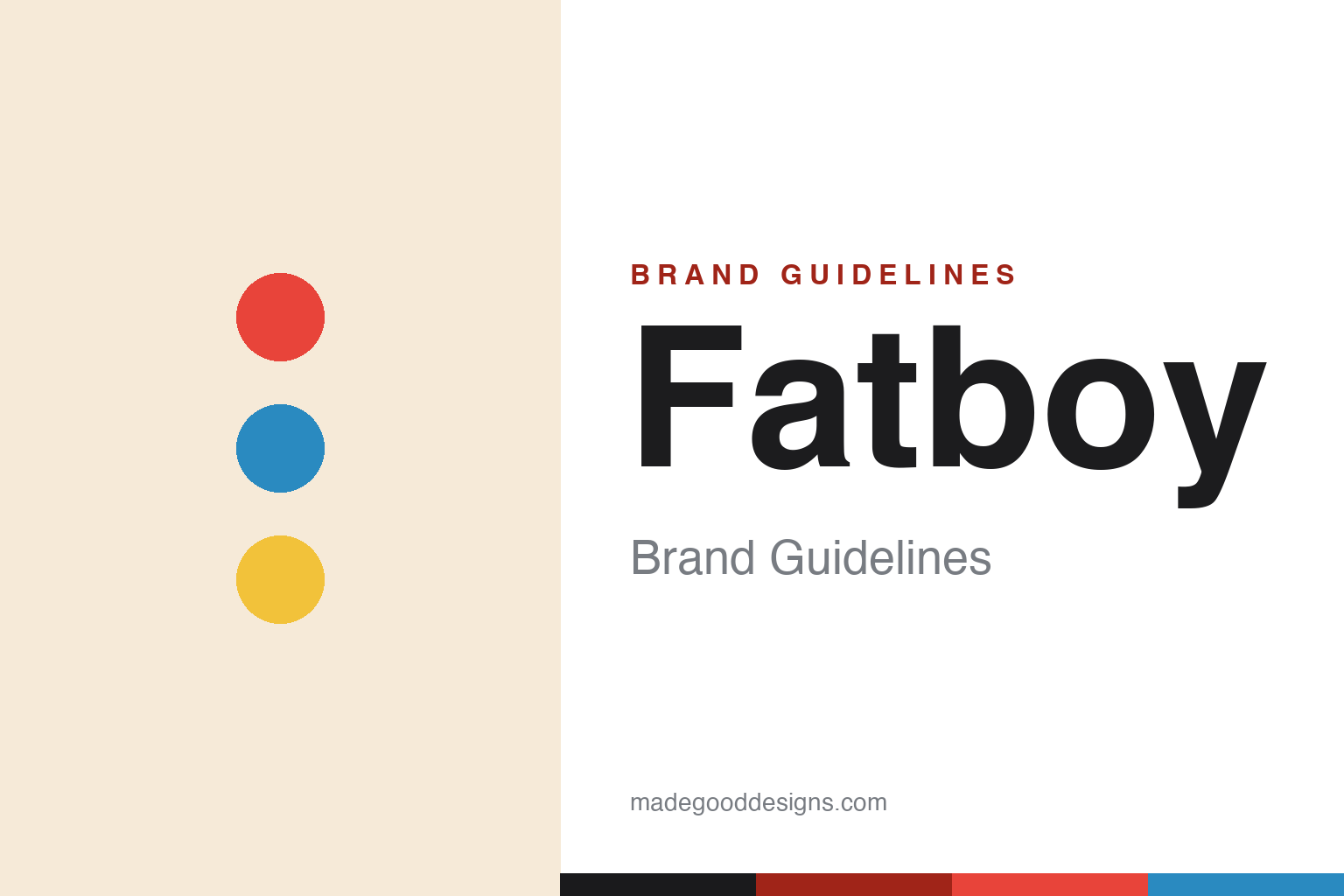
Fatboy lives in bright, playful colour. Click a swatch to copy the hex.
Fatboy’s identity is its bright, playful, multi-colour palette — bold reds, blues, greens, yellows, oranges and pinks, in cheerful, high-energy combinations. The colour is deliberately fun and casual — the opposite of serious, restrained design — matching a brand whose whole ethos is “design with a wink”: playful, relaxed, don’t-take-it-too-seriously lounging. The bright palette makes the oversized beanbags and loungers feel joyful and inviting, objects you flop onto rather than admire from afar. The honest caveat: Fatboy publishes no official brand hex, so the bright red, blue and yellow here are an original, unofficial interpretation of its playful spirit, not first-party values.
The lesson is bright, playful colour signals casual, fun design. Fatboy’s multi-colour world reads as joyful and relaxed. For designers, it’s a reminder that bold, cheerful colour can express casualness and fun. The takeaways: use bright, playful colour for casual, un-serious design; keep the energy high; and treat specific hexes as unofficial when there’s no published spec.
Typography
The wordmark is a playful rounded display — casual and fun.
Fatboy’s identity carries a casual, playful, fun spirit — the lowercase “fatboy” wordmark whose warm, rounded letterforms read as friendly, relaxed and unpretentious. A playful rounded display captures the mood: it’s fun and casual, matching a brand built on oversized beanbags, bright colour and a wink. Set against a bright, playful palette, the type feels casual and fun — exactly the “design with a wink” personality Fatboy cultivates. It’s rounded and playful rather than serious or refined, mirroring the relaxed, huggable products. Because the exact wordmark face isn’t publicly documented, the honest description is “a playful rounded display spirit,” not a named font. The type behaves like the brand: casual, playful and fun.
Aa
A playful rounded display spirit — casual and fun. (Specimen set in Grandstander, a playful rounded display in the spirit of the Fatboy identity; the real face is undocumented.)
Fun as the difference
Fatboy didn’t take itself seriously.
Fatboy is a lesson in fun and casualness as a differentiator. In a design world that often prizes seriousness, restraint and “good taste,” Fatboy went the other way: deliberately playful, colourful, casual, relaxed — “design with a wink.” The oversized Original beanbag isn’t trying to be a status object; it’s trying to be the most fun, comfortable, un-precious thing in the room, and that lack of pretension is exactly the appeal. That casual, joyful identity is the whole differentiator — Fatboy owns “relaxed fun” in a category full of serious furniture — and it extends naturally into clever, delightful products like the pump-free Lamzac (a genuinely smart bit of design wrapped in playfulness). By refusing to be too serious, Fatboy made itself approachable, memorable and lovable. The lesson is that embracing fun, casualness and a sense of humour — while still delivering real design cleverness (the Lamzac) and quality — can differentiate a brand in a category that takes itself very seriously. Don’t be precious; be fun. A wink beats a frown.
For designers and brand-builders, Fatboy offers a clear takeaway: fun and casualness can differentiate in a serious category. The lessons: embrace playfulness and a wink (the oversized, colourful beanbag); back the fun with real design cleverness (the pump-free Lamzac); and keep it un-precious and approachable. It’s also a reminder to keep the facts precise — the Fatboy Original was designed by Jukka Setälä, commercialised by a Dutch entrepreneur in the early 2000s, is a nylon beanbag, and the Lamzac (by Marijn Oomen) inflates with no pump. Fatboy didn’t take itself seriously — proof that fun can be the difference.
Explore & save
Keep Fatboy’s identity on hand — save it to a board in the Made Good inspiration library.
Fatboy identity set
Pin the playful palette and the rounded-display spirit to your own board.