Fornasetti Brand Guidelines
The candle of a surreal Milanese atelier.
Aa
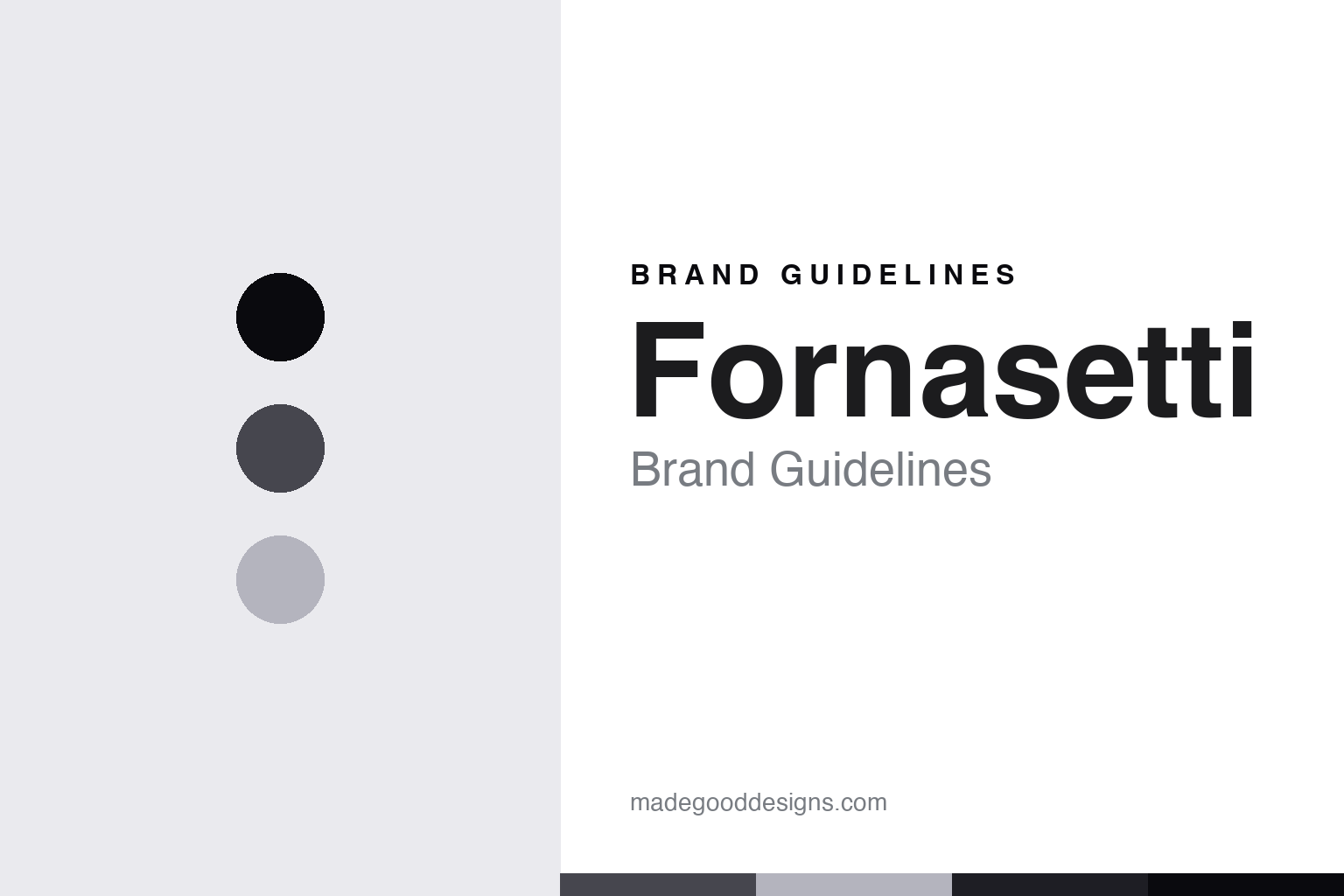
Two constants: an atelier-charcoal palette and an atelier-sans register. Abstract homage — no Fornasetti artwork, face or motif reproduced.
The candle of a surreal Milanese atelier
Fornasetti is the Milan design atelier of Piero and Barnaba Fornasetti — and its scented candles.
Fornasetti brings the round a design house made scent — the Milan atelier founded by the artist Piero Fornasetti and continued by his son Barnaba, whose scented candles carry the studio’s surreal imagery. Fornasetti makes scented candles and home fragrance, and its answer to a round about the second flame is an atelier’s art: a candle from a design house, in a decorated vessel, that treats the object as a canvas. A brand, surreal.
Its identity is the candle of a surreal Milanese atelier. Fornasetti’s scented candles, its Milan atelier and its decorated vessels are the story here. A brand, surreal. The candle of a surreal Milanese atelier.
(Honest notes, so the story stays precise, and the artwork is theirs. Fornasetti, at fornasetti.com, makes home fragrance, including scented candles, room mist and an extrait de parfum, as a modern extension of the historic design house, and the fragrance line is widely reported to have launched around 2010, which we frame as the early twenty-tens rather than a hard year, and we mention a well-known scent softly rather than asserting a flagship. It was founded by Piero Fornasetti, who lived from 1913 to 1988, based in Milan, and the atelier is continued by his son Barnaba Fornasetti as creative director. On where it is made, a theme of this round, Milan is the atelier’s home, and we say Milan-based rather than assert a made-in-Italy label on the wax. On ownership, it is a family-run, independent atelier led by Barnaba Fornasetti. On its motif, its defining, iconic element is the repeated face of Lina Cavalieri, an early-twentieth-century Italian opera singer, reworked into the Tema e Variazioni series of hundreds of variations, alongside surrealist black-and-white imagery; Lina Cavalieri was a real person, whom we reference in words only, respectfully. That artwork is Fornasetti’s IP, so we reproduce none of it, no face, no motif, no vessel design; there is no official brand hex; these tones are an unofficial interpretation.)
Colour
Fornasetti lives in an atelier charcoal. Click a swatch to copy the hex.
Fornasetti’s identity is surreal, Milanese and monochrome — an atelier charcoal, an ink, a grey, a deep charcoal, and a paper. The palette leans atelier charcoal and grey: a monochrome register that nods to the studio’s black-and-white world rather than a loud palette, and it stays abstract, with none of the house’s imagery. It signals a design-house candle. The honest caveat: with no published brand hex, these values are an original, unofficial interpretation, not first-party colours, and they carry no Fornasetti artwork.
The lesson is an atelier charcoal signals a surreal, monochrome identity. Fornasetti’s world is a made, decorated object. For designers, it is a reminder that an atelier charcoal and a soft grey can carry a candle brand — the mood of a black-and-white studio, without borrowing its pictures. Because these tones can fail as small text, keep type dark and let the colour live in the accents, palette and band. The takeaways: make the object a canvas; continue an atelier; protect the artwork; and treat any single hex as unofficial.
Typography
The register is an atelier sans — surreal, monochrome, considered.
Fornasetti’s identity carries a surreal, monochrome, considered spirit — a design-house candle, not a fashion. An atelier sans captures the mood: clean, graphic and confident, the register of a Milan studio. Set in an atelier-charcoal palette, the atelier sans feels surreal and monochrome — exactly the personality Fornasetti carries, held here as plain type with no borrowed imagery. It is an atelier rather than a logo, mirroring wax and ceramic. (Fornasetti’s real artwork and vessels are things we describe but do not reproduce, and the exact typeface is not ours to use.) Because it is not ours to use, the honest description is “an atelier-sans candle,” shown here in a stand-in. The type behaves like the brand: surreal, monochrome and considered.
Aa
An atelier-sans candle — surreal and monochrome. (Specimen set in Space Grotesk, an atelier-sans STAND-IN; NOT the Fornasetti logo or any Fornasetti motif.)
The second flame
Fornasetti stands for the candle of a surreal Milanese atelier.
Fornasetti brings the round a design house made scent. An atelier-charcoal palette, an atelier sans and a decorated vessel make one thing — the candle of a surreal Milanese atelier — the whole identity: surreal, Milanese and monochrome. The atelier’s art is the substance, and the candle is the object it decorates. The point is a candle from a design house, that treats the vessel as a canvas.
Put to work, the identity is an atelier told straight, as design. A maker in this spirit would make the object a canvas, continue an atelier, and protect the artwork. A reader in this spirit would keep the facts right: Fornasetti makes scented candles, room mist and an extrait de parfum, a modern extension of the design house; it was founded by Piero Fornasetti, who lived from 1913 to 1988, and is continued by his son Barnaba in Milan; the fragrance line launched around 2010; its defining motif is the repeated face of the opera singer Lina Cavalieri, in the Tema e Variazioni series; and it is a family-run, independent atelier. Fornasetti sits in the round’s heritage thread with Carrière Frères and Maison Louis Marie, and it is the design-house entry, its vessel the clearest case of the object as a canvas. The honest editorial moves are to say around 2010, to name Piero and Barnaba, to reference Lina Cavalieri in words only, and to reproduce none of the artwork. The lesson Fornasetti teaches is that an atelier’s art can be a whole identity, and protecting that artwork keeps it credible.
For designers and brand-builders, Fornasetti continues the second flame: make the object a canvas — and protect the artwork. The lessons: turn a product into a surface for art; continue a founder’s atelier across generations; treat a signature motif as protected IP, describing not reproducing it; reference a real historical person respectfully, in words; and never copy a face, a motif or a vessel. It is also a reminder to stay precise: Fornasetti is the Milan design atelier of Piero and Barnaba Fornasetti, and its scented candles — with the palette here an unofficial interpretation carrying no Fornasetti imagery. Read that way, Fornasetti is less a candle than an atelier: a design house in scent. The lesson for a brand is that an atelier and protected artwork reinforce each other, and reproducing none of it keeps the story earned. Fornasetti made the-candle-of-a-surreal-Milanese-atelier the identity — proof that an atelier can define a brand.
Explore & save
Keep Fornasetti’s identity on hand — save it to a board in the Made Good inspiration library.
Fornasetti identity set
Pin the atelier-charcoal palette and the atelier-sans register to your own board.