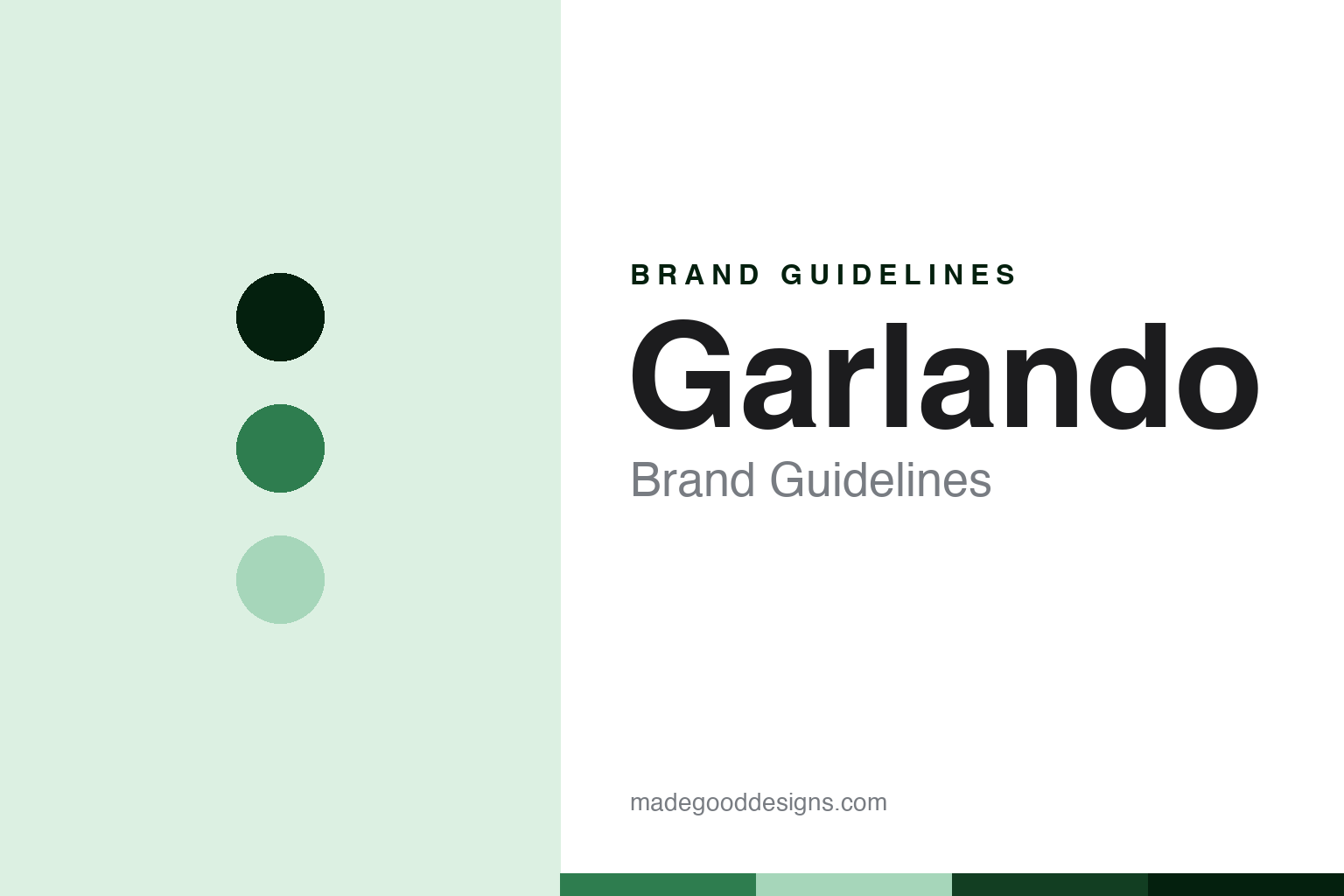
Garlando Brand Guidelines
Italy’s family calcio-balilla maker.
Aa
Two constants: a Garlando-green palette and a balilla-sans register. Abstract homage — not a Garlando product or mark; no table, player or logo is reproduced.
Italy’s family calcio-balilla maker
Garlando is the 1954 Piedmont firm (Giuseppe Garlando), one of the five official ITSF tables and the exclusive Italian distributor of Stiga table tennis, still family-owned and made in Italy.
Garlando follows Bonzini as the round’s Italian-family node — the calcio-balilla maker that is one of the world’s five official tables and still run by its founding family. Its answer to a round about who owns the foosball table is the national one: Italy’s family calcio-balilla maker.
Its identity is Italy’s family calcio-balilla maker. The 1954 founding, the ITSF-official status and the Garlando family are the story here. The Italian table. Italy’s family calcio-balilla maker.
(Honest notes, so the founding, the ownership, a distinction and the status are framed accurately. Garlando sells calcio-balilla tables as its heroes; we report its language as the brand’s own. On founding: Garlando was officially established in 1954 in Pozzolo Formigaro, in the province of Alessandria in Piedmont, with roots in a family carpentry workshop under grandfather Giovanni Garlando, the foosball concept arriving via Marcel Zosso of Marseille in 1949 and the family’s first biliardino in 1950. On ownership: it is still family-owned, the legal entity Garlando S.p.A., its current head Giuseppe Garlando, with no parent group on record. On a distinction: its tie to Stiga is a distribution agreement, an exclusive Stiga table-tennis distributorship since 2008, not ownership of Stiga. On the status: it is one of the five official ITSF tables, alongside Bonzini, Roberto Sport, Tornado and Leonhart. On the products: foosball for home, bar and competition, Stiga-distributed table tennis, billiards and air hockey, made in Italy at Pozzolo Formigaro. Its designs and the Garlando name are IP we describe but do not reproduce; there is no official brand hex; these tones are an unofficial interpretation.)
Colour
Garlando lives in a Garlando green. Click a swatch to copy the hex.
Garlando’s identity is Italian, family and ITSF-official — a Garlando green, an ink, a pale green, a deep forest, and a paper. The palette leans Garlando green and deep forest: a clean, considered register that stands in for an Italian family maker rather than a loud logo colour. It signals Italy’s family calcio-balilla maker — Italian, family and ITSF-official. The honest caveat: with no official brand hex, these values are a considered, unofficial interpretation, not first-party colours.
The lesson is a Garlando green signals an Italian, family identity. Garlando’s world is the Italian games hall and the official table. For designers, it is a reminder that a clean green and a pale green can carry an Italian, family brand — a considered tone held as an accent, not a product shot. Because a mid hue can fail as small text, keep type dark and let the colour live in the accents, palette and band. The takeaways: date the founding to 1954 and name Giuseppe Garlando; keep the ownership family; separate the Stiga distribution from ownership; and name the ITSF-official status.
Typography
The register is a balilla sans — Italian, family, ITSF-official.
Garlando’s identity carries an Italian, family spirit — a national maker of the official table. A balilla sans captures the mood: clean, orderly and warm, the register of a family firm. Set in a Garlando-green palette, the balilla sans feels dependable and grounded — exactly the personality Garlando carries. It behaves like a made, tooled thing rather than a loud logo, mirroring a player-dot and a pitch-band. (Garlando’s real products and the name are things we describe but do not reproduce, and the exact typeface is not ours to use.) Because it is not ours to use, the honest description is “a balilla-sans brand,” shown here in a stand-in. The type behaves like the brand: Italian, family and ITSF-official.
Aa
A balilla-sans brand — dependable and grounded. (Specimen set in Archivo, a balilla-sans STAND-IN; NOT the Garlando logo or products.)
The foosball node
Garlando stands for Italy’s family calcio-balilla maker.
Garlando sits third in the round as its Italian-family node. A Garlando-green palette, a balilla sans and a 1954 founding make one thing — Italy’s family calcio-balilla maker — the whole identity: Italian, family and ITSF-official. The 1954 founding is the pitch, the ITSF-official status is the substance, and the Garlando family is the frame. The point is a national family maker of an official table, in a round about who owns the foosball table.
Put to work, the identity is the brand told straight, the family named and the Stiga distinction drawn. A brand in this spirit would date the founding to 1954 and name Giuseppe Garlando, keep the ownership family, separate the Stiga distribution from ownership, and name the ITSF-official status. A reader in this spirit would keep the facts right: Garlando makes calcio-balilla; it dates to 1954; it is family-owned; and its Stiga tie is distribution, not ownership. Garlando sits after Bonzini and before René Pierre. The honest editorial moves are to date the founding, to name the family, to draw the Stiga distinction, and to name the status.
For designers and brand-builders, Garlando carries the foosball node: distinguish distributing a brand from owning it. The lessons: a national maker can distribute another company’s products without owning them, here Garlando and Stiga; a founding is dated to 1954 in Pozzolo Formigaro, Alessandria, with roots under grandfather Giovanni Garlando, the game arriving via Marcel Zosso of Marseille in 1949 and the first biliardino in 1950; an ownership is kept, still family-owned as Garlando S.p.A. under Giuseppe Garlando, no parent group on record; a distinction is drawn, that its Stiga tie is an exclusive table-tennis distributorship since 2008, not ownership; and a status is named, one of the five official ITSF tables, with foosball, Stiga-distributed table tennis, billiards and air hockey made in Italy. It is also a reminder to stay precise: Garlando is the family-owned Italian calcio-balilla maker of the foosball aisle — with the palette here an unofficial interpretation, and the Stiga tie kept a distributorship. The hook is that standing: Garlando is Italy’s family calcio-balilla maker, the 1954 Piedmont firm under Giuseppe Garlando, one of the five official ITSF tables and the exclusive Italian distributor of Stiga table tennis, still family-owned and made in Italy. Read that way, Garlando is less a single table than Italy’s family calcio-balilla maker: Italian, family, ITSF-official. The lesson for a brand is that distinguishing distributing a brand from owning it reinforces the honesty, and dating the founding keeps it earned. Garlando made Italy’s-family-calcio-balilla-maker the identity — proof that a national family maker can anchor a node.
Explore & save
Keep Garlando’s identity on hand — save it to a board in the Made Good inspiration library.
Garlando identity set
Pin the Garlando-green palette and the balilla-sans register to your own board.