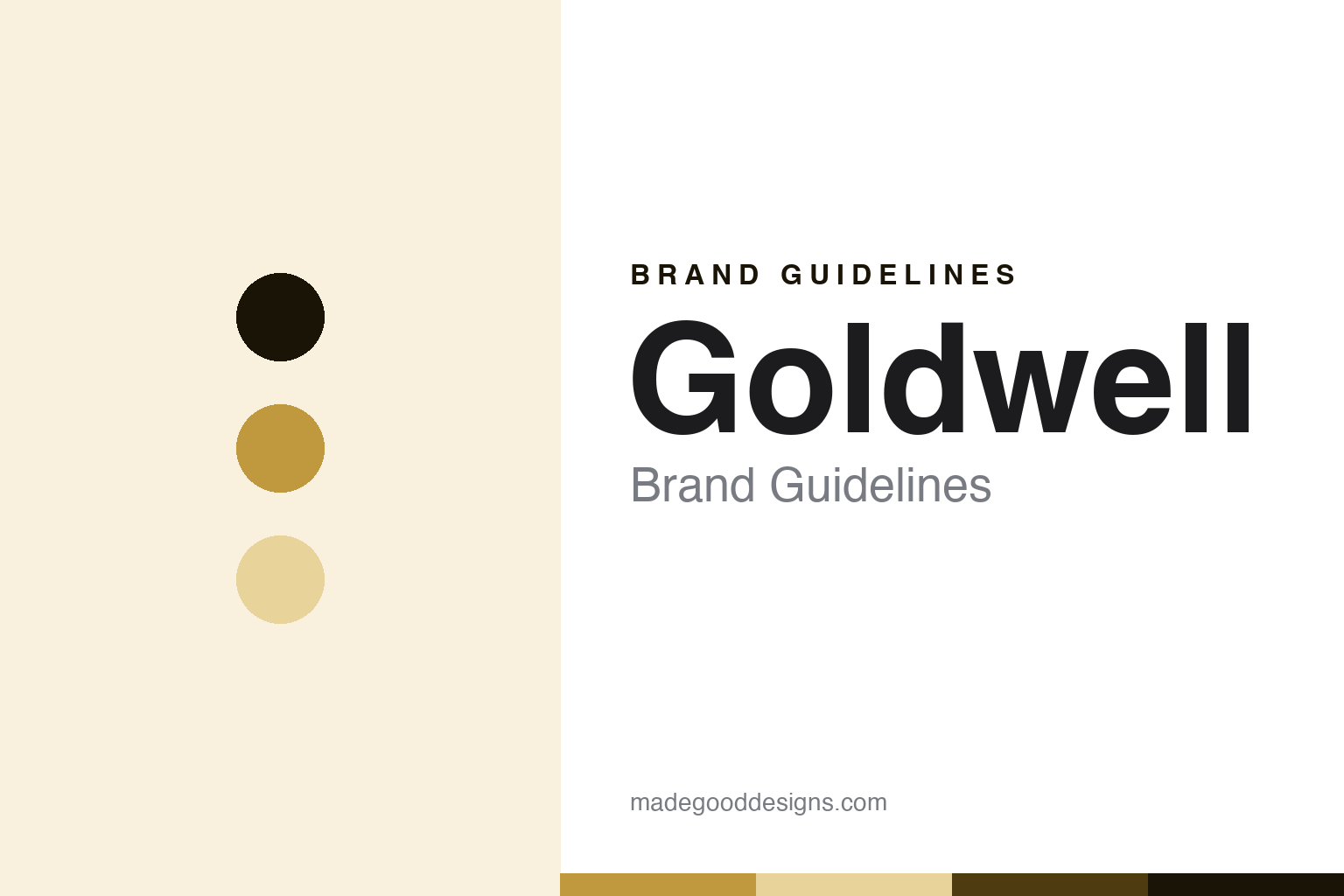
Goldwell Brand Guidelines
The salon-only German colour house owned by Kao.
Aa
Two constants: a gold palette and a salon-colour-sans register. Abstract homage — not a Goldwell product or mark.
The salon-only German colour house owned by Kao
Goldwell is the salon-only German professional colour house, owned by Kao.
Goldwell closes the salon round — and the deepest tier of the haircare vein — as a salon-only German colour house: the professional brand founded in 1948, distributed only through salons, and owned by the Japanese group Kao. Goldwell makes salon colour and care, and its answer to a round about the salon brands is discipline: a strictly professional range, kept to the salon channel, with a long German colour heritage. A brand, professional.
Its identity is the salon-only German colour house owned by Kao. Goldwell’s salon-only model, its German heritage and its Kao ownership are the story here. A brand, professional. The salon-only German colour house owned by Kao.
(Honest notes, so the story stays precise, and the claims stay the brand’s own. Goldwell, at goldwell.com, makes professional salon colour and care — permanent colour, care systems, styling and a premium line — with lines such as Topchic and Elumen in colour, Dualsenses in care and Kerasilk as its premium range, and we report its colour, bond and biomimetic language as the brand’s own marketing, not established fact. It was founded in 1948 by Erhard Schäfer in Germany, a colour-and-care house built for hairdressers. On where it is made, a theme of this round, a specific country of manufacture is not clearly documented, so we credit the German heritage without asserting a blanket made-in-Germany claim. On ownership, a star theme of this round, it is owned by Kao, within its professional-hair division, which acquired Goldwell’s parent, and which also owns a brand from an earlier round. Its name, its line names and its packaging are IP we describe but do not reproduce; there is no official brand hex; these tones are an unofficial interpretation.)
Colour
Goldwell lives in a gold. Click a swatch to copy the hex.
Goldwell’s identity is professional, colour and warm — a gold, an ink, a wheat, a deep bronze, and a paper. The palette leans gold and wheat: a warm register that nods, gently, to the “gold” in the name and to a professional colour house rather than a loud palette. It signals salon colour. The honest caveat: with no published brand hex, these values are an original, unofficial interpretation, not first-party colours.
The lesson is a gold signals a professional, colour identity. Goldwell’s world is a professional, made object. For designers, it is a reminder that a gold and a soft wheat can carry a salon colour house — the tone of the name itself. Because these tones can fail as small text, keep type dark and let the colour live in the accents, palette and band. The takeaways: keep it salon-only; carry the colour; report claims as marketing; and treat any single hex as unofficial.
Typography
The register is a salon-colour sans — professional, plain, warm.
Goldwell’s identity carries a professional, plain, warm spirit — a colour house, not a fashion. A salon-colour sans captures the mood: clean, professional and confident, the register of a salon-only brand. Set in a gold palette, the salon-colour sans feels professional and warm — exactly the personality Goldwell carries. It is a discipline rather than a logo, mirroring a colour and a silk. (Goldwell’s real packaging is a thing we describe but do not reproduce, and the exact typeface is not ours to use.) Because it is not ours to use, the honest description is “a salon-colour-sans haircare,” shown here in a stand-in. The type behaves like the brand: professional, plain and warm.
Aa
A salon-colour-sans haircare — professional and warm. (Specimen set in Mulish, a salon-colour-sans STAND-IN; NOT the Goldwell logo.)
The salon brands
Goldwell stands for the salon-only German colour house owned by Kao.
Goldwell closes the salon round — and the deepest tier of the haircare vein. A gold palette, a salon-colour sans and a salon-only discipline make one thing — the salon-only German colour house owned by Kao — the whole identity: professional, colour and warm. The salon-only model is the discipline, and Kao is the owner. The point is a strictly professional colour house, kept to the salon channel, inside a Japanese group.
Put to work, the identity is a salon-only discipline told straight, as design — with the ownership stated and the making credited honestly. A maker in this spirit would keep it salon-only, carry the colour, and report claims as marketing. A reader in this spirit would keep the facts right: Goldwell makes professional salon colour and care, its Topchic, Dualsenses and Kerasilk the heroes; it was founded in 1948 by Erhard Schäfer in Germany; a specific country of manufacture is not clearly documented, so the German heritage is credited without a blanket made-in claim; and it is owned by Kao, within its professional-hair division, the same group that owns a brand from an earlier round. Goldwell joins Wella on the round’s colour-house and German thread, and closes the conglomerate side of the who-owns thread. The honest editorial moves are to date it to 1948, to keep the making credited to German heritage without a blanket claim, and to state the Kao ownership. The lesson Goldwell teaches is that a salon-only discipline and a colour heritage can define a brand, and stating the ownership keeps it credible.
For designers and brand-builders, Goldwell closes the salon brands: keep it salon-only — and carry the colour. The lessons: hold a brand to a professional channel; build on a colour heritage; report colour and biomimetic language as your own; state a conglomerate ownership plainly; and never reproduce packaging. It is also a reminder to stay precise: Goldwell is the salon-only German professional colour house, owned by Kao — with the palette here an unofficial interpretation. Read that way, Goldwell is less a bottle than a discipline: colour, kept to the salon, closing the round. The lesson for a brand is that a discipline and honest ownership reinforce each other, and stating the Kao ownership keeps the story earned. Goldwell made the-salon-only-German-colour-house-owned-by-Kao the identity — proof that a discipline can close a round. And it closes the deepest tier of the haircare vein on the round’s clearest lesson, that the salon brands are, above all, a study in who owns them, and that the honest guide names the conglomerate every time.
Explore & save
Keep Goldwell’s identity on hand — save it to a board in the Made Good inspiration library.
Goldwell identity set
Pin the gold palette and the salon-colour-sans register to your own board.