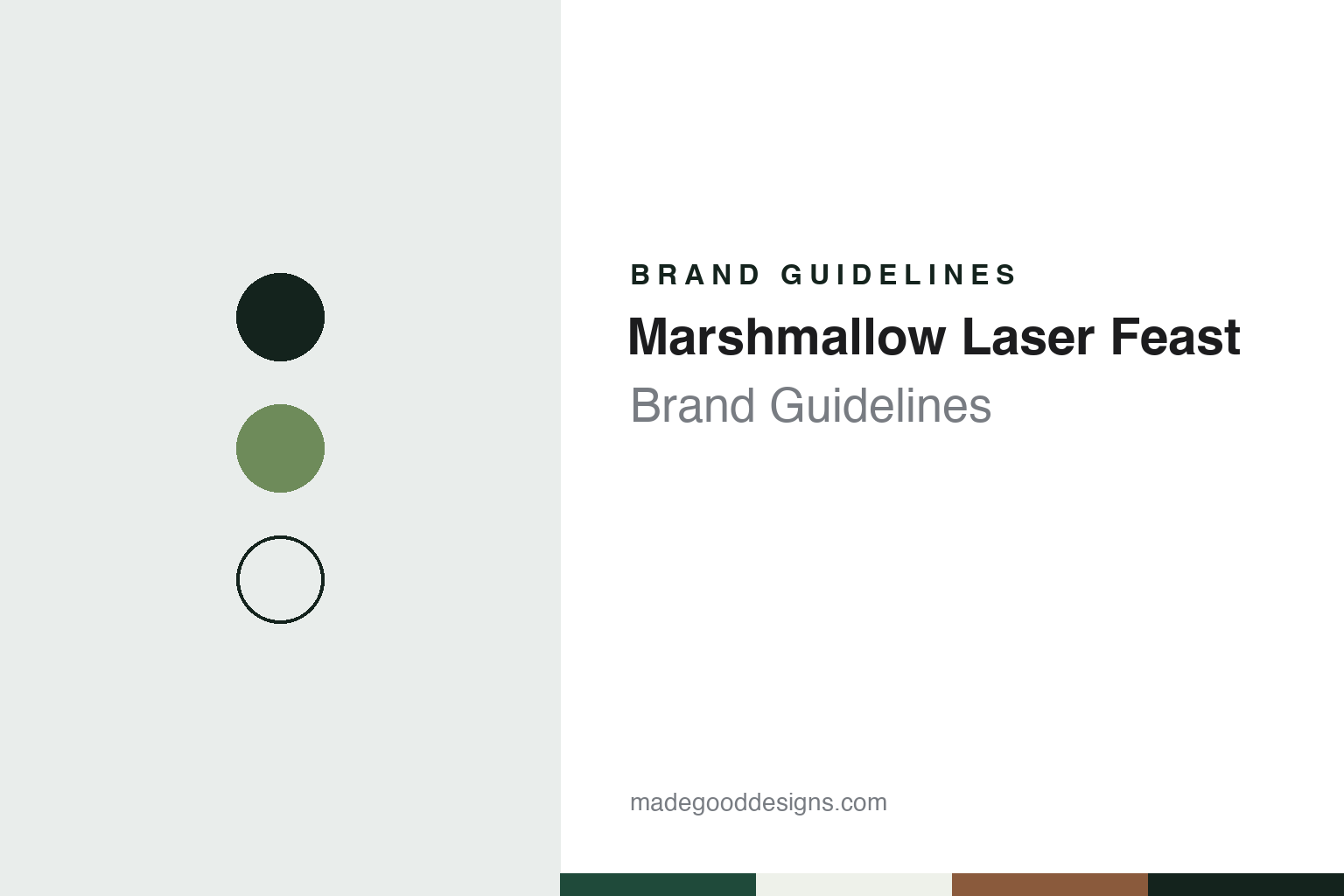
Gornergrat Bahn Brand Guidelines
Zermatt’s electric rack railway since 1898.
Aa
Two constants: a red, black, snow and steel palette and a railway grotesque register. Abstract homage — not a Gornergrat Bahn train, sign or mark; no logo or livery is reproduced.
Zermatt to the Gornergrat
A rack railway built in two years and electric from the start.
The Gornergratbahn is an electric rack railway that climbs from Zermatt to the Gornergrat ridge in the Monte Rosa area of the Valais, with views of Monte Rosa and the Matterhorn. German Wikipedia names its operator as the private Gornergrat Bahn AG, abbreviated GGB; the company spells its name Gornergrat Bahn, and that is the name used in this guide.
The line followed the railway to Zermatt itself. After the Visp–Zermatt railway opened in 1891, German Wikipedia says, there were plans for an excursion line into the Monte Rosa massif; early schemes looked at a funicular to the Schafberg and a rack line towards the Matterhorn, but the lead engineer developed a direct rack railway from Zermatt to the Gornergrat in 1895. The concession had been granted in 1892, building began in 1896, the first locomotive runs took place on 24 November 1897, and the line opened officially on 20 August 1898. In a 2023 interview published by the railway for its 125th anniversary, Fernando Lehner, then director of the Matterhorn Gotthard Bahn and BVZ Holding, pointed out that the line had been built in two years.
The engineering was settled from the outset. German Wikipedia says it was built to metre gauge with the Abt rack system and electrified with three-phase current from the start, so every track has two overhead wires and each motor vehicle two pantographs side by side. Power came from a hydroelectric plant at 40 Hz, and in 1930 the vehicles were converted to the 725-volt, 50 Hz three-phase supply still used, so that the line could draw power from the national grid. The same traction design feeds energy back into the grid on the way down, German Wikipedia says, and has done so since August 1898.
The line was extended by 310 metres in 1909 to bring the top station closer to the summit. Until 1928 trains ran only in summer. That year winter trains began, at first only as far as Riffelalp or Riffelboden; work on a 770-metre gallery on the Riffelbord section began in 1939 and, delayed by the Second World War, was completed in 1941, and since 1942 winter trains have been able to run to the top in good conditions. The railway also cut a depot tunnel in 1971, which Lehner said in the 2023 interview has room for 24 carriage units.
Colour
Stations, railcars and a gilded locomotive.
The route is short and steep. German Wikipedia says it starts beside the Matterhorn Gotthard Bahn station in Zermatt at 1,604 metres and climbs about nine kilometres at gradients of up to 200 per mille to the Gornergrat at 3,089 metres; Railway Gazette gave the length as 9.4 kilometres in April 2026. On the way the trains stop at Findelbach, Riffelalp at 2,211 metres, Riffelberg at 2,582 metres and Rotenboden, the start of the path to the Monte Rosa hut. At Riffelalp a short electric tramway, the Riffelalptram, has linked the station with the Riffelalp hotel since 1899; it was rebuilt and reopened in 2001, now running on batteries.
The rolling stock tells the railway’s history in generations. German Wikipedia lists the original He 2/2 locomotives of 1898, the Bhe 2/4 railcars introduced from 1947, which halved the journey time, articulated Bhe 4/8 units of 1965, 1975 and 1993, and Bhe 4/6 units of 2006. Older vehicles have been kept: locomotive 3003, retired in 2021, has stood on the Gornergrat covered in gold leaf as the “Golden Spot” since 20 August 2023, and railcar 3021 was overhauled in 2023 to run as the heritage “NostalChic” class for special and charter trains.
The newest trains carry the clearest design story. The railway says the Polaris double cogwheel motor-coaches were ordered from Stadler in a contract signed just before Christmas 2019, and that the interior and exterior design was given to the Italian studio Pininfarina. The name is an acronym for “POpular LAndscape Railway In Switzerland,” and follows the BVZ group’s habit of naming trains after astronomical terms, begun with the KOMET regional trains of the Matterhorn Gotthard Bahn in 2007. German Wikipedia says the Polaris units, numbered 3091 to 3095, entered scheduled service in September 2022.
Railway Gazette reported in April 2026 that the two-car, 34.6-metre units seat 120 and hold 100 standing passengers, with low-floor entrances and room for bicycles and winter sports equipment, and that Gornergrat Bahn had ordered one more unit in 2024 and a further four from Stadler in April 2026.
Typography
Railways and ropeways.
Mountain railways, funiculars and cable cars present themselves through a small set of public materials: the line’s name, the operator’s logo and the livery of its cabins and railcars, all as the operators publish them. Many lines carry the name of a summit or a station rather than the name of the company, so a single identity often has to cover a railway, a cableway, a restaurant and a viewing platform at once.
Much of that identity is met on the ground. Valley and summit stations, platform signs, timetables, tickets and souvenir graphics repeat the same names and colours, and railcars and cabins often appear in the operator’s own photography against snow, rock and sky. Station names and altitudes are a recurring part of that signage, as the operators print them.
Engineering is a large part of the story these companies tell. Operators and the sources cited in each guide name the rack systems, rope systems, builders and cabin makers behind a line, and the dates on which sections opened, were rebuilt or received new rolling stock. Owners and operators are described plainly here: a listed holding company, a long-established local company or a subsidiary of a larger transport group, with dates taken from dated sources.
Each guide in this series sets out what can be checked about one line: when it opened, who runs it, which renewals and new sections have followed and how its name and graphics appear today. History pages and line-renewal announcements from the operators are cited as company statements, and independent reporting is named where it is used. The palettes and typefaces shown are unofficial interpretations, not the operators’ own.
Aa
A railway grotesque — plain, upright, made for timetables. (Specimen set in Libre Franklin, a sans STAND-IN; NOT the Gornergrat Bahn logo.)
Gornergrat Bahn AG
From an independent company to part of BVZ Holding.
The company’s name has changed with its business. German Wikipedia says the original Société de chemin de fer du Gornergrat, or Gornergrat-Bahn-Gesellschaft, was renamed Gornergrat-Monte Rosa-Bahnen in 1997 to reflect the cableways it also ran on the Gornergrat. Once those cableways had been transferred to Zermatt Bergbahnen AG, the general meeting of 1 April 2005 voted to take back the name Gornergrat Bahn AG.
Ownership changed the same year. In May 2005, German Wikipedia says, BVZ Holding, the majority shareholder of the Matterhorn Gotthard Bahn, bought 44.3 percent of the share capital and made an offer to the other shareholders. A merger agreement followed in September 2005, and in October the railway was transferred to a wholly owned subsidiary of BVZ Holding, the former Furka-Oberalp-Tours AG, which took the name Gornergrat Bahn AG; the old company was removed from the commercial register on 20 October 2005. The railway’s own pages now describe it as part of the BVZ Group, and in April 2026 Railway Gazette quoted Egon Gsponer as the operator’s chief executive.
The company marked the railway’s 125th anniversary in 2023. In the interview published for the occasion, Lehner listed the NostalChic class and a new photo point on the Gornergrat among the anniversary additions, and quoted Mark Twain’s description of the view from 1878. The railway’s website today describes a ride “up to 3,100 meters” with views of the Matterhorn and the Gorner Glacier.
For a design guide, Gornergrat Bahn shows how a railway can present more than a century of engineering through its trains, from gilded locomotives to Pininfarina’s Polaris, while its stations name the climb stop by stop. Compare Zermatt, the resort where the line begins, and Jungfraubahn, another Swiss rack railway. For this guide we use a deep red, near-black, snow white and steel grey with a sans, an unofficial interpretation; no product or logo is reproduced.
Explore & save
Keep Gornergrat Bahn’s identity on hand — save it to a board in the Made Good inspiration library.
Gornergrat Bahn identity set
Pin the Gornergrat Bahn red, black, snow and steel palette and the railway grotesque register to your own board.
Source & notes
Frequently Asked Questions
What font can I use to match the Gornergrat Bahn look?
This guide describes Gornergrat Bahn’s type as “A railway grotesque — plain, upright, made for timetables”. Its type specimen is set in Libre Franklin from Google Fonts as a stand-in; Libre Franklin is not Gornergrat Bahn’s own lettering.
What colours are in the Gornergrat Bahn palette?
This guide’s Gornergrat Bahn palette is Railcar red #8C2A23, Gneiss black #1E1A18, Snowfield #F2EFEA, Rack steel #5E6B73 and Paper #F8F6F3. The tones are the guide’s own unofficial interpretation, not official Gornergrat Bahn hex codes.
When did Gornergrat Bahn open?
Gornergrat Bahn opened on 20 August 1898, in Zermatt, Switzerland.