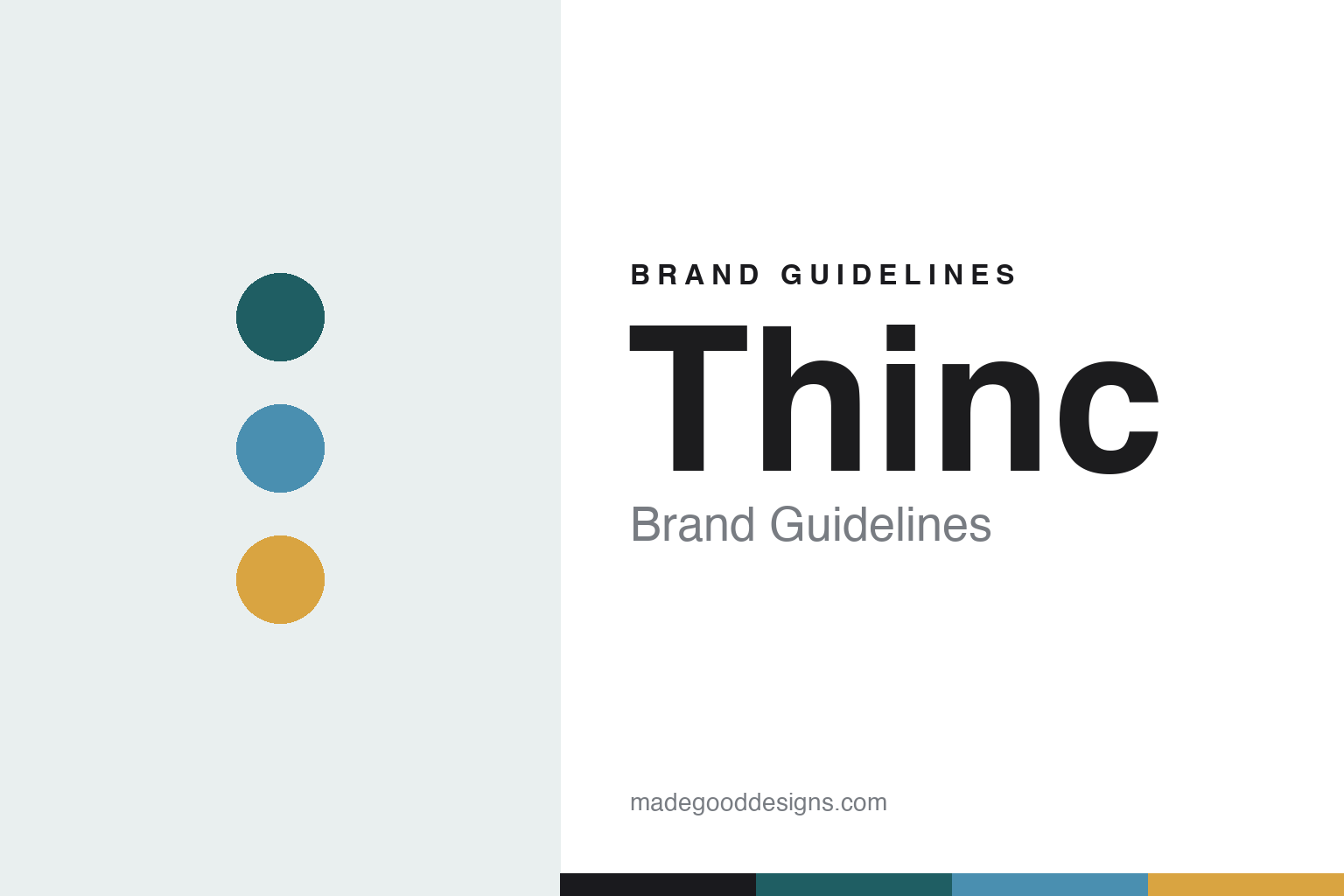
Thinc Brand Guidelines
A theatre designer’s studio for museums, aquariums and observatories.
Aa
Two constants: a theatre black, stage teal and footlight amber palette and a condensed sans register. Abstract homage — not a Thinc asset or mark; no logo, exhibit or building is reproduced.
From the stage
Lighting, scenery, then museums.
Thinc Design, which often signs its work simply as Thinc, is an exhibition and experience design studio in New York founded by Tom Hennes. The company says Hennes founded it in 1992 as an extension of his practice in theatre design. The magazine Architects + Artisans, profiling Hennes in December 2012, gave a slightly different account: by 1995, it said, he had founded Thinc Design in Manhattan and begun to build a staff of about 20 architects, designers, content developers and project managers, all with museum backgrounds.
Hennes came from the theatre, starting in lighting and then moving to scenery, the 2012 profile says. The Santa Fe Opera lists him as the scenic designer of its productions of Salome in 1995 and 1998. In the mid-1990s, according to Architects + Artisans, he moved into theme-park exhibition work for Disneyland, Nickelodeon and SeaWorld in Florida, where he made a manatee exhibit that he described as a virtual theatre that opened onto the real animals. Museum commissions followed, in the Netherlands and for BMW. He told the magazine that he had decided he liked museums rather than theatre, and spoke of the museum as a meeting place where knowledge and perspectives are exchanged between cultures, more a social medium than a showplace.
The company today describes a studio of designers, architects, storytellers, graphic designers, film-makers, engineers and technologists, with a team that grows and shrinks by project. It says that team has at times taken in architects such as Renzo Piano, Snøhetta and Grimshaw, as well as theme-park designers and specialist scientists. Thinc says it designs for art museums, science centres, aquaria, zoos and brand experiences, and that alongside a lab for augmented and virtual reality it does analogue work such as concept writing, master-planning, habitat design, storytelling, script-writing and project delivery. Its portfolio is sorted into aquariums and zoos, brand experiences, entertainment, expositions and museums.
Colour
A museum, a pavilion and an observatory.
Thinc’s museum work includes the National September 11 Memorial Museum in New York. Architects + Artisans reported in December 2012 that the museum was being developed by Thinc in collaboration with Local Projects, and its renderings of the project were credited to both studios. English Wikipedia records that the museum opened to the public on 21 May 2014. Thinc lists the museum in its portfolio as an exhibition design project.
For World Expo Milan 2015, Thinc designed the exhibition inside the USA Pavilion, titled “American Food 2.0: United to Feed the Planet.” Archinect, reporting the pavilion’s opening in May 2015, credited the building to the New York practice Biber Architects and the exhibition to Thinc Design. The open, barn-like structure carried a harvestable hydroponic vertical farm on its side and a series of food trucks, under the expo’s theme “Feeding the Planet, Energy for Life.” For Expo 2020 in Dubai, the company lists Terra, The Sustainability Pavilion in its portfolio.
The Empire State Building Observatory ran over several years. The design news site Dexigner reported on 26 August 2018 that Thinc had completed a new 34th Street guest entrance to the Empire State Building, an 18,000-square-foot entry experience and the opening phase of a reworked observatory. Thinc was the experience designer, the report said, working with Beneville Studios, IDEO and other consultants on digital media, lighting and fabrication. On 5 December 2019 Archinect reported the completion of the observatory project, announced by Thinc and Empire State Realty Trust. The 80th floor had become the opening viewing level, with interactive exhibits, lighting that changes with conditions outside, and virtual-reality binoculars that show augmented views of New York landmarks. Archinect quoted Hennes, as founding principal, describing a journey through the building’s past and present and its place in the popular imagination.
Typography
Studios, stories and the screens between.
Exhibition, museum and experience-design studios rarely sell a product with their name on it. What they publish instead is a body of work: galleries, visitor centres, pavilions and installations, each credited to the studio by the museum, the client or the trade press. A guide to their identity therefore starts with how they present that work, and with the names and wordmarks on their own websites.
Several of these practices are named after their founders or partners, and some shorten a longer name to initials: Ralph Appelbaum Associates calls itself RAA on its own site. Their websites show a wordmark, a project list and a few pages on the practice. Founders and partners appear in a professional role, as creative directors or principals, and team pages can list designers, content developers and model-makers alongside them, as Casson Mann’s does.
The project case study is the core format. A typical page names the client and the opening date, then shows the gallery graphics, wayfinding, display furniture, projections and interactive installations that make up the scheme; Casson Mann’s pages call this mix its scenography. Independent coverage, in titles such as Museums Journal, Blooloop and national newspapers, is the surest way to date and credit a project, because a single building can involve more than one design firm: English Wikipedia credits the conversion of the IKEA Museum in Älmhult to both WilkinsonEyre and Ralph Appelbaum Associates.
Corporate pages fill in the rest: office locations, practice history, renamings and, where it has happened, a change of ownership. This guide sets out what dated sources say about each studio, keeps company statements attributed, and leaves out awards and any claims about what an exhibition does for its visitors.
Aa
A tall condensed sans, like a stage title or a gallery header. (Specimen set in Barlow Condensed, a sans STAND-IN; NOT the Thinc logo.)
Thinc Design
Two names and a run of short verbs.
The studio uses two forms of its name. Its website, its press pages and the trade press most often say Thinc Design; news reports such as the 2018 Dexigner piece shorten it to Thinc, and the studio’s blog runs under the name Thinc Tanc. The firm remains in New York, where its site gives a single headquarters, and Archinect described Hennes as its founding principal in 2019.
Its home page is built on a run of short “We” phrases that cycle over project photographs: “We Think Big,” “We Listen,” “We Open Eyes,” “We Make Waves,” “We Tell Stories,” “We Make History.” The about page uses the same device for its section headings. The company says it starts each project with three questions, “Why you? Why here? Why now?”, before working with architects, engineers, curators and educators, and it describes itself as taking on both playful projects and difficult social subjects. Its news page collects coverage from newspapers and design magazines with the date of each article, and its project pages group work by client and city.
For a design guide, Thinc shows how a studio rooted in theatre can present itself through verbs and places rather than a logo: a short line of action, a client and a city for each project. Compare Local Projects, its New York collaborator on the September 11 museum, and Ralph Appelbaum Associates, another New York museum design firm. For this guide we use theatre black, a stage teal, a tank blue and a footlight amber with a condensed sans, an unofficial interpretation; no product or logo is reproduced.
Explore & save
Keep Thinc’s identity on hand — save it to a board in the Made Good inspiration library.
Thinc identity set
Pin the theatre black, stage teal and footlight amber palette and the condensed sans register to your own board.
Source & notes
Frequently Asked Questions
What font can I use to match the Thinc look?
This guide describes Thinc’s type as “A tall condensed sans, like a stage title or a gallery header”. Its type specimen is set in Barlow Condensed from Google Fonts as a stand-in; Barlow Condensed is not Thinc’s own lettering.
What colours are in the Thinc palette?
This guide’s Thinc palette is Theatre black #1A1A1E, Stage teal #1F5E63, Tank blue #4A8FB0, Footlight amber #D9A441 and Paper #F5F3EE. The tones are the guide’s own unofficial interpretation, not official Thinc hex codes.
When was Thinc founded?
Thinc was founded in 1992 (company); by 1995 (2012 profile), in New York, United States.
Who founded Thinc?
Thinc was founded by Tom Hennes in 1992 (company); by 1995 (2012 profile).