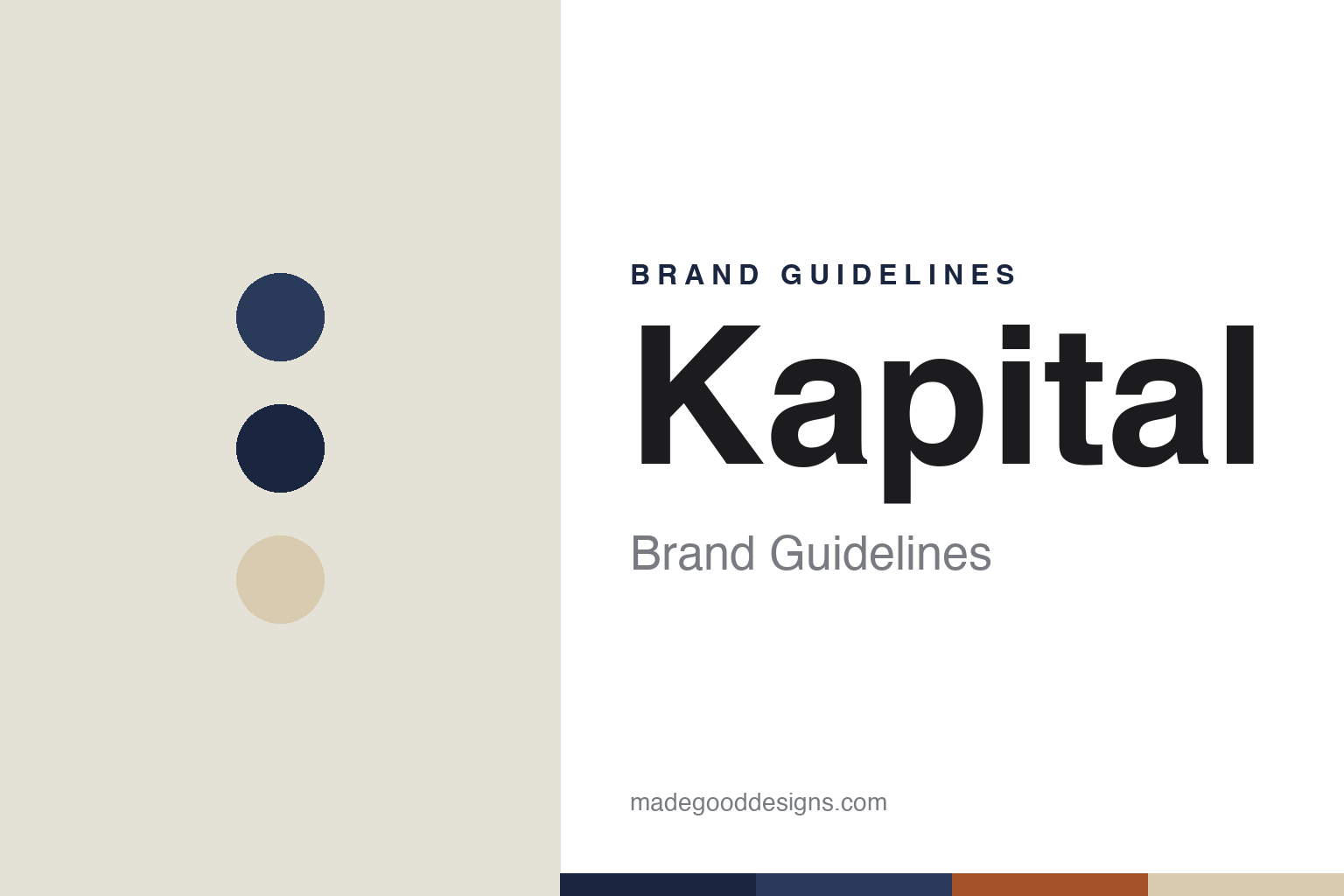
Kapital Brand Guidelines
Boro patchwork, sashiko stitching and indigo — eccentric Japanese Americana from Japan’s denim capital.
Aa
Two constants: an indigo-and-ecru palette and a craft slab. Abstract homage — not the Kapital wordmark.
From Japan’s denim capital
Kapital turns craft into eccentric fashion.
Kapital is a lesson in traditional craft reimagined as fashion. It was founded in March 1985 by Toshikiyo Hirata in Kojima — a district of Kurashiki, in Okayama Prefecture — which is famous as Japan’s “denim capital,” the birthplace of Japan’s domestic jeans industry. The name references Kojima, the denim capital (a popular retelling splits it into “Ka” from Kojima plus “capital”). (Two honest corrections: it’s not a Karl Marx “Das Kapital” reference; and it’s Kojima in Kurashiki — not “Okawa,” a different city. Caveats: no official brand hex is published, and the wordmark typeface is undocumented.)
Kapital became a cult name for its artisanal, eccentric Japanese take on Americana and workwear, built on genuine traditional textile craft: boro (a centuries-old folk tradition of patching and mending worn indigo textiles), sashiko running-stitch reinforcement, natural indigo dyeing, and heavy distressing, mending and appliqué on vintage-inspired denim. The most heavily hand-processed pieces come from its “Kountry” sub-line. Founder Toshikiyo Hirata (who died in 2024) built the house; his son Kiro Hirata, who joined in 2002, is the creative director.
Part of Kapital’s cult status is its famously eccentric lookbooks/catalogs — surreal, narrative, styled in unexpected real-world settings — collector items in their own right and a big driver of the brand’s following. The identity is craft-rich: a “Kapital” wordmark, an indigo-and-ecru world of denim blue and natural tones. (An honest, current note: in 2024 the private-equity firm L Catterton — associated with LVMH — acquired a majority stake, though Kiro Hirata remains creative director, so the “independent family-run” framing is now outdated.) Boro, indigo, and Japan’s denim capital.
Colour
Kapital lives in indigo and ecru. Click a swatch to copy the hex.
Kapital’s identity is built on indigo — the deep blue of denim and natural indigo dyeing — with warm ecru/natural tones and a rust accent. The indigo reads as authentic, crafted and rooted — the colour of Japan’s denim capital and of the boro and sashiko textile traditions Kapital elevates — while the ecru and natural tones add a handmade, folk-craft warmth. It’s a rich, earthy scheme that signals genuine craft and heritage rather than flash, tying the brand’s look straight to its indigo-dyeing, patchwork and mending practices. The indigo is the craft. The honest caveat: Kapital publishes no official brand hex — the indigo, ecru and rust here are observed approximations, not first-party values.
The lesson is let genuine craft define the palette. Kapital’s indigo-and-ecru comes straight from its denim, boro and indigo-dyeing traditions. For designers, it’s a reminder that a palette rooted in real materials and craft signals authenticity. The takeaways: draw the palette from genuine craft and materials (indigo, natural tones); let the heritage techniques be the story (boro, sashiko); and treat specific hexes as approximate when no official spec is published.
Typography
The wordmark is a craft slab — earthy and characterful.
Kapital’s identity carries a craft, slab-serif spirit — earthy, characterful and vintage-workwear in feel. The sturdy, warm letterforms read as handmade, heritage and folk-craft, matching a brand built on boro, sashiko and indigo denim, and the character suits its eccentric, collectible, hand-processed pieces. Set in indigo-and-ecru, the type feels rooted and artisanal — exactly the Japanese-Americana, craft-first personality Kapital cultivates. It’s warm and characterful rather than slick, mirroring the patched, mended, hand-dyed garments and the surreal catalogs. Because the exact face is undocumented, the honest description is “a craft slab spirit,” not a named font. The type behaves like the brand: earthy, characterful and craft-rich.
Aa
A craft slab spirit — earthy and characterful. (Specimen set in Josefin Slab, a vintage-flavoured slab serif in the craft spirit of the Kapital identity; the real face is undocumented.)
Craft as the brand
Kapital elevates folk tradition.
Kapital is a lesson in elevating traditional craft into a cult brand. It took boro — a poverty-era, make-do-and-mend folk tradition of patching worn indigo textiles — and sashiko stitching, and reframed them as high-craft, collectible fashion, rooted in the authentic heritage of Kojima, Japan’s denim capital. That genuine craft is the brand: each heavily hand-processed piece (especially the “Kountry” line) carries real technique and history, giving Kapital an authenticity impossible to fake, and its surreal, narrative catalogs turn that craft into cult desirability. It’s proof that reviving and elevating genuine traditional craft — with real skill, heritage and a distinctive creative voice — can build a devoted, global following, even at high prices. The craft is both the substance and the story. (And when a brand’s craft is this real, even new investment, like L Catterton’s 2024 stake, is a bet on that authenticity.) Elevate the craft, and it becomes the brand.
For designers and brand-builders, Kapital offers a clear takeaway: reviving and elevating genuine traditional craft can build an authentic, cult brand. The lessons: root the brand in real heritage and technique (boro, sashiko, indigo, Kojima); make the craft both substance and story (the hand-processed “Kountry” pieces, the eccentric catalogs); and let a craft-rich identity carry it. It’s also a reminder to keep the facts precise — Kapital was founded in 1985 by Toshikiyo Hirata in Kojima (Japan’s denim capital), is known for boro/sashiko craft and indigo denim, is now led creatively by Kiro Hirata, and had a majority stake acquired by L Catterton in 2024. Kapital elevates folk tradition — proof that genuine craft can be a brand.
Explore & save
Keep Kapital’s identity on hand — save it to a board in the Made Good inspiration library.
Kapital identity set
Pin the indigo-and-ecru palette and the craft-slab spirit to your own board.