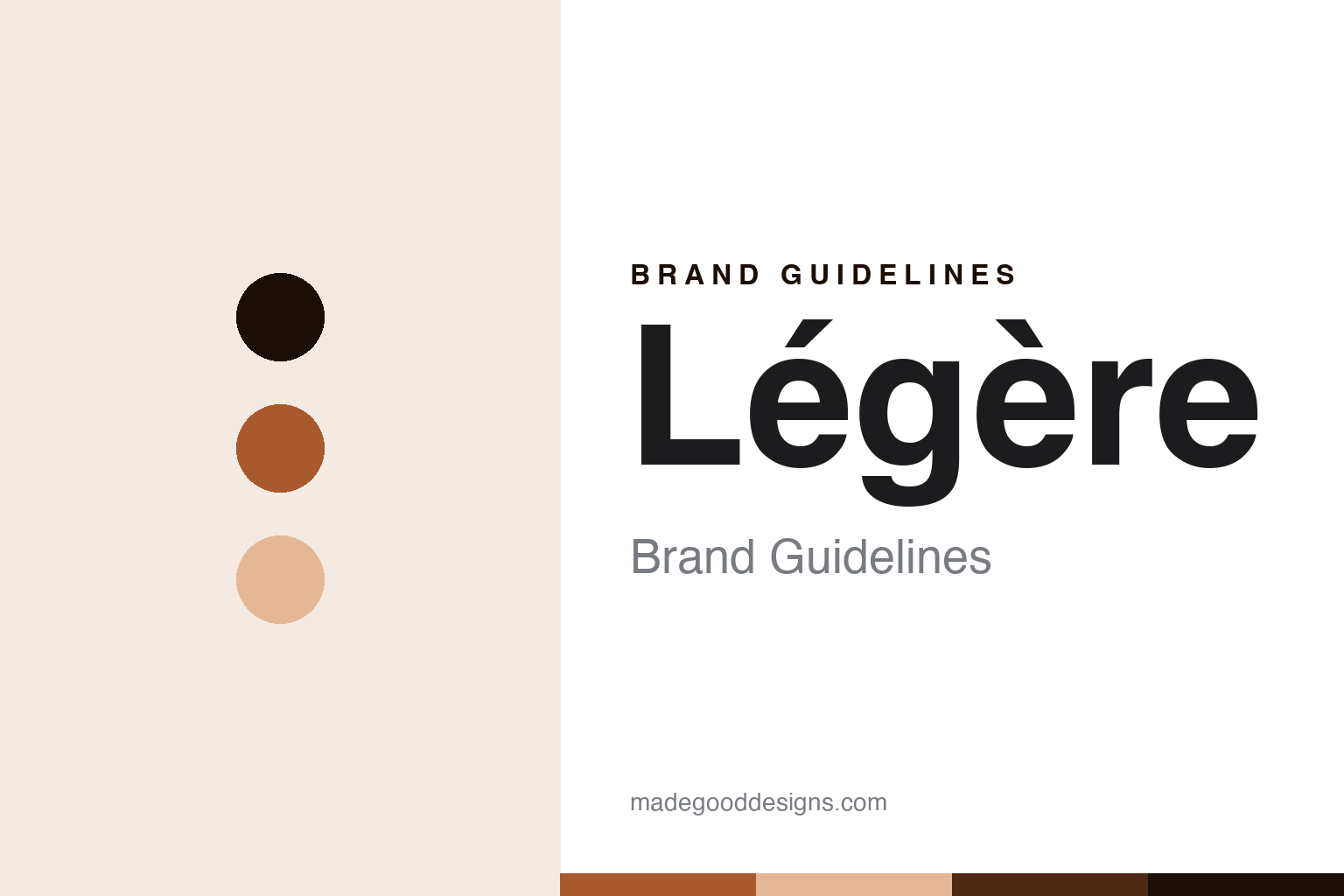
Légère Brand Guidelines
The synthetic reed.
Aa
Two constants: a polymer-amber palette and a polymer-sans register. Abstract homage — not a Légère reed, mouthpiece or mark.
The synthetic reed
Légère is the Canadian maker of synthetic woodwind reeds founded in 1998, made in Barrie, Ontario, now part of the Italian Music Center group.
Légère is the round’s synthetic answer to the reed — the direct counterpart to the cane maker before it. From Barrie, Ontario, Légère makes polymer reeds for clarinet, saxophone, oboe and bassoon: a reed that does not warp, wilt or wear out mid-performance the way cane can. Its answer to how a maker becomes a name is materials science: replace nature’s cane with an engineered polymer, and make it play like the real thing. A Canadian reed, made from polymer instead of plants.
Its identity is the synthetic reed. Légère’s polymer reeds, its cane-alternative science and its made-in-Canada manufacture are the work it is known for. A reed, engineered. The synthetic answer to a natural material.
(Honest notes, so the story stays precise. Légère Reeds was founded in 1998 by Dr. Guy Légère and Dr. Mark Kortschot — a chemist-clarinettist and a chemical-engineering professor — living individuals described from public, company-stated facts. On what it makes, it is synthetic (polymer) reeds for clarinet, saxophone, oboe and bassoon, in named cuts; we do not state the specific polymer chemistry, which we could not confirm. On where it is made — the crux of this round — Légère states its reeds are designed, tested and manufactured in Canada, with its home address in Barrie, Ontario, so the made-in-Canada claim is explicit. On ownership — an honest point — Légère is no longer independent: per its own account it joined the Italian company Music Center in 2024 (a group that also holds several other woodwind-accessory brands), while its reeds continue to be made in Canada by the same team; we present the 2024 date and the Italian parent as company-stated, and we do not call it founder-independent. Its sales and pro-player figures are its own, attributed as such. Its name and marks are IP, described but never reproduced, and there is no official brand hex; these tones are an unofficial interpretation. This is design commentary and does not promote any product.)
Colour
Légère lives in a polymer-amber palette. Click a swatch to copy the hex.
Légère’s identity is engineered, modern and material — a polymer amber, an ink, a sand, a deep amber, and a paper. The palette leans polymer amber and sand: the register of a translucent polymer reed, the amber of an engineered material standing in for cane. It signals science over tradition. The honest caveat: with no published brand hex, these values are an original, unofficial interpretation, not first-party colours.
The lesson is a polymer-amber palette signals a synthetic, engineered-material identity. Légère’s world is an engineered, polymer, Canadian object. For designers, it is a reminder that a warm amber and a soft sand can carry a maker built on replacing a natural material — the translucent amber of polymer and the neutral of a lab bench. Because these tones can fail as small text, keep type dark and let the colour live in the accents, palette and band. The takeaways: engineer the material; make it play like nature; be honest about ownership; and treat any single hex as unofficial.
Typography
The register is a polymer sans — clean, technical, modern.
Légère’s identity carries a clean, technical, modern spirit — a materials-science reed maker, not a heritage house. A polymer sans captures the mood: even, precise and contemporary, the register of an engineered reed. Set in a polymer-amber palette, the polymer sans feels clean and technical — exactly the personality Légère carries. It is a science rather than a lineage, mirroring a synthetic reed. (Légère’s real logo and cut-name marks are things we describe but do not reproduce, and the exact typeface is not ours to use.) Because it is not ours to use, the honest description is “a polymer-sans spirit,” shown here in a stand-in. The type behaves like the maker: clean, technical and modern.
Aa
A polymer-sans spirit — clean and technical. (Specimen set in Manrope, a polymer-sans STAND-IN; NOT the Légère logo or any mark.)
How an instrument is made
Légère stands for the reed engineered to replace cane.
Légère is a lesson in how engineering a material can be an identity. A polymer-amber palette, a polymer sans and a synthetic reed make one thing — the synthetic reed — the whole identity: engineered, modern and material. The polymer science is the differentiator, and the cane-alternative promise is the meaning. The point is a maker founded by two scientists to solve cane’s biggest problem — its inconsistency — by replacing the plant with an engineered polymer that plays like it.
Put to work, the identity is engineering, honestly told, as design. A maker in this spirit would engineer the material, prove it against nature, and be candid about ownership — polymer reeds, designed and made in Canada, now inside an Italian group. A brand learning from it would see that a materials-science identity is durable — that a reed engineered to beat cane’s inconsistency carries an argument tradition cannot — and that being precise, founded 1998 by Légère and Kortschot, made in Barrie, part of Music Center since 2024, keeps the story honest. Légère is the round’s clearest natural-versus-synthetic pairing: set directly against the cane reed maker that opened this piece, it is the same object made the opposite way — and the honest editorial move is to let the two stand as a genuine choice, cane’s sound versus polymer’s consistency, rather than crowning one. It also carries the round’s ownership thread: a founder-built innovator that has since joined a group, the same arc several of the component makers here have travelled. The discipline is in the caveats: not naming a polymer chemistry we could not confirm, and stating the Music Center ownership plainly rather than trading on the founders’ story. The lesson Légère teaches is that engineering can hold an identity: the polymer gives it substance, and the honesty about the ownership keeps it credible. The engineering is the personality, and the synthetic reed is the proof.
For designers and brand-builders, Légère holds the synthetic pole in how an instrument is made, from Canada: engineer the material, and be honest about who owns you. The lessons: solve a real material problem; prove it against nature; keep the making at home; name your parent plainly; and never reproduce a logo. It is also a reminder to stay precise: Légère is the Canadian maker of synthetic woodwind reeds founded in 1998, made in Barrie, Ontario, now part of the Italian Music Center group — with the palette here an unofficial interpretation. Légère made an engineered material the identity — proof that a synthetic answer to a natural part, honestly told, can be the difference.
Explore & save
Keep Légère’s identity on hand — save it to a board in the Made Good inspiration library.
Légère identity set
Pin the polymer-amber palette and the polymer-sans register to your own board.