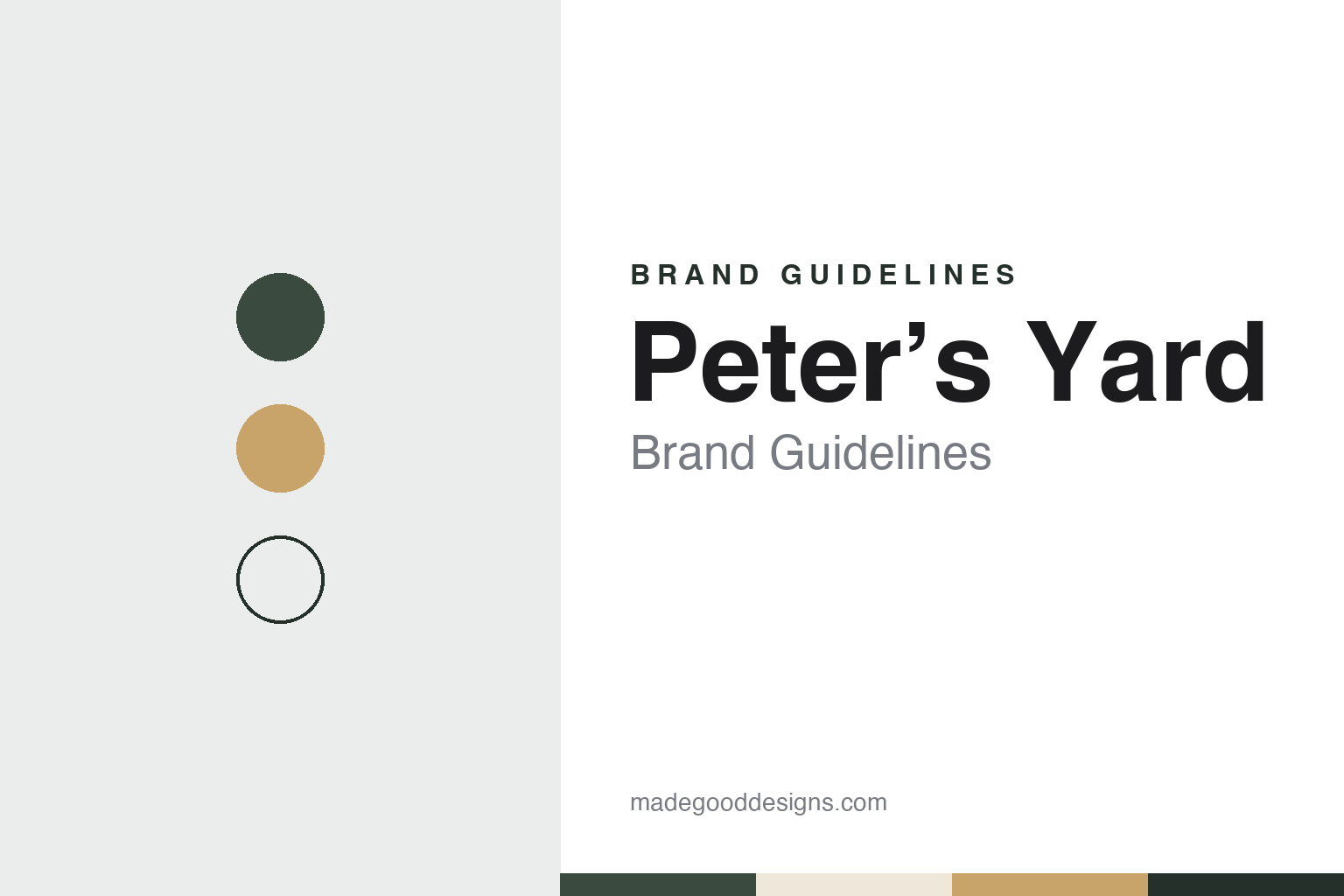
Peter’s Yard Brand Guidelines
The Swedish-inspired sourdough crispbread baked in Britain.
Aa
Two constants: a Peter’s Yard green, linen and rye palette and a Scandinavian sans register. Abstract homage — not a Peter’s Yard product or mark; no pack, logo or wordmark is reproduced.
From Skåne to Edinburgh
A Swedish bakery café, a master baker and a coffee house in Scotland.
Peter’s Yard began as a bakery rather than a biscuit brand. The company’s archived website from 2010 and 2011 described it as the Peter’s Yard Coffee House and Bakery in the Quartermile development in Edinburgh, near the university. An “Our journey” page signed simply “Peter” said the coffee house and bakery opened there “at the very end of 2007.”
That page traced the idea back to Sweden. Its author wrote that, with a friend named Christer, he had opened a first bakery café called Olof Viktors in a traditional Skåne farmhouse, a Skånegård, with a wood-fired stone oven. The search for better bread led them to the Swedish master baker Jan Hedh, and the page quoted the British baker and writer Dan Lepard crediting Hedh with much of Sweden’s modern artisan baking culture. Working with Hedh, the page said, meant bread and crispbread made with sourdough starters and traditional methods.
The brand’s current website tells the story with more people in it. It names the Swede as Peter Ljungquist and says two English friends, Ian and Wendy, left corporate jobs hoping to bring a Swedish-inspired bakery to the UK. On a research trip they heard about Peter from another baker, visited his bakery and tasted his crispbread, or knäckebröd. Over an evening at Peter’s home near Ystad, the company says, they proposed turning the crispbread into a brand sold across the UK — and named it after Peter’s home and its yard with a wooden gate.
Colour
Imported first, then baked in Britain.
According to the company, the crispbread was at first imported from the bakery in Sweden. By 2010 the archived site was already saying that the crispbreads, which “originally” started life in a small Swedish countryside bakery, were “now made here in the UK,” with flour from Shipton Mill. The recipe it described combined sourdough, rye and whole wheat flour, fresh milk and honey. The same site said the crispbreads were stocked by Selfridges, John Lewis Food Halls, Fortnum & Mason and independent food shops.
Its press page from the period listed coverage the company was proud of: House & Garden and Ideal Home recommending the crispbreads for Christmas cheeseboards in December 2010, a listing in The Larder, a guide to Scotland’s food and drink, and — the company said — Dan Lepard naming Peter’s Yard among the top ten small bakeries in Britain in The Times in July 2010, with a special mention of its large crispbreads. Those mentions come from the company’s own press page, which we have not checked against each publication.
The present website explains how production grew. It says demand outgrew the original arrangement and that John Lister, a friend of the founders and owner of Shipton Mill, joined the business with a team of craft bakers; the range is now made in his artisan bakery in the UK to the original Swedish recipe. Its frequently asked questions put it more plainly: the products are made in the company’s craft bakery in London. The brand says everything starts from a 45-year-old sourdough starter fermented for 16 hours, and that it uses British cold-pressed rapeseed oil from Hillfarm in Suffolk rather than palm oil.
The range has widened from crispbread to sourdough crackers, flatbreads and sourdough bites, and the company publishes a cheese pairing wheel matching each cracker to a style of cheese. It names Sainsbury’s, Waitrose, Morrisons, Co-op and Ocado among its retailers.
Typography
Crispbread and crackers.
The seven brands in this group all make crispbreads, crackers or oatcakes — the dry, savoury side of the biscuit aisle — and they come from four countries: Ryvita, Peter’s Yard and Carr’s from England, Nairn’s from Scotland, Wasa and Leksands from Sweden, and Finn Crisp from Finland. Brands of this kind sit at many different points in the trade, from long-established supermarket staples to younger names sold through delicatessens, and a single maker can bake under its own name and for other people’s labels at the same time.
A cracker brand’s identity is usually carried less by the product itself, which can look much the same from one maker to the next, than by a grain, a pack and the story told about where it began. That makes the questions behind each name worth asking plainly: who started it, who owns it now, and where its crispbreads, crackers or oatcakes are actually baked today.
Each guide separates what independent sources record from what the company says about itself — its founding story, its owners over time and where it bakes — and marks plainly what rests only on the company’s own word.
Aa
A clean Scandinavian sans for a brand rooted in a Swedish bakery. (Specimen set in Work Sans, a sans STAND-IN; NOT the Peter’s Yard logo.)
Peter’s Yard
A Belgian owner since 2022.
The brand did not stay independent. Lotus Bakeries, the Belgian maker of Biscoff, founded in 1932 in Lembeke, records Peter’s Yard twice in its corporate timeline. In 2019, it says, its newly established incubator fund, FF2032, took a 20% stake as its first investment. In 2022 Lotus Bakeries acquired 100% of the shares of what it calls a British artisanal sourdough company. Peter’s Yard appears today among the brands on the Lotus Bakeries corporate site, alongside Biscoff, nākd., TREK and Kiddylicious.
Packaging is one area where the company has published specifics. On its sustainability page Peter’s Yard says it replaced single-use plastic stand-up pouches with recyclable cardboard, uses FSC-certified board for its retail packs and recycled board for outer packaging, and seals the product in a film that can be recycled with soft plastics at larger supermarkets. It also says it has modelled the climate footprint of its Original Sourdough Crackers with the carbon-labelling firm CarbonCloud. Those are the company’s own statements.
No official colour values or typeface for the brand are published, so the palette and type here are our own reading.
For a design guide, Peter’s Yard shows how a small bakery’s origin story — a Swedish farmhouse, a yard and a gate — can carry a packaged cracker brand into supermarkets and a multinational group. Compare Lotus Biscoff, the parent company’s flagship biscuit, and Walker’s Shortbread, a Scottish bakery that became a national brand. For this guide we use a deep green, linen and a rye-crust tan with a sans, an unofficial interpretation; no product or logo is reproduced.
Explore & save
Keep Peter’s Yard’s identity on hand — save it to a board in the Made Good inspiration library.
Peter’s Yard identity set
Pin the Peter’s Yard green, linen and rye palette and the Scandinavian sans register to your own board.