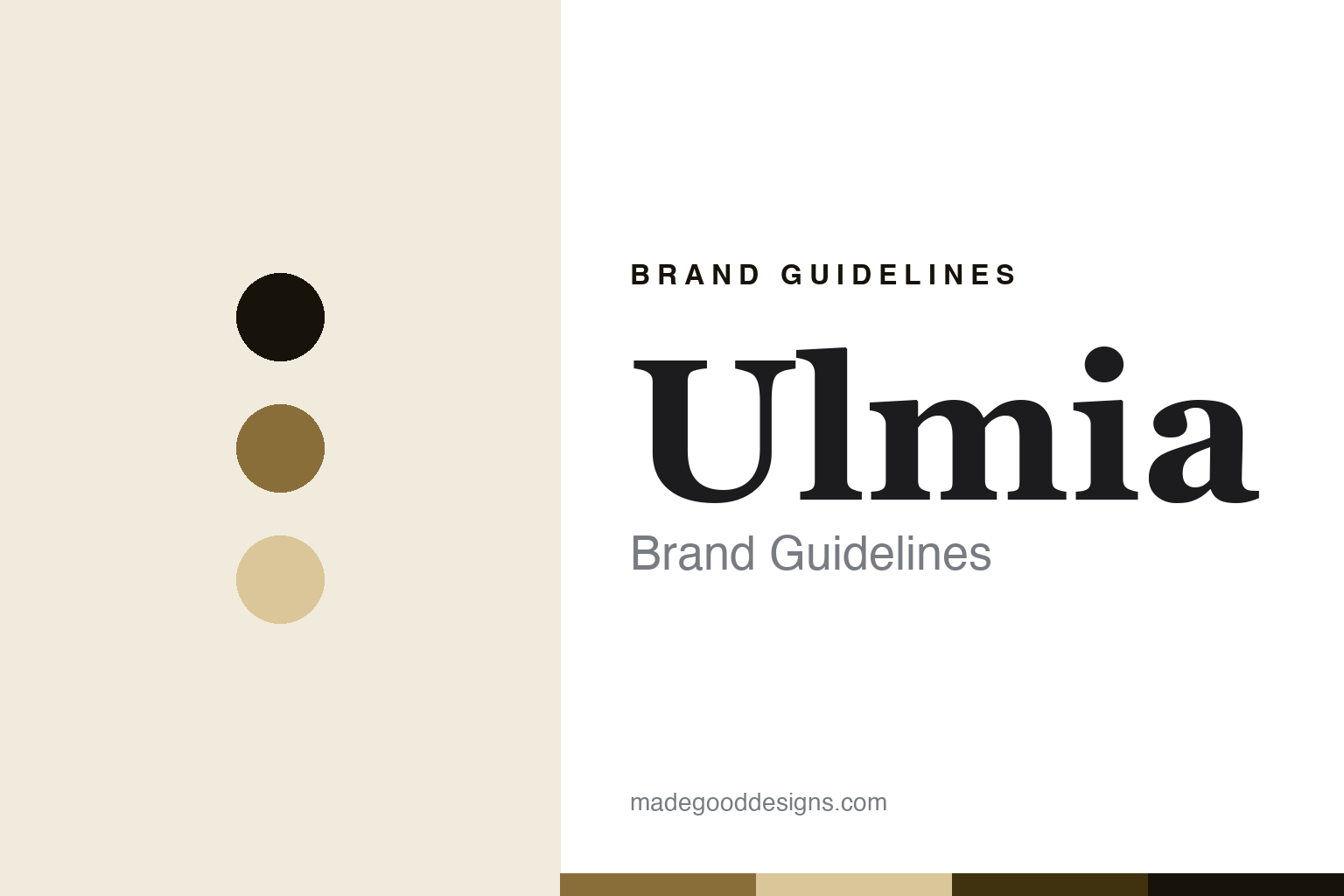
Ulmia Brand Guidelines
The German workbench.
Aa
Two constants: a beech palette and a heritage-serif register. Abstract homage — not an Ulmia bench or mark.
The German workbench
Ulmia is the German workbench and bench-hardware name whose heritage is Ulm, now owned and made by Anton Kessel in Langenenslingen.
Ulmia closes the round — the component makers — with the component everything else clamps to: the bench. Ulmia is the name behind the classic German cabinetmaker’s workbench — solid beech, with a front vise and a tail vise and rows of dog holes — plus bench hardware and, by heritage, wooden planes. Its answer to how a maker becomes a name is the workholding itself: make the bench and the vises the rest of the shop works on. A German workbench, made in Swabia.
Its identity is the German workbench. Ulmia’s beech benches, its bench hardware and its Swabian making are the work it is known for. A bench, not a cutting tool. The workholding the whole shop depends on.
(Honest notes, so the story stays precise, because the name changed hands. Ulmia is alive and trading in 2026, but as a brand that moved: today it is ULMIA GmbH of Langenenslingen, in Swabia, wholly owned by Anton Kessel, a Swabian family-associated company that bought the Ulmia name and rights in 2002 and now makes the benches in-house. On the two histories, we keep them apart: Anton Kessel began in 1888 as a sawmill in Andelfingen, which is not the Ulmia-of-Ulm story; the name “Ulmia” is the Latin name of the city of Ulm, and the brand’s heritage ties to the old Ulm toolmaker Georg Ott Werkzeugfabrik, commonly said to date to 1877 — which we present as reported, not verified, and the earlier maker’s insolvency likewise as reported without a year. On what it makes, workbenches are the core, with bench hardware and vises, plus wooden and modern planes and measuring tools. On where it is made — a theme of this round — the current benches are made in Germany, at Langenenslingen; importantly, not in Ulm, which is now the name’s etymology, not the factory. On ownership, it is owned by the Anton Kessel group, a family-associated Swabian firm, independent, not a multinational. Its name and marks are IP, described but never reproduced, and there is no official brand hex; these tones are an unofficial interpretation. This is design commentary and does not promote any product.)
Colour
Ulmia lives in a beech palette. Click a swatch to copy the hex.
Ulmia’s identity is solid, German and made — a beech, an ink, a pale beech, a deep timber, and a paper. The palette leans beech and steel: the register of a solid beech bench and a steel vise. It signals the workholding everything rests on. The honest caveat: with no published brand hex, these values are an original, unofficial interpretation, not first-party colours.
The lesson is a beech palette signals a solid, made-in-Germany identity. Ulmia’s world is a solid, beech-and-steel, German object. For designers, it is a reminder that a warm beech and a cool steel can carry a workbench maker — the tan of a beech top and the neutral of a vise. Because these tones can fail as small text, keep type dark and let the colour live in the accents, palette and band. The takeaways: make the workholding; make it at home; be honest about the name; and treat any single hex as unofficial.
Typography
The register is a heritage serif — solid, classical, made.
Ulmia’s identity carries a solid, classical, made spirit — a heritage workbench name, not a fashion label. A heritage serif captures the mood: traditional, weighty and steady, the register of a Swabian bench shop. Set in a beech palette, the heritage serif feels solid and made — exactly the personality Ulmia carries. It is workholding heritage rather than a logo, mirroring a solid beech bench. (Ulmia’s real wordmark, and any “Ott” heritage mark, are things we describe but do not reproduce, and the exact typeface is not ours to use.) Because it is not ours to use, the honest description is “a heritage-serif spirit,” shown here in a stand-in. The type behaves like the bench: solid, classical and made.
Aa
A heritage-serif spirit — solid and made. (Specimen set in Playfair Display, a heritage-serif STAND-IN; NOT the Ulmia logo or Ott mark.)
The component makers
Ulmia stands for the German workbench whose name changed hands.
Ulmia closes the round with the component everything else needs: the bench that holds the work. A beech palette, a heritage serif and a solid workbench make one thing — the German workbench — the whole identity: solid, German and made. The beech benches are the differentiator, and the Swabian making is the meaning. The point is a maker of the workholding itself — the bench and vises the rest of the shop works on — under a heritage name that moved to a new maker.
Put to work, the identity is workholding, honestly told, as design. A maker in this spirit would build the bench, make it at home, and be honest about the name — beech benches, bench hardware, made in Swabia. A brand learning from it would see that the workholding is a durable identity — that the bench a whole shop clamps to is as essential as any blade — and that being precise, ULMIA GmbH, owned by Anton Kessel since 2002, made in Langenenslingen, keeps the story honest. Ulmia closes the component makers on the round’s ownership-churn thread, and it is the clearest case: the name is the old Ulmia, the Latin for Ulm, but the maker is a different Swabian company that bought the name in 2002 — so the benches no longer come from the Ulm workshop the name commemorates. The honest editorial moves are to keep Anton Kessel’s 1888 sawmill history separate from the reported 1877 Ulm heritage, to present the original insolvency as reported without a year, and to say the benches are made in Langenenslingen, not Ulm. The lesson Ulmia teaches is that a name can outlive its origin: the German making gives it substance, and the honesty about the change of hands keeps it credible. The workbench is the personality, and the Swabian-made bench is the proof.
For designers and brand-builders, Ulmia closes the component makers, from Germany: make the workholding, and be honest when a name has moved. The lessons: value the bench as much as the blade; make in-country; separate the heritage from the current maker; present unverified history as reported; and never reproduce a logo. It is also a reminder to stay precise: Ulmia is the German workbench and bench-hardware name whose heritage is Ulm, now owned and made by Anton Kessel in Langenenslingen — with the palette here an unofficial interpretation. Ulmia made the workbench the identity — proof that a German workbench, honestly told, can be the difference.
Explore & save
Keep Ulmia’s identity on hand — save it to a board in the Made Good inspiration library.
Ulmia identity set
Pin the beech palette and the heritage-serif register to your own board.