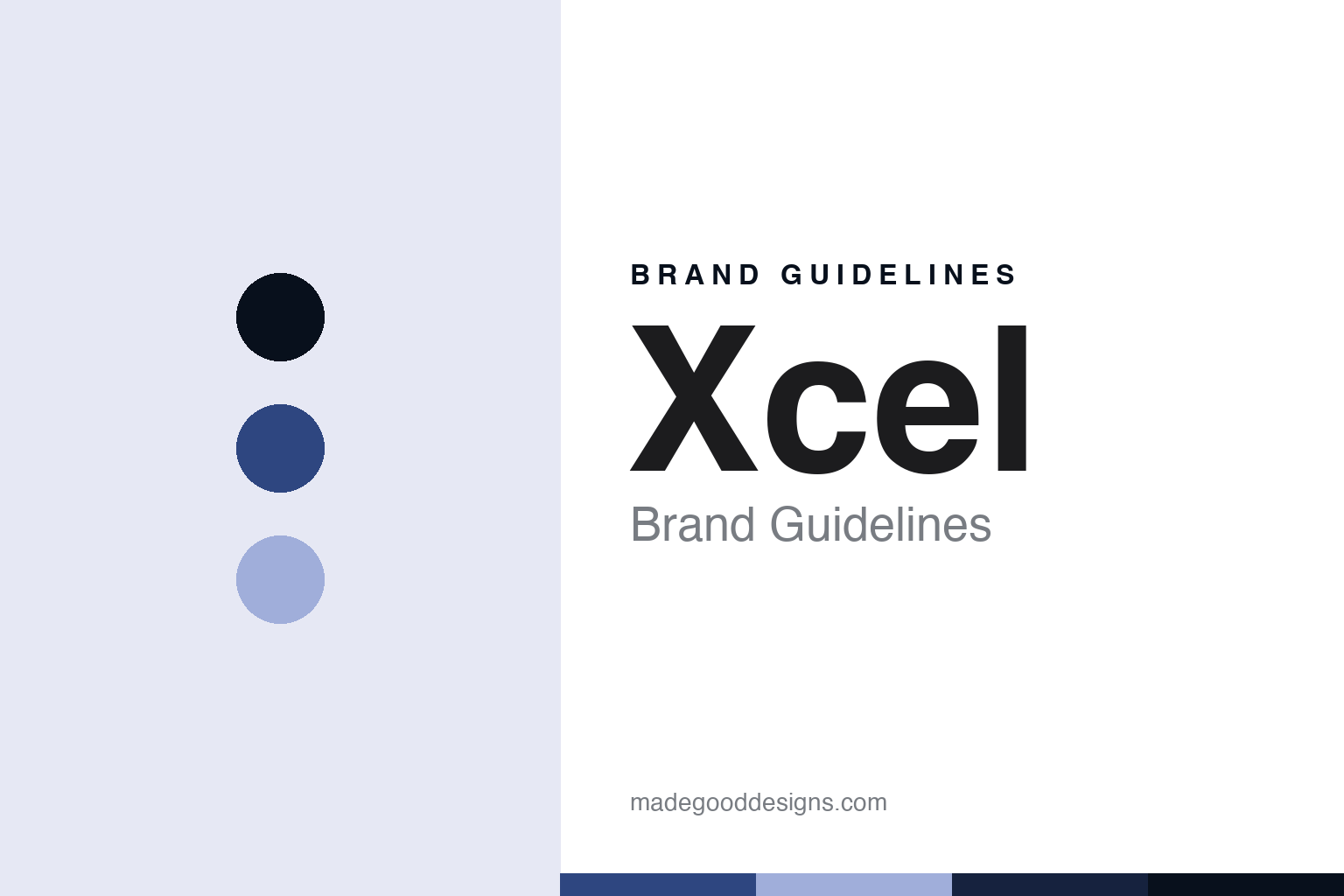
Xcel Brand Guidelines
The wetsuit specialist.
Aa
Two constants: an ocean-indigo palette and a specialist-sans register. Abstract homage — not an Xcel product or mark.
The wetsuit specialist
Xcel is the Hawaii wetsuit specialist of 1982 — an independent maker that does one thing well.
Xcel brings the round its specialist — the Hawaii house that makes wetsuits and little else, stayed out of the big conglomerates, and built its name on the quality of the suit. Xcel makes wetsuits, and its answer to a round about who owns your wetsuit is focus plus independence: a dedicated wetsuit maker, privately held. A wetsuit, and only that.
Its identity is the wetsuit specialist. Xcel’s Hawaii heritage, its wetsuit focus and its independence are the story here. A wetsuit, from the North Shore. The wetsuit specialist.
(Honest notes, so the story stays precise. Xcel — at xcelwetsuits.com — is a dedicated wetsuit specialist, not a general apparel house, with lines such as Drylock, Comp X and Infiniti and an Ocena neoprene-free foam; it has won a wetsuit-industry award for wetsuit of the year several times. It was founded in 1982 in Hawaii, on the North Shore at Sunset Beach, by Ed D’Ascoli, and moved to Haleiwa in 1990. On where it is made — a theme of this round — it does not publish a factory location; like the industry its suits are made offshore, in Asia, widely reported at its own factory in Thailand, so Hawaii is the home and headquarters, not the factory, and we do not claim Hawaii- or US-made. On ownership, it is reported to be independent and privately held, one of the larger independents that stayed out of the surf conglomerates; a stray reference listing it among another company’s acquisitions is unverified, so we do not assert a parent. A cultural note: it is Hawaii-rooted but a modern wetsuit business, not a Native Hawaiian cultural entity, so we use no indigenous motifs. Its marks are IP we describe but do not reproduce, and there is no official brand hex; these tones are an unofficial interpretation. This is design commentary and does not promote any product.)
Colour
Xcel lives in an ocean indigo. Click a swatch to copy the hex.
Xcel’s identity is specialist, independent and made — an ocean indigo, an ink, a mist, a deep indigo, and a paper. The palette leans ocean indigo and mist: a deep-water register that nods to dive depths and cold sets rather than a bright apparel palette. It signals a focused wetsuit maker. The honest caveat: with no published brand hex, these values are an original, unofficial interpretation, not first-party colours.
The lesson is an ocean indigo signals a specialist, independent identity. Xcel’s world is a specialist, made object. For designers, it is a reminder that a deep ocean indigo and a soft mist can carry a wetsuit maker — the tone of deep water. Because these tones can fail as small text, keep type dark and let the colour live in the accents, palette and band. The takeaways: do one thing well; stay independent; be honest about offshore making; and treat any single hex as unofficial.
Typography
The register is a specialist sans — focused, technical, made.
Xcel’s identity carries a focused, technical, made spirit — a specialist, not a fashion. A specialist sans captures the mood: precise, plain and expert, the register of a maker that does one thing and does it well. Set in an ocean-indigo palette, the specialist sans feels focused and technical — exactly the personality Xcel carries. It is expertise rather than a logo, mirroring neoprene and sealed seams. (Xcel’s real wordmark, and Drylock, are things we describe but do not reproduce, and the exact typeface is not ours to use.) Because it is not ours to use, the honest description is “a specialist-sans spirit,” shown here in a stand-in. The type behaves like the suit: focused, technical and made.
Aa
A specialist-sans spirit — focused and technical. (Specimen set in Libre Franklin, a specialist-sans STAND-IN; NOT the Xcel logo.)
Who owns your wetsuit
Xcel stands for the wetsuit specialist.
Xcel brings the round its specialist. An ocean-indigo palette, a specialist sans and a wetsuit make one thing — the wetsuit specialist — the whole identity: specialist, independent and made. The wetsuit focus is the differentiator, and the independence is the meaning. The point is a Hawaii house that makes wetsuits and nothing else, and stayed independent while the big names were consolidated.
Put to work, the identity is a focused independent told straight, as design. A maker in this spirit would do one thing well and stay out of the conglomerates, while being honest that the suits are made offshore. A reader in this spirit would keep the facts right: it was founded in 1982 by Ed D’Ascoli in Hawaii; it is a wetsuit specialist; it is made offshore, reported in Thailand; and it is independent, with a stray acquisition reference unverified. Xcel sits in the round’s owner thread at the independent end with Vissla, a counterpoint to the conglomerate-owned Quiksilver and Billabong, and it shares the round’s offshore where-made truth even as a focused maker. The honest editorial moves are to credit D’Ascoli, to frame the making as offshore, to state independence as reported without asserting a parent, and to use no Hawaiian cultural motifs. The lesson Xcel teaches is that focus and independence can be an identity: doing one thing well, owned by no one but itself.
For designers and brand-builders, Xcel continues who owns your wetsuit: do one thing well — and stay independent. The lessons: specialise; resist consolidation; be honest about offshore making; do not assert an unverified owner; and never reproduce a logo. It is also a reminder to stay precise: Xcel is the Hawaii wetsuit specialist of 1982, an independent maker that does one thing well — with the palette here an unofficial interpretation. Read that way, Xcel is less a wetsuit than a focus: a Hawaii maker that stayed independent by doing one thing and doing it well. The lesson for a brand is that specialisation and independence reinforce each other — a focused maker is a harder acquisition target and a clearer promise — and honesty about the offshore factory keeps the specialist claim credible. Xcel made the-wetsuit-specialist the identity — proof that doing one thing well can keep a brand its own.
Explore & save
Keep Xcel’s identity on hand — save it to a board in the Made Good inspiration library.
Xcel identity set
Pin the ocean-indigo palette and the specialist-sans register to your own board.