Pike Place Market Brand Guidelines
Seattle’s 1907 public market, its neon sign and its clock.
Aa
Two constants: a brick red, neon amber and bay green palette and a condensed sans register. Abstract homage — not a Pike Place Market sign or mark; no logo, clock or lettering is reproduced.
A market above the tideflats
A city ordinance, a street and an arcade.
Pike Place Market opened in Seattle on 17 August 1907. English Wikipedia says the city council member Thomas P. Revelle used an 1896 ordinance that allowed the city to designate land as a public market, and that a stretch of street above the Elliott Bay tideflats, off Pike Street and First Avenue, was chosen. The market was opened by the president of the city council, and its first building, the Main Arcade, followed on 30 November 1907. The University of Washington’s Pacific Coast Architecture Database (PCAD) credits the developer Frank Goodwin with investing in that original arcade, which his brother, an engineer, designed as a plain, utilitarian structure.
The market grew quickly. Wikipedia says the number of stalls had doubled by 1911, that the west side of the stall lines was roofed over into what became known as the “dry row,” and that the market expanded into the Economy Market in 1916. It lists further buildings with their dates: the Sanitary Market of 1910, the North Arcade of 1911 and 1922, which extended the market to the northwest and added 160 covered stalls, and the Corner Market of 1912. In 1921 the council voted to keep the market on its site and to expand it in place. By 1930, PCAD says, the name “Public Market Center” covered Pike Place Market and the markets around it, including the Corner, Sanitary, Economy and Municipal markets. Wikipedia adds that Goodwin kept ornament to a minimum so that the produce, rather than the building, held the eye.
On 2 November 1971 Seattle voters approved an initiative that created a historic district around the market and a Market Historical Commission to look after its physical and social character; PCAD gives the share of the vote as about 60 per cent. In 1973 the City of Seattle chartered the Pike Place Market Preservation and Development Authority, known as the PDA, a public development authority under Washington State law, to own and manage the market. PCAD says rehabilitation work began in 1974, and Wikipedia dates the restorations of the Main Arcade, the North Arcade and several neighbouring buildings to the late 1970s.
Colour
A public authority, a commission and daystalls.
The PDA describes itself as a not-for-profit organisation overseen by a twelve-member council. English Wikipedia says four members are appointed by the mayor, four by the council itself and four by the Pike Place Market Constituency, a membership body set up by the same 1973 charter. The PDA works alongside the Historical Commission, which, the PDA says, sets guidelines and regulatory oversight for the buildings and activities in the district. Wikipedia notes that the commission must approve any substantive change to the use or design of buildings and signage in the historical district, even when the PDA itself makes the change. The PDA describes the market as spanning nine historic acres in the centre of downtown and says it is open 363 days a year.
The market is built on the edge of a steep hill above Elliott Bay, and Wikipedia describes several lower levels below the main one. The upper street level holds fishmongers, fresh produce stands and craft stalls in the covered arcades. Farmers and craftspeople rent tables from the market by the day; Wikipedia says farmers have priority along most of the arcade and craftspeople on a covered bridge over Western Avenue and at the north end. The PDA counts more than 220 independently owned shops and restaurants, more than 180 craftspeople and more than 70 farmers, alongside licensed buskers and more than 450 residents in the market’s housing. English Wikipedia gives a figure of 20.9 million visitors in 2023, and says the federally listed Pike Place Public Market Historic District is bounded roughly by First Avenue, Virginia Street and Western Avenue.
The newest part of the market is the MarketFront, designed by The Miller Hull Partnership for the PDA and completed in 2017; English Wikipedia gives its grand opening as 29 June 2017. ARCHITECT magazine, in its May 2019 issue, described a mixed-use structure of steel and concrete with commercial space, public terraces and housing for older residents, set on a long, narrow wedge of land and stepping down a steep grade from the level of Pike Place toward the waterfront through outdoor and indoor ramps and stairs.
Typography
Public markets and food halls.
Public markets and food halls in North America and Australia usually introduce themselves through who stands behind the name and when the market began. Some are run by a city council or a public development authority set up by a city charter, some by a non-profit corporation and some by a private property company. A founding date tends to sit close to the name, and a market’s documented origins and its present building often carry different dates.
The buildings do much of the work of an identity. Several markets occupy structures built for something else: space under a former railway train shed, a ferry terminal on a waterfront, or the brick and timber blocks of a former biscuit factory. Others grew as rows of covered arcades and open-sided sheds added stall by stall over decades, with halls for meat and fish and long tables for farmers who rent space by the day.
Lettering is often attached to the architecture rather than drawn for a page. A rooftop sign, a clock above an entrance, painted lettering on a wall or old company monograms set into an entryway can become the image that a market protects as a trademark, and in a historic district a commission may need to approve any change to that signage.
Inside, most of these markets describe their mix in general terms: fresh produce, fish, butchers, bakers and delis alongside food counters with seating, craft stalls and shops. Some are not buildings at all but weekly open-air markets that set up in a park or on a waterfront lot. Each guide in this series describes one market from dated sources and pairs it with a palette and typeface of our own.
Aa
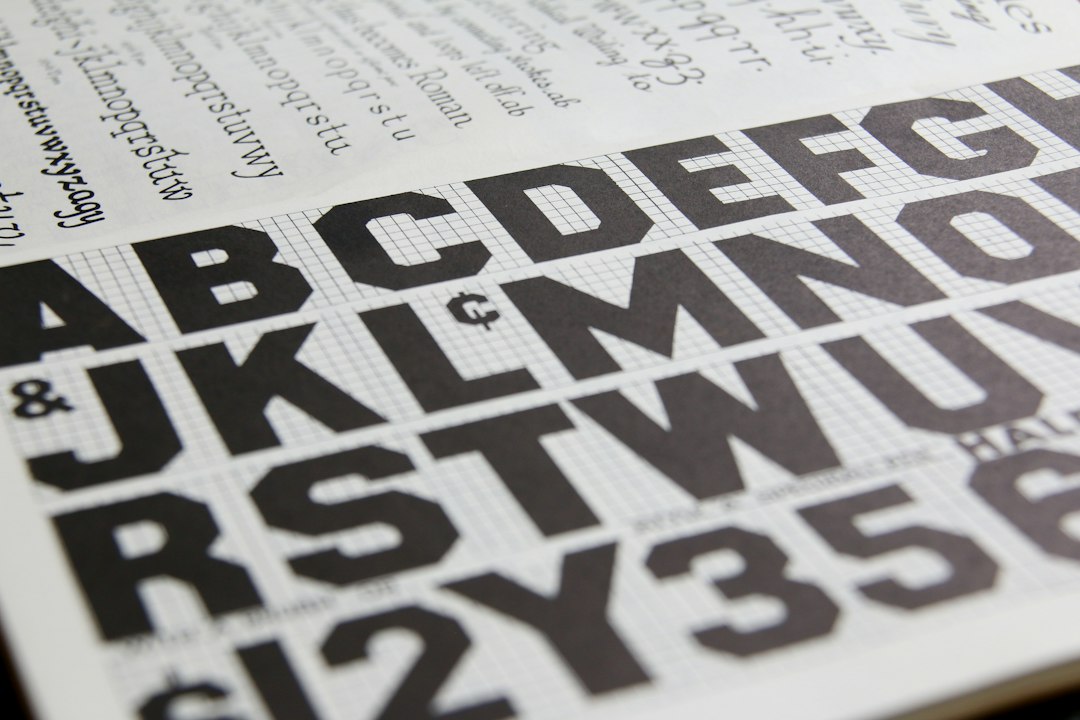
A condensed sans for a rooftop name. (Specimen set in Barlow Condensed, a sans STAND-IN; NOT the Pike Place Market sign or logo.)
The sign and the clock
A neon sign, a clock and a bronze pig.
The image the market guards most closely is its rooftop sign. The PDA says it owns trademark rights to the Pike Place Market name and associated names, to “the Public Market Center clock and sign image” and to other market imagery, and that no product or business may use those marks unless the PDA council has approved a licensing agreement. PCAD dates the present neon sign and clock to 1927. The words on the sign repeat “Public Market Center,” the umbrella name that, by PCAD’s account, covered the whole cluster of markets by 1930.
Under the sign stands Rachel, a bronze piggy bank weighing about 550 pounds that has stood at the corner of Pike Place since 1986, according to English Wikipedia. It was designed by the Seattle artist Georgia Gerber and modelled on a prize-winning pig from Whidbey Island, and Wikipedia calls it the market’s unofficial mascot. Wikipedia also notes that visitors often say “Pike’s Place,” although the market is named after its central street, Pike Place, not a person, a point worth keeping in any written style for the name.
The buildings carry the rest of the identity. The arcades are long, roofed rows of stalls on a slope, and Wikipedia describes later buildings in the district, among them the Market Heritage Center of 1999, as echoing aspects of the historic market architecture. Because the Historical Commission must approve changes to signage as well as buildings, the lettering of the market works within a set of rules rather than being redrawn freely. The MarketFront extends the same plain register of stalls, terraces and stairs toward the bay.
For a design guide, Pike Place Market shows how one rooftop sign, a clock and a bronze pig can carry a public market’s name for close to a century, protected both by a trademark and by a historic district. Compare the Space Needle, another Seattle landmark, and Chelsea Market, a New York food hall in a former biscuit factory. For this guide we use a brick red, a neon amber and a bay green with a condensed sans, an unofficial interpretation; no product or logo is reproduced.
Explore & save
Keep Pike Place Market’s identity on hand — save it to a board in the Made Good inspiration library.
Pike Place Market identity set
Pin the Pike Place Market brick red, neon amber and bay green palette and the condensed sans register to your own board.
Source & notes
Frequently Asked Questions
What font can I use to match the Pike Place Market look?
This guide describes Pike Place Market’s type as “A condensed sans for a rooftop name”. Its type specimen is set in Barlow Condensed from Google Fonts as a stand-in; Barlow Condensed is not Pike Place Market’s own lettering.
What colours are in the Pike Place Market palette?
This guide’s Pike Place Market palette is Arcade brick #8A2E24, Neon amber #D88A34, Sound green #3F5C55, Market cream #F3ECDF and Tideflat ink #1F1D1B. The tones are the guide’s own unofficial interpretation, not official Pike Place Market hex codes.
When did Pike Place Market open?
Pike Place Market opened on 17 August 1907, in Seattle, Washington.