Bigscreen Brand Guidelines
The ultra-compact PCVR.
Aa
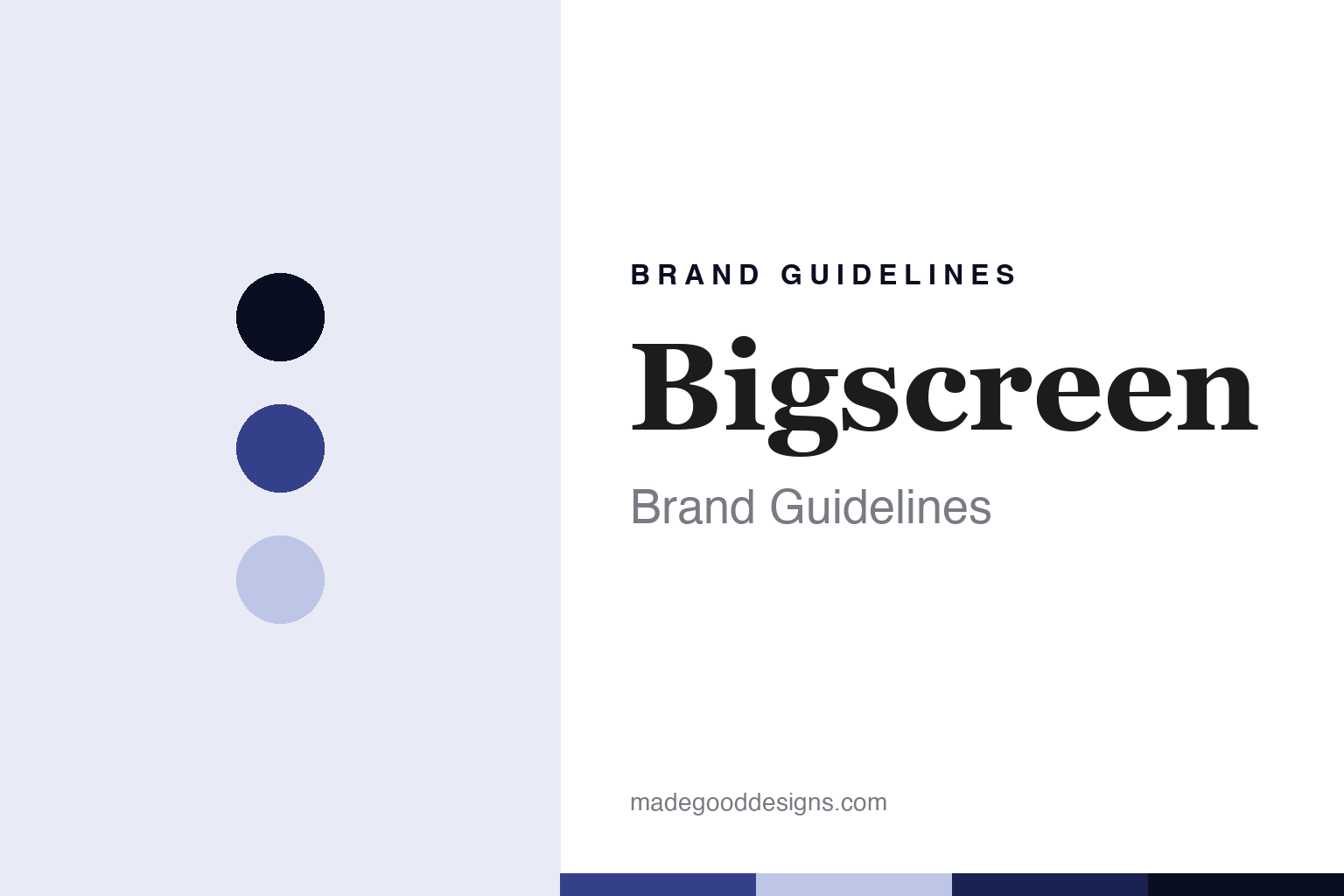
Two constants: a compact-indigo palette and a compact-serif register. Abstract homage — not a Bigscreen product or mark; no headset, goggle or logo is reproduced.
The ultra-compact PCVR
Bigscreen is the US maker of the Beyond, a tiny micro-OLED PCVR headset custom-fitted to each buyer’s face scan.
Bigscreen brings the round its compact node — the US company that made the smallest serious PC-tethered headset by fitting it, literally, to your face. Its answer to a round about who owns the VR headset and where it is made is an American boutique one: a private US brand whose signature is a custom-scanned facial interface.
Its identity is the ultra-compact PCVR. The tiny form, the micro-OLED clarity and the custom face-scan fit are the story here. A headset, ultra-compact. The ultra-compact PCVR.
(Honest notes, so the ownership, the products and the details are framed accurately, with hedges. Bigscreen sells the Beyond as its hero — an ultra-compact, PC-tethered headset with dual micro-OLED displays, pancake lenses, SteamVR tracking and a custom 3D-printed facial interface made to order from each buyer’s face scan, weighing only around 127 grams — followed by the Beyond 2 and Beyond 2e, which improve the field of view, add manual IPD adjustment and, in the 2e, eye tracking, at a lighter weight; we report its specification language as its own. On ownership: Bigscreen, Inc. is a private, venture-backed US company, commonly placed in the California Bay Area, though the exact city and its founders are reported but not firmly verified, so we hedge them. On the lineup: the original Beyond was discontinued in March 2025, and the Beyond 2 line is current. On an honest limitation: the original Beyond’s IPD was fixed per custom scan and non-adjustable, so it fitted poorly if shared, a limitation the Beyond 2 addressed with manual IPD. On where it is made: not specified, though the custom facial masks are made to order from face scans. On nationality: a US-made brand, not Chinese. Its designs, the Bigscreen and Beyond names and the tiny-goggle form are IP we describe but do not reproduce, and we avoid its VRChat co-branded edition; these tones are an unofficial interpretation.)
Colour
Bigscreen lives in a compact indigo. Click a swatch to copy the hex.
Bigscreen’s identity is compact, precise and boutique — a compact indigo, an ink, a pale periwinkle, a deep indigo, and a paper. The palette leans compact indigo and pale periwinkle: a clean, high-clarity register that nods to micro-OLED and a made-to-fit object rather than a loud logo colour. It signals the ultra-compact PCVR — compact, precise and boutique. The honest caveat: with no published brand hex, these values are an original, unofficial interpretation, not first-party colours.
The lesson is a compact indigo signals a precise, boutique identity. Bigscreen’s world is a tiny headset moulded to one face. For designers, it is a reminder that a clean compact indigo and a soft pale periwinkle can carry a hardware brand — a precise tone held as colour, not the goggle form. Because these tones can fail as small text, keep type dark and let the colour live in the accents, palette and band. The takeaways: lead with the ultra-compact micro-OLED PCVR and the custom scan; note the original Beyond is discontinued and Beyond 2 current; keep it US and hedge the founders; and state the IPD limitation honestly.
Typography
The register is a compact serif — compact, precise, boutique.
Bigscreen’s identity carries a compact, precise, boutique spirit — a made-to-fit specialist, not a mass brand. A compact serif captures the mood: refined, exacting and considered, the register of a custom-fitted instrument. Set in a compact-indigo palette, the compact serif feels compact and precise — exactly the personality Bigscreen carries. It behaves like a made, considered thing rather than a loud logo, mirroring a pixel grid and a foveated ring. (Bigscreen’s real products, the names and the goggle form are things we describe but do not reproduce, and the exact typeface is not ours to use.) Because it is not ours to use, the honest description is “a compact-serif brand,” shown here in a stand-in. The type behaves like the brand: compact, precise and boutique.
Aa
A compact-serif brand — compact and precise. (Specimen set in Fraunces, a compact-serif STAND-IN; NOT the Bigscreen logo or the goggle form.)
The VR headset
Bigscreen stands for the ultra-compact PCVR.
Bigscreen brings the round its compact node. A compact-indigo palette, a compact serif and a custom-fit signature make one thing — the ultra-compact PCVR — the whole identity: compact, precise and boutique. The tiny form is the pitch, and the custom face-scan fit is the proof. The point is a US boutique that shrank the serious PCVR headset to a made-to-fit object, in a round about who owns the VR headset and where it is made.
Put to work, the identity is the brand told straight, the lineup kept current and the limitation admitted. A brand in this spirit would lead with the ultra-compact micro-OLED PCVR and custom scan, note the Beyond 2 as current, and admit the original IPD limitation. A reader in this spirit would keep the facts right: Bigscreen sells the Beyond and Beyond 2 as heroes; it is a private US company; its signature is a custom 3D-printed facial interface from a face scan; the original Beyond is discontinued and Beyond 2 current; and it is a tethered PCVR, not standalone. Bigscreen sits second in the round, after Pico. The honest editorial moves are to lead with the compact micro-OLED PCVR and scan, to keep the lineup current, to keep it US and hedge the founders, and to admit the IPD limitation.
For designers and brand-builders, Bigscreen continues the VR headset: make a made-to-fit form the identity — and admit an early limitation honestly. The lessons: a radical form factor, here an ultra-compact custom-fitted headset, can be the whole identity; a made-to-order fit is a differentiator and a constraint at once; keep a lineup current as models are discontinued; and admit an early limitation, the fixed IPD, that a later model fixed. It is also a reminder to stay precise: Bigscreen is the US maker of the Beyond, a tiny micro-OLED PCVR headset custom-fitted to each buyer’s face scan — with the palette here an unofficial interpretation. The hook is that fit: Bigscreen shrank the serious PCVR headset to a sunglasses-scale object by 3D-printing a facial interface from each buyer’s own face scan — a US boutique whose made-to-fit approach was both its signature and, in the first Beyond, a shareability limitation the Beyond 2 fixed with manual IPD. Read that way, Bigscreen is less a mass headset than an ultra-compact PCVR: compact, precise, boutique. The lesson for a brand is that a made-to-fit form and honest limitation-telling reinforce each other, and admitting the IPD constraint keeps the story earned. Bigscreen made the-ultra-compact-PCVR the identity — proof that a form factor can carry a round.
Explore & save
Keep Bigscreen’s identity on hand — save it to a board in the Made Good inspiration library.
Bigscreen identity set
Pin the compact-indigo palette and the compact-serif register to your own board.