Bulldog Brand Guidelines
Anshuman Vohra’s London dry gin in the spiked-collar bottle.
Aa
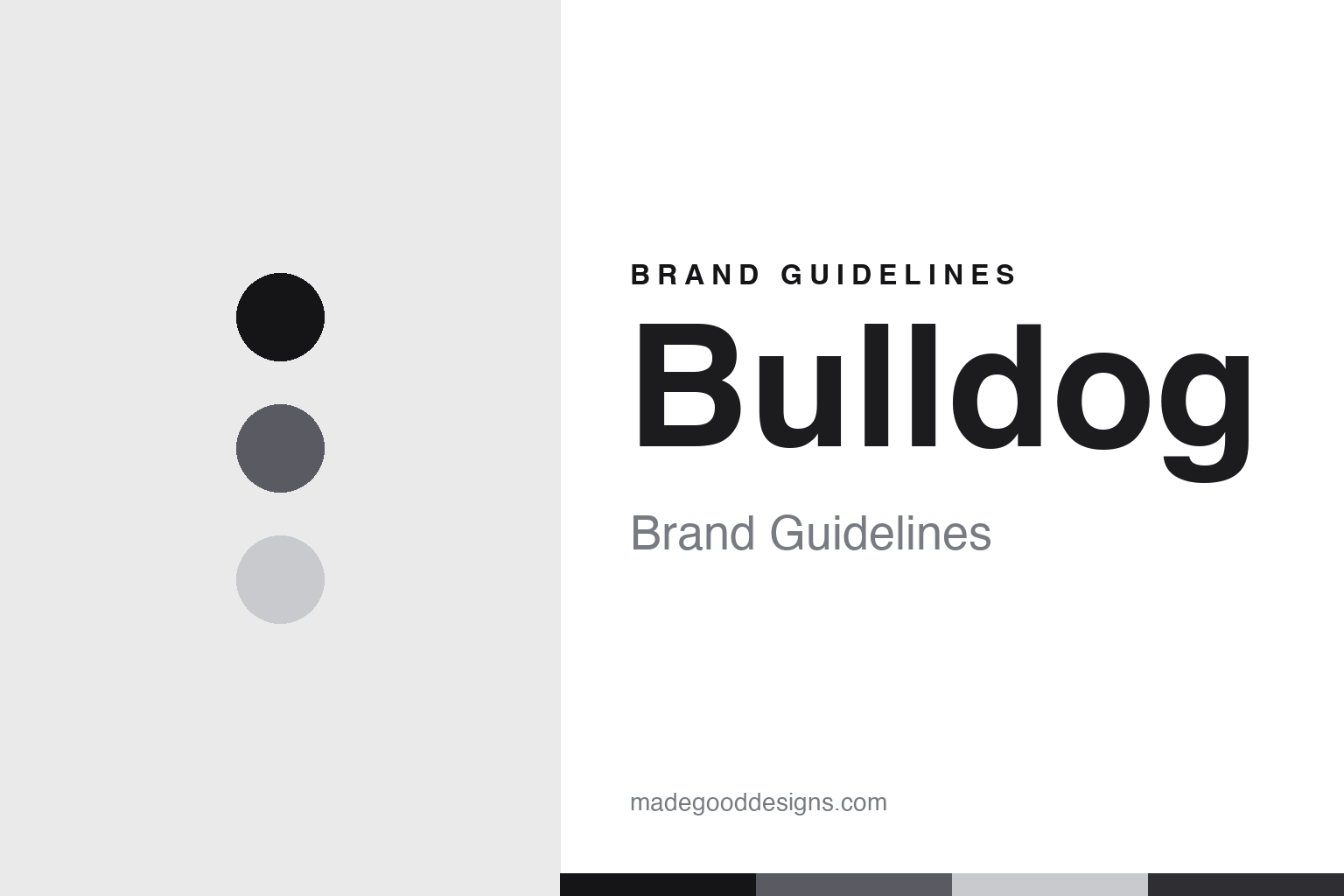
Two constants: a collar black, smoked glass and steel palette and a condensed sans register. Abstract homage — not a Bulldog product or mark; no bottle, collar or logo is reproduced.
A banker’s gin
Launched in America, made in England.
Bulldog is a London dry gin created by Anshuman Vohra, an entrepreneur and former investment banker. Trade reports on the brand’s sale in 2017 — in Drinks International and Shanken News Daily — say it was launched in the United States in 2007 and then rolled out in Europe. It stayed independently owned for its first decade, until Gruppo Campari bought it in 2017, Shanken News Daily reported.
It came to Britain by way of New York. FoodBev reported in June 2008 that Bulldog was “returning” to the UK after its success in the US, made with British grain and quadruple distilled in copper pot stills, and sold to bars and restaurants through the distributor International Spirits Brands. The same report said David Kanbar, a spirits industry veteran formerly with SKYY Vodka, had helped to develop the brand and its recipe.
Accounts of where the gin is made have changed in wording over time. FoodBev in 2008 said it was distilled in London; Drinks International in 2017 said only that it was made in England, quadruple distilled in traditional copper pot stills.
The recipe is the brand’s other talking point. Drinks International reported that Bulldog uses 12 botanicals from eight countries, and the 2008 launch coverage singled out unusual ones for a London dry gin, among them poppy and dragon eye, the longan fruit, and described the gin as having crisp fruit and citrus notes.
Colour
Smoked glass, broad shoulders and a studded collar.
The name is carried by the pack. FoodBev described the bottle in 2008 as smoked grey tinted glass with broad shoulders and a spiked dog collar around the neck. When The Spirits Business picked its top ten gin bottle designs in October 2014, it included Bulldog, describing a bold, jet-black bottle with a studded dog collar at the neck — a “cult classic” among gin fans, it said — and noted that the higher-strength Bulldog Bold came in a sleeker bottle in charcoal grey and purple.
Both descriptions agree on the essentials — dark glass, a heavy silhouette and the collar — and FoodBev’s 2008 report also carried the brand’s early marketing line, which billed Bulldog as “the world’s first sippable gin.” The Bold variant, as The Spirits Business described it, kept the collar while changing the bottle’s colour and line, so the collar works as the constant across the range.
The brand’s growth came largely in Europe. Drinks International reported in 2017, citing the research firm IWSR, that Bulldog was the fourth-largest premium gin in the world, sold in 95 countries, with its largest markets in Spain, the Benelux countries, the UK, global travel retail and the US; Shanken News Daily put the figure at nearly 100 markets, with a strong concentration in Europe. Both reported sales of around 150,000 cases in 2016.
Typography
Design and documentation.
The seven brands in this group are all gin and vodka names: The Botanist, Bulldog, Malfy, Gin Mare, Brockmans, Cîroc and Skyy. Gin and vodka brands in general sit at many different points in the trade, from small distilleries that still carry a founder’s name to labels that now belong to much larger drinks groups, and a single brand can be sold everywhere from a corner shop to a cocktail bar.
A gin or vodka brand’s identity is usually carried less by the spirit itself than by a bottle, a name and the place it promises, because the company behind the name may have changed hands, moved its production or grown far beyond the place where it started. That makes the questions behind each name worth asking plainly: who started it, who owns it now, and where its gin or vodka is actually distilled and bottled.
Each guide separates what independent sources record from what the company says about itself — its founding story, its owners over time, where its spirit is made and how its bottles and labels have changed — and marks plainly what rests only on the company’s own word.
Aa
A strong condensed sans for a gin named after a dog. (Specimen set in Oswald, a sans-serif STAND-IN; NOT the Bulldog logo.)
Bulldog
From independent brand to Campari Group.
The route to new ownership ran through distribution. Gruppo Campari, the Milan-based drinks group, began distributing Bulldog through its own network, including global travel retail, in 2014, under a five-year exclusive agreement that, Drinks International reported, carried an option to buy the brand in 2020. The terms were renegotiated, and on 2 February 2017 Campari announced a definitive agreement to acquire Bulldog, Shanken News Daily reported. Vohra was to stay on for a period as founder and brand ambassador, Drinks International said, and the purchase gave Campari full control of the brand’s marketing and brand-building, the magazine reported.
The relationship had begun market by market. Australian Bartender reported in November 2013 that Campari Australia had added Bulldog to its portfolio under a distribution agreement that took effect on 1 November that year, taking the brand over from Challenger Beverages; its managing director, Shane O’Hart, said the company was keen to build Bulldog in the Australian market.
Under Campari the brand’s advertising has passed through several agencies. More About Advertising reported, a year after the purchase, that Grey London had won the global Bulldog account after a competitive pitch and would launch a global campaign. Ogilvy’s Milan office has also worked on the brand: its case study describes “Begin Bold,” a global, digital-first campaign for Bulldog London Dry Gin built on social content, with static and video work made in two parallel productions and featuring actors, performers and influencers.
The name needs care in search. On this site, a Bull-Dog guide covers the Japanese sauce maker and a separate Bulldog guide covers a men’s skincare brand; neither is related to the gin.
For a design guide, Bulldog shows how one physical detail — a studded collar on the neck — can carry a whole identity. Compare Beefeater, a London dry gin with its own figurehead, and Tanqueray, a gin known for its bottle shape. For this guide we use collar black, smoked glass and steel with a sans, an unofficial interpretation; no product or logo is reproduced.
Explore & save
Keep Bulldog’s identity on hand — save it to a board in the Made Good inspiration library.
Bulldog identity set
Pin the Bulldog collar black, smoked glass and steel palette and the condensed sans register to your own board.