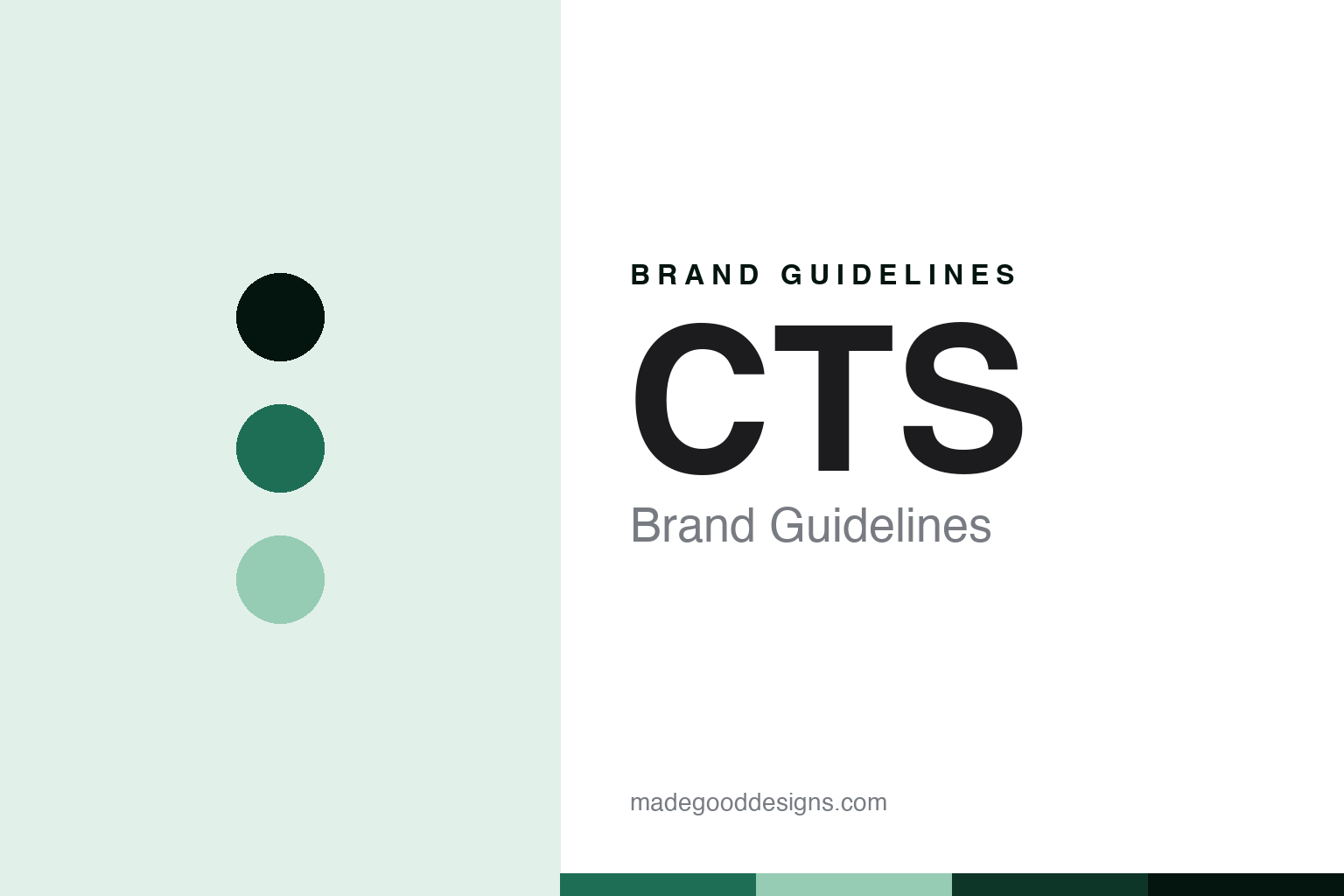
CTS Brand Guidelines
Made in New Zealand.
Aa
Two constants: a pounamu-green palette and a maker-sans register. Abstract homage — not a CTS product or mark.
Made in New Zealand
CTS is the New Zealand rod-blank maker of 1999 — rolling its own carbon blanks in Auckland for custom builders worldwide.
CTS closes the round, and the pre-authorised fishing tour, in New Zealand — the blank maker that rolls its own carbon in Auckland and supplies the custom rod builders who finish it, a rare transparent made-at-home story in a market that mostly rolls its blanks in Asia. CTS makes rod blanks and rods, and its answer to a round about the world is a small NZ factory that says, plainly, where its blanks are made. A blank, rolled in New Zealand.
Its identity is Made in New Zealand. CTS’s in-house blanks, its Auckland factory and its supply to builders worldwide are the story here. A blank, from Auckland. Made in New Zealand.
(Honest notes, so the story stays precise. CTS — at ctsfishing.com — makes fishing and fly rod blanks in carbon and its CrystalGlass fibreglass, sold to custom rod builders who finish them, plus rod-building components and its own Affinity finished-rod series. It was founded in 1999 in Auckland, New Zealand, by Stephen Pratt; the reading of “CTS” as “Composite Technologies South Pacific” is reported rather than stated on the site, so we hedge the acronym. On where it is made — the theme of this round — CTS rolls its own blanks in New Zealand and says so directly, with a “Made in New Zealand” message and the line that its first blank rolled off the Auckland production line in 1999; this is a genuine, transparent NZ-made story, and a fitting close to a round about where tackle is made. On ownership, it presents as an independent, founder-associated company, with no parent documented. Its marks are IP we describe but do not reproduce, and there is no official brand hex; these tones are an unofficial interpretation. This is design commentary and does not promote any product.)
Colour
CTS lives in a pounamu green. Click a swatch to copy the hex.
CTS’s identity is made, transparent and New Zealand — a pounamu green, an ink, a jade, a deep green, and a paper. The palette leans pounamu green and jade: a New Zealand register that nods to greenstone and clear water. It signals a maker that rolls its own blanks at home. The honest caveat: with no published brand hex, these values are an original, unofficial interpretation, not first-party colours.
The lesson is a pounamu green signals a made-in-New-Zealand identity. CTS’s world is a made, transparent object. For designers, it is a reminder that a deep green and a soft jade can carry a blank maker — the tone of greenstone and river. Because these tones can fail as small text, keep type dark and let the colour live in the accents, palette and band. The takeaways: roll your own; say where; supply the builders; and treat any single hex as unofficial.
Typography
The register is a maker sans — plain, transparent, made.
CTS’s identity carries a plain, transparent, made spirit — a maker’s object, not a fashion. A maker sans captures the mood: honest, capable and direct, the register of a blank rolled in a New Zealand factory and sold to builders. Set in a pounamu-green palette, the maker sans feels plain and transparent — exactly the personality CTS carries. It is making rather than a logo, mirroring a carbon blank. (CTS’s real wordmark, and the Affinity and CrystalGlass names, are things we describe but do not reproduce, and the exact typeface is not ours to use.) Because it is not ours to use, the honest description is “a maker-sans spirit,” shown here in a stand-in. The type behaves like the blank: plain, transparent and made.
Aa
A maker-sans spirit — plain and transparent. (Specimen set in Mulish, a maker-sans STAND-IN; NOT the CTS logo.)
Around the world
CTS stands for Made in New Zealand.
CTS closes the round in New Zealand. A pounamu-green palette, a maker sans and a rolled blank make one thing — Made in New Zealand — the whole identity: made, transparent and New Zealand. The in-house blank-rolling is the differentiator, and the transparency is the meaning. The point is a small Auckland maker that rolls its own carbon and supplies the builders who finish it, in a market that mostly hides where its blanks are made.
Put to work, the identity is a transparent made-at-home story told straight, as design. A maker in this spirit would roll its own blanks and say where, plainly — a blank, made in New Zealand, sold to builders worldwide. A reader in this spirit would keep the facts right: it was founded in 1999 in Auckland by Stephen Pratt; it rolls its own carbon and CrystalGlass blanks in New Zealand; the acronym is reported rather than stated; and it is independent. CTS sits in the round’s where-made thread at the genuinely-made-at-home end with Tenryu and Ari ’t Hart, the clearest of the three, and it ties across the vein to Epic from the rod-builders round — another New Zealand maker, but where Epic keeps its blank origin quiet, CTS names it. The honest editorial moves are to celebrate the made-in-NZ blank-rolling, to hedge the acronym, and to credit the supply to independent builders. The lesson CTS teaches is that transparency about where a blank is rolled can itself be a brand — the answer, said plainly, to the question this whole round asks.
For designers and brand-builders, CTS closes around the world: roll your own — and say exactly where. The lessons: make the core component yourself; state the country plainly; serve the makers who build on you; hedge what is unverified; and never reproduce a logo. It is also a reminder to stay precise: CTS is the New Zealand rod-blank maker of 1999, rolling its own carbon blanks in Auckland for builders worldwide — with the palette here an unofficial interpretation. Read that way, CTS is less a blank than an answer: to a round that asked, over and over, where is this made, a small Auckland factory replies, simply, here. The lesson for a brand is that in a market built on vagueness, plain transparency about making is the rarest and strongest position of all — and it closes a world tour of fishing houses on the clearest note it could. CTS made Made-in-New-Zealand the identity — proof that the honest answer to where-is-this-made can be the whole of a brand.
Explore & save
Keep CTS’s identity on hand — save it to a board in the Made Good inspiration library.
CTS identity set
Pin the pounamu-green palette and the maker-sans register to your own board.