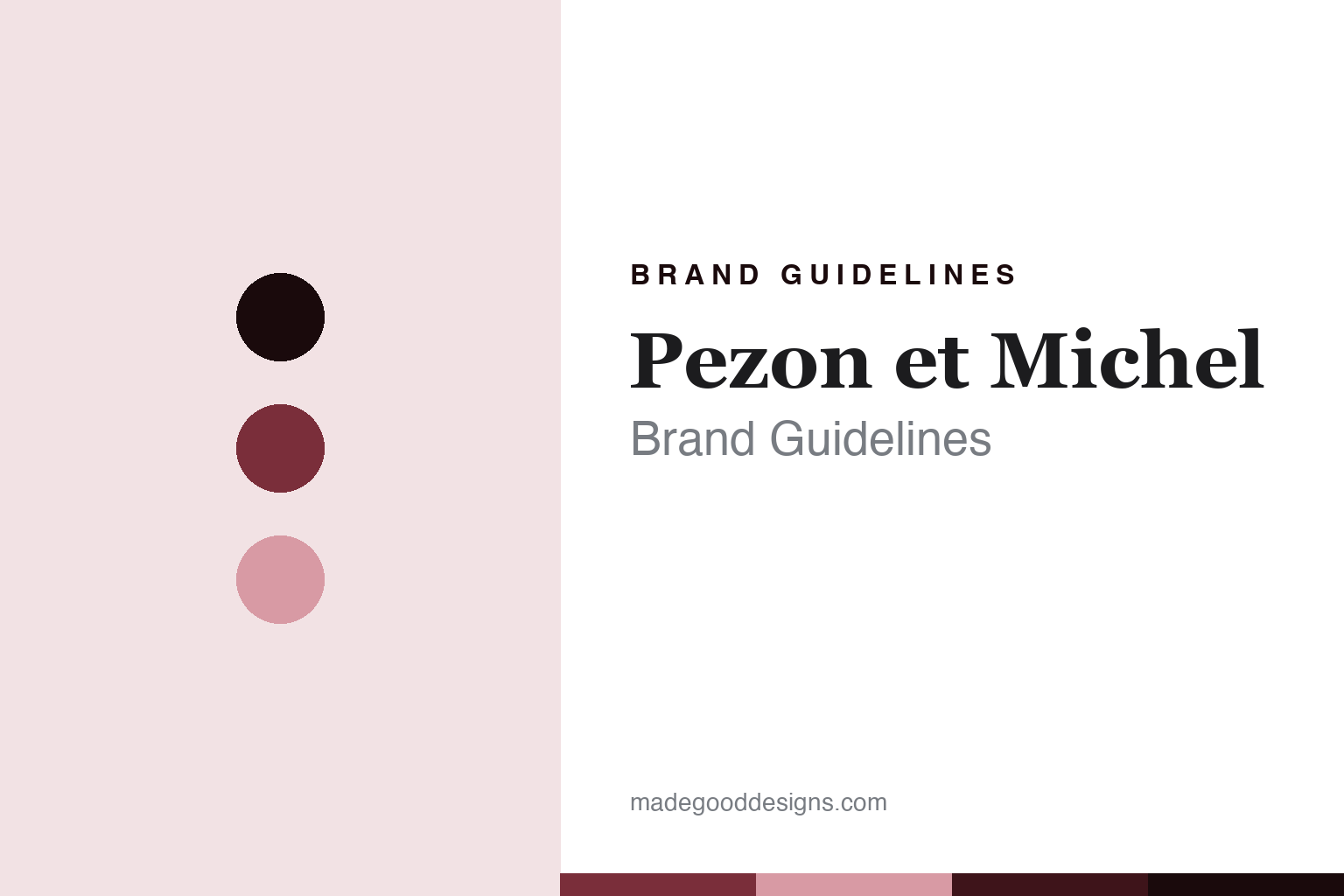
Pezon et Michel Brand Guidelines
The house of the parabolic rod.
Aa
Two constants: a claret palette and a heritage-serif register. Abstract homage — not a Pezon et Michel product or mark.
The house of the parabolic rod
Pezon et Michel is the French fly-rod house of the parabolic rod and Charles Ritz — a heritage name from the Loire, continued today as a modern tackle brand.
Pezon et Michel opens the round’s world tour in France — the storied fly-rod house whose split-cane rods, shaped with Charles Ritz, defined a whole philosophy of casting, and whose name lives on today as a broad modern tackle brand. Pezon et Michel makes fly rods by heritage, and its answer to a round about the world is a French idea — the parabolic rod — that travelled everywhere. A rod, French by lineage.
Its identity is the house of the parabolic rod. Pezon et Michel’s Loire cane heritage, its Ritz collaboration and its continuation as a modern brand are the story here. A rod, from Amboise. The house of the parabolic rod.
(Honest notes, so the story stays precise. Pezon et Michel — at pezonetmichel.com — was a French rod-making house from the Loire valley, around Amboise, that became world-famous for split-cane fly rods; the exact founding year and founders are reported rather than firmly documented, so we say the early twentieth century, around the 1930s. Its lasting fame comes from its collaboration with Charles Ritz — of the Paris hotel family, a renowned angler — on the “parabolic” rod-action philosophy and models such as the Fario Club. On where it is made — a theme of this round — the historic cane rods were hand-built in Amboise, France, but the modern products sold under the name today are, like most tackle, made overseas, and the current manufacturing is not publicly documented; we do not claim French manufacture today. On ownership, the name is carried on by a French tackle group that also runs the Gunki brand; the exact corporate parent is reported rather than confirmed. Its marks are IP we describe but do not reproduce, and there is no official brand hex; these tones are an unofficial interpretation. This is design commentary and does not promote any product.)
Colour
Pezon et Michel lives in a claret. Click a swatch to copy the hex.
Pezon et Michel’s identity is heritage, French and continued — a claret, an ink, a rosewood, a deep claret, and a paper. The palette leans claret and rosewood: a warm, old-world register that nods to French fly-fishing heritage and varnished cane. It signals a storied house whose name outlived its cane workshop. The honest caveat: with no published brand hex, these values are an original, unofficial interpretation, not first-party colours.
The lesson is a claret palette signals a heritage, French identity. Pezon et Michel’s world is a heritage object with a modern present. For designers, it is a reminder that a warm claret and a soft rosewood can carry a fly-rod house — the tone of varnish and cane. Because these tones can fail as small text, keep type dark and let the colour live in the accents, palette and band. The takeaways: honour a real heritage; keep where-made honest; note the modern owner; and treat any single hex as unofficial.
Typography
The register is a heritage serif — French, classic, continued.
Pezon et Michel’s identity carries a French, classic, continued spirit — a house of the cane era, not a fashion. A heritage serif captures the mood: elegant, old-world and a little literary, the register of a fly-rod house tied to Charles Ritz and the salons of French angling. Set in a claret palette, the heritage serif feels French and classic — exactly the personality Pezon et Michel carries. It is heritage rather than a logo, mirroring varnished cane and cork. (Pezon et Michel’s real wordmark, and the Fario Club name, are things we describe but do not reproduce, and the exact typeface is not ours to use.) Because it is not ours to use, the honest description is “a heritage-serif spirit,” shown here in a stand-in. The type behaves like the rod: French, classic and continued.
Aa
A heritage-serif spirit — French and classic. (Specimen set in Playfair Display, a heritage-serif STAND-IN; NOT the Pezon et Michel logo.)
Around the world
Pezon et Michel stands for the house of the parabolic rod.
Pezon et Michel opens the world tour in France. A claret palette, a heritage serif and a cane rod make one thing — the house of the parabolic rod — the whole identity: heritage, French and continued. The Ritz collaboration is the differentiator, and the continuation of the name is the meaning. The point is a Loire cane house whose parabolic idea travelled the world, and whose name now fronts a modern French tackle brand.
Put to work, the identity is a heritage told straight, as design. A maker in this spirit would honour a real idea — the parabolic action — while being candid that the cane workshop is gone and the modern gear is made elsewhere. A reader in this spirit would keep the facts right: it was a French house from around Amboise in the early twentieth century; its fame rests on Charles Ritz and the parabolic rod; the historic rods were French cane while today’s products are made overseas and undisclosed; and the name is carried on by a French group that also runs Gunki. Pezon et Michel opens the round’s where-made thread at the heritage-then-overseas end, and it ties across the vein to the bamboo houses of earlier fishing rounds — Winston and Thomas & Thomas, Orvis and Hardy — as the French voice in a cane tradition that spanned continents. The honest editorial moves are to credit Ritz, to keep the founding hedged, to say the modern gear is made abroad, and to name the group softly. The lesson Pezon et Michel teaches is that an idea can outlive its factory: the parabolic rod is French heritage even though the cane bench is long closed.
For designers and brand-builders, Pezon et Michel opens around the world: honour a real idea — and be honest about what became of the workshop. The lessons: credit a genuine heritage; hedge what is uncertain; separate historic making from modern making; note the current owner; and never reproduce a logo. It is also a reminder to stay precise: Pezon et Michel is the French fly-rod house of the parabolic rod and Charles Ritz, a heritage name continued as a modern tackle brand — with the palette here an unofficial interpretation. Read that way, Pezon et Michel is less a rod than an inheritance: a French idea about how a rod should bend, kept alive under a name that has changed hands and countries of manufacture. The lesson for a brand is that heritage is a claim about ideas, not just objects, and the honest way to carry a storied name is to credit the idea while telling the truth about the factory. Pezon et Michel made the-house-of-the-parabolic-rod the identity — proof that a way of casting can outlast the cane it was cut from.
Explore & save
Keep Pezon et Michel’s identity on hand — save it to a board in the Made Good inspiration library.
Pezon et Michel identity set
Pin the claret palette and the heritage-serif register to your own board.