Elite Brand Guidelines
The Ramat Gan chocolate maker behind Para, now part of Strauss.
Aa
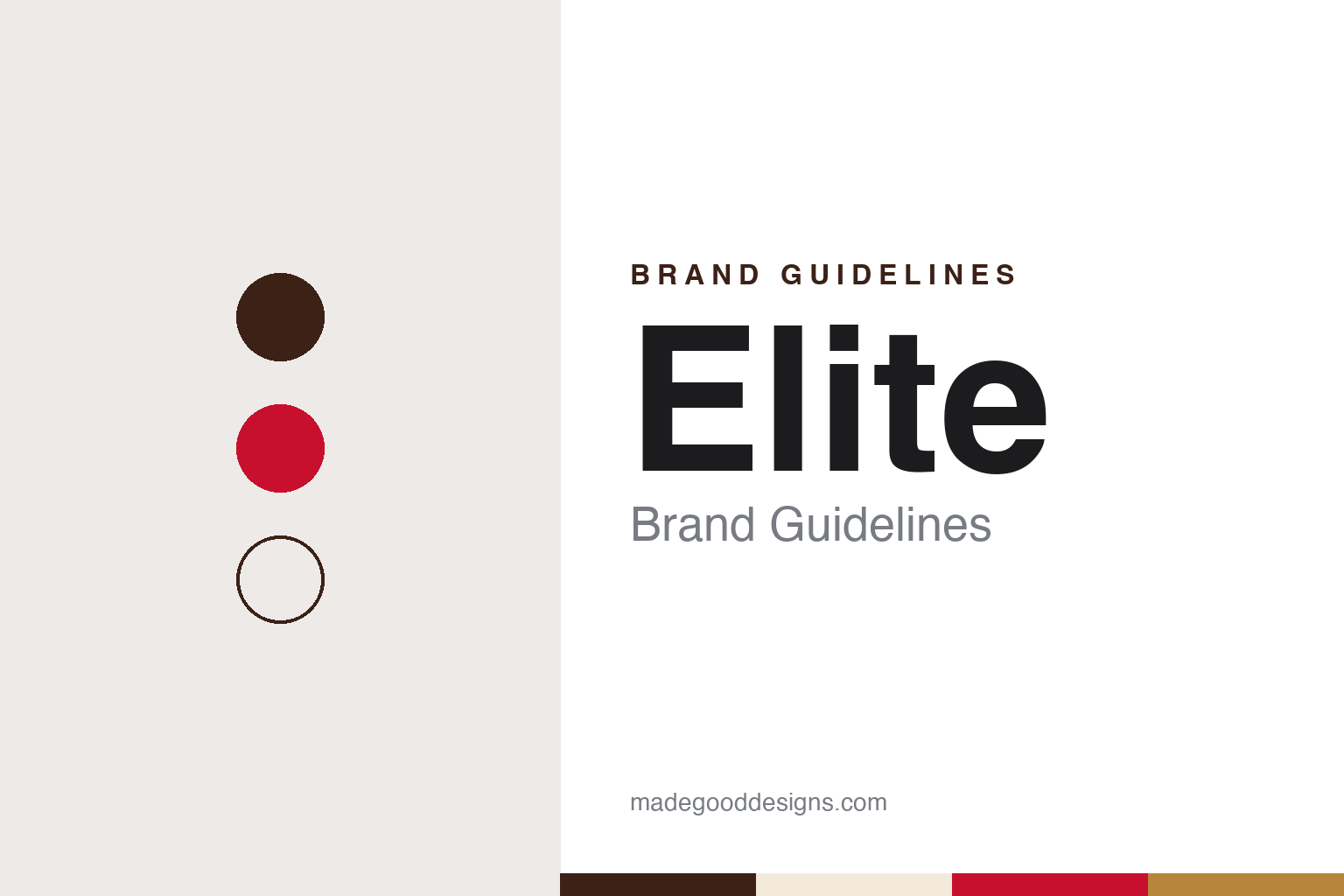
Two constants: a chocolate brown, wrapper red and cream palette and a classic serif register. Abstract homage — not an Elite product or mark; no wrapper, logo or product is reproduced.
From Riga to Ramat Gan
A Latvian sweet factory, a move in 1933 and a cow on the wrapper.
Elite’s story starts in Latvia. Hebrew Wikipedia says Eliyahu Fromchenko set up the sweet and chocolate factory Laima, Latvian for “luck,” in the 1920s with partners Eliyahu Kopilov and David Moshevitz; English Wikipedia says Fromchenko, a Russian Jew, began making sweets in his home kitchen in 1918 and in 1924 merged his business with Laima in Riga. Both agree that in 1933 he left for Mandatory Palestine, and Hebrew Wikipedia says he brought machines, chocolate experts and capital with him.
With his Latvian partners and further investors, Fromchenko bought land in Ramat Gan, beside the crossroads now known as Elite Junction, and built a factory there. English Wikipedia says production began in the spring of 1934, with the first product in shops in time for Passover; Hebrew Wikipedia cites a Davar report of May 1934 on the works. The best-known product was Para chocolate. Para is Hebrew for “cow,” and English Wikipedia says the packaging carried an image of one; Hebrew Wikipedia says the chocolate was first sold under the trade name “Shmenunit.”
The factory ran around the clock in three shifts, and during the Second World War Elite won a contract to supply chocolate to the British Army and Allied units in the region, Hebrew Wikipedia says. By 1951, Davar reported, a four-storey building on the site employed 250 workers making chocolate, cocoa and sweets of various kinds. The factory also entered popular culture: Yehonatan Geffen’s children’s song “Re’ach shel Shokolad” (“The Smell of Chocolate”) refers to it, according to Hebrew Wikipedia.
Colour
Instant coffee in Safed, a rival bought and snacks in Sderot.
Coffee became Elite’s second business. Around 1955, Hebrew Wikipedia says, Mark Moshevitz and Abba Fromchenko proposed an instant-coffee plant in Safed; its cornerstone was laid in October 1956 and it opened in May 1958, the newspaper LaMerhav reported. English Wikipedia describes this as the launch of Israel’s first coffee company. In 1958 Elite also bought the Z.D. chocolate factory in Ramat Gan and finished a plant Z.D. had begun in what is now Nof HaGalil, then called Nazareth Illit, starting production there that autumn, according to Davar as cited by Hebrew Wikipedia.
Brands came by purchase as well as invention. In the 1960s Elite bought the Alma chewing gum, and in March 1970 it took over its rival Lieber, gaining the Mekupelet folded chocolate bar and Bazooka gum. That year it also sold a complete instant-coffee production line to South Korea, Maariv reported. English Wikipedia dates the Pesek Zman chocolate bar to 1982. In 1991 Elite moved into salty snacks with a factory in Sderot, making the peanut snack Shush and, as the local licensee of Frito-Lay, the potato crisps Tapuchips, English Wikipedia says.
Elite also grew abroad. It set up the distributor Goman in Poland in 1989, the base of its European coffee business, and bought coffee plants in Germany, Belgium, France and Spain and a chocolate factory in France, Hebrew Wikipedia says; it later expanded its coffee business in South America. At home, Elite was listed on the Tel Aviv Stock Exchange in 1973, and the founding families sold their remaining shares in 1986, according to the same source.
Typography
Design and documentation.
The seven brands in this group all make food, and they come from Israel, the United States and Saudi Arabia: Osem, Elite, Strauss, Bamba, Tnuva, Sadaf and NADEC. Food brands in general sit at many different points in the trade, from family firms that still carry a founder’s name to names that now belong to much larger food groups, and a single brand can be sold everywhere from a corner shop to a supermarket shelf.
A food brand’s identity is usually carried less by a single product than by a pack, a name and the meal or snack it promises, because the company behind the name may have changed hands, moved its factory or grown far beyond the town where it started. That makes the questions behind each name worth asking plainly: who started it, who owns it now, and where its food is actually made and packed.
Each guide separates what independent sources record from what the company says about itself — its founding story, its owners over time, where its food is made and how its packaging has changed — and marks plainly what rests only on the company’s own word.
Aa
A classic serif for a chocolate brand born in the 1930s. (Specimen set in Frank Ruhl Libre, a serif STAND-IN; NOT the Elite logo.)
Elite
A dairy partner, a new name for the group and a preserved factory.
Elite’s independence ended in stages. In 1997 the dairy group Strauss, founded by Richard and Hilde Strauss in Nahariya, bought into Elite; Hebrew Wikipedia says the Federmann and Strauss families acquired the holding of the British MAN group. The formal merger followed in 2004, creating Strauss-Elite, and in January 2007 the company was renamed Strauss Group, with its head office in Petah Tikva. Hebrew Wikipedia says the group went on selling Elite’s products under the Elite brand, which changed its logo in 2009.
The Ramat Gan site was sold in 2006, and demolition of the factory began in 2008, Haaretz reported, to make way for a tower. The historic building was kept: the art department of Shenkar College moved in, and in 2025 it was preserved with its original look restored, Hebrew Wikipedia says. Since July 2009 a copper drum once used to coat sweets and gum has stood beside it. Production today is spread across Israel: chocolate at the sweets plant in Nof HaGalil, coffee in Safed and Lod, and salty snacks in Sderot, according to the same source.
The chocolate plant was at the centre of a 2022 recall. In April 2022 Strauss recalled chocolate products over suspected salmonella, ynet reported; the health ministry closed the plant for three months, Walla reported; and Elite chocolate sweets returned to the shelves in November 2022, Globes reported.
For a design guide, Elite shows how a cow on a chocolate wrapper and a 1930s factory name can outlast a merger and a change of owner. Compare Strauss Group, its owner since the merger, and Osem, which English Wikipedia describes as the savoury half of a snack market once divided with Elite. For this guide we use a chocolate brown, a wrapper red and a cream with a classic serif, an unofficial interpretation; no product or logo is reproduced.
Explore & save
Keep Elite’s identity on hand — save it to a board in the Made Good inspiration library.
Elite identity set
Pin the Elite chocolate brown, wrapper red and cream palette and the classic serif register to your own board.