Heintzman Brand Guidelines
“The Canadian legend continues in China.”
Aa
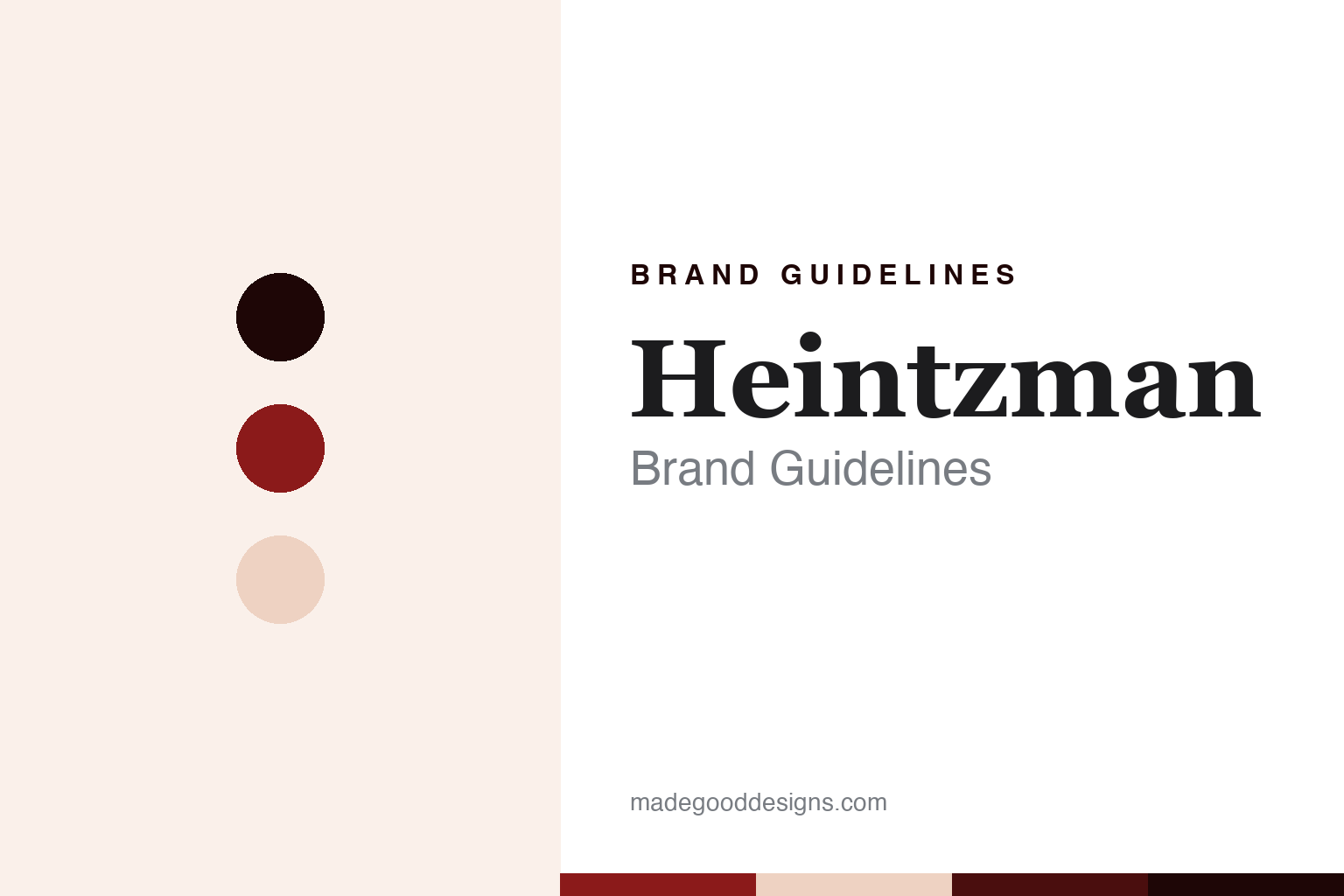
Two constants: a maple-red palette and a Victorian-serif register. Abstract homage — not a Heintzman product or mark; no piano or logo is reproduced.
A Berlin maker in Toronto
Heintzman was one of Canada’s great manufacturers.
Theodor August Heintzman was born in Berlin in 1817, the Dictionary of Canadian Biography records, and came to North America in 1850, working in New York and Buffalo before settling in Toronto in 1860. In 1866 he founded Heintzman and Company. By his death in 1899 it made about 1,000 pianos a year with more than 200 employees — one of the city’s largest manufacturers. He took Canadian patents on an agraffe bridge in 1873, 1882, 1884 and 1896, and his pianos won prizes at Philadelphia’s Centennial Exhibition of 1876 and in London in 1886 — at least eleven awards in all, his biographer counts. He died at Toronto Junction, near the factory that would carry the firm into the twentieth century.
The company grew with the country. English Wikipedia records a new factory in West Toronto’s Junction district from 1888 — Heintzman Street marks the site — a factory at Hanover, Ontario, from 1962, and a 1978 merger with the Canadian maker Sherlock-Manning that moved its head office to Hanover. Then the family let go. “In January 1981, Heintzman Ltd was sold by the family to Sklar-Peppler Inc. of Hanover, Ontario,” English Wikipedia says, and in the mid-1980s the patents and trade marks were sold on to The Music Stand, a chain of music shops based in Oakville. Canadian production ended in the 1980s, after more than a century of pianos built in Ontario under the founder’s name, first in Toronto and then in Hanover.
The name then met the law. English Wikipedia says that in 1990 a Federal Court judge ruled that The Music Stand could not place the Heintzman nameplate on pianos built in South Korea and the United States. The case is not named in the article, and we report it as Wikipedia’s account; it shows that, in Canada at least, a heritage name was not simply a sticker to be put on any piano.
Colour
A joint venture in Beijing, with the Canadian drawings.
The name’s next life was in China. A joint venture between the Beijing Hsinghai Piano Group and Canadian shareholders was set up in August 1989, English Wikipedia says, and the Canadian shareholders bought control in 1995. The company’s archived website of 2007 told the story in its own words: “The new Heintzman factory currently located in Beijing was established in August 1989,” it was “a totally independent joint-venture company owned by Chinese and Canadian shareholders,” and “the original drawings, scale designs and production equipment of the original Canadian Heintzman Piano Factory were purchased and are utilized.” Its international team, it said, was based in Vancouver, and since 2005 its pianos had been made at a new plant in Beijing.
That is a revival with a stronger claim than most. The joint venture did not merely buy a name; by its account it bought the designs and the machines. Its slogan was frank about the move: “The Canadian legend continues in China.” Dealers describe two lines, Heintzman & Co. and a cheaper Gerhard Heintzman, and say the pianos are made in Beijing; Piano Buyer’s 2022 survey listed Heintzman among the “foreign-owned companies that own factories in China or contract with Chinese manufacturers to make pianos for the U.S. market” — in Heintzman’s case, a company whose owners were partly Canadian and whose factory was Chinese.
We could not find a current official Heintzman website: the 2007 domain now serves unrelated content and other domains we tried did not resolve. That is a statement about the web, not the business, and we do not say the brand has ceased. The Hsinghai group behind the Beijing venture also makes the Heritage line of Hallet, Davis & Co., Piano Buyer says.
Typography
How a heritage name changes hands.
Heintzman’s path shows the legal life of a piano name. A trade mark can be sold with a business, as Heintzman’s was in 1981, or on its own, as its patents and marks were in the mid-1980s. It can also be lost by silence. Under the US Lanham Act a mark is “abandoned” when “its use has been discontinued with intent not to resume such use,” and “Nonuse for 3 consecutive years shall be prima facie evidence of abandonment”; EU and UK law set a five-year clock for “genuine use.” As far as the record we found shows, Heintzman’s name did not fall silent; it passed from owner to owner as an asset.
The trade also has a word for the worst case. In 2019 the US Trademark Trial and Appeal Board described pianos bought as “unbranded, ‘no-name’ pianos from China” and given the marks of unrelated makers — “known in the industry as ‘stencil pianos’” — and cancelled one such registration because it would “falsely suggest a connection” with the real maker. Heintzman’s Beijing venture is a different thing: a company that, by its own account, bought the Canadian maker’s drawings, scale designs and equipment and built on them.
British law adds a test that applies to any heritage name: a mark may be revoked if its use makes it “liable to mislead the public, particularly as to the nature, quality or geographical origin” of the goods. Heintzman’s 2007 slogan, naming China outright, was the opposite of misleading on that point.
Aa
A Victorian serif — the nameboard of a Toronto house. (Specimen set in Fraunces, a serif STAND-IN; NOT the Heintzman logo.)
Heintzman & Co.
A Canadian name, a Chinese factory and an honest slogan.
The Heintzman name carries a nineteenth-century Toronto, a Berlin-born founder and a long run of Canadian prizes. Its 2007 owners chose not to hide the move to Beijing but to make it the message. For a design guide, that is a useful model: a heritage brand that changes its place of manufacture can say so in its slogan and keep its history intact.
Its two lines, Heintzman & Co. and Gerhard Heintzman, also show a family name stretched into a range: the full historic name for the better line, and a first name added for the cheaper one. We could not verify a current logo, so we describe none.
For this guide we use a maple red and a pale birch with a Victorian serif. These are an unofficial interpretation, not Heintzman’s colour values, and nothing of its logo is reproduced.
Explore & save
Keep Heintzman’s identity on hand — save it to a board in the Made Good inspiration library.
Heintzman identity set
Pin the maple-red palette and the Victorian-serif register to your own board.