JDB Brand Guidelines
The Hong Kong group that built the red can, then renamed it.
Aa
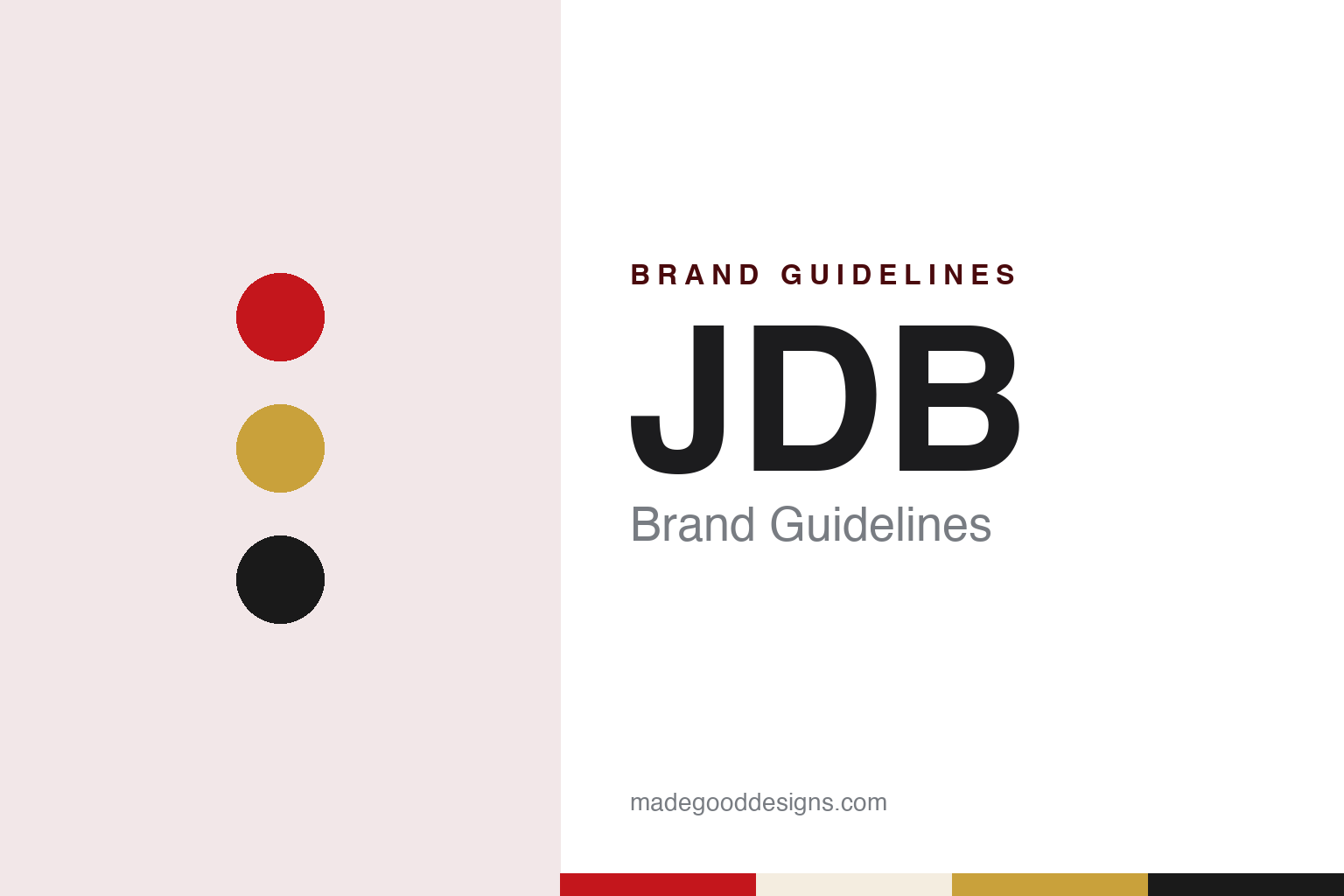
Two constants: a herbal red, gold can and ink palette and a bold modern sans register. Abstract homage — not a JDB product or mark; no can, logo or character is reproduced.
Hung To and the licence
A wholesaler, a recipe and a borrowed name.
JDB is the English short form of 加多宝, Jiaduobao, the herbal-tea brand of a Hong Kong-based drinks group of the same name. Chinese Wikipedia says its founder, Chan Hung To, was born in Dongguan in Guangdong, worked in wholesale and moved to Hong Kong, where he set up the Hung To Group.
The company began by borrowing a name. In 1990, Chinese Wikipedia says, Chan reached an agreement with Wang Jianyi, the Hong Kong descendant of the family behind Wong Lo Kat, to use the family recipe and trademark. In 1992 he opened a factory in Dongguan to make herbal tea for the mainland market. But the Wanglaoji trademark in mainland China belonged to a state-owned Guangzhou pharmaceutical company, so at first the drink had to be sold under a generic name meaning “cooling tea.”
In March 1995 Hung To signed its first mainland trademark licence with the state company. It allowed the group’s subsidiary, Jiaduobao, to make and sell Wanglaoji herbal tea in red paper packs and red cans, with the recipe supplied by Wang Jianyi; the state company sold its own tea in green cartons. Under the deal neither side was to use the other’s packaging, and the Hong Kong family’s own Wong Lo Kat products could not be sold in the mainland, Chinese Wikipedia says. The first licence ran to January 2003; the agreement was re-signed in February 1997 and again in 2000, with the right to the name now running to 2 May 2010. Two further supplementary agreements, signed in 2002 and 2003, extended the term to 2013 and 2020, English Wikipedia says.
Colour
From Wong Lo Kat to JDB.
Under the licence, the red can became one of the best-selling canned drinks in China. Both English and Chinese Wikipedia record that red-can sales grew far faster than the state company’s green carton during the 2000s, and Chinese Wikipedia says the red can topped Chinese canned-drink sales from 2007 to 2009. It was sold in the mainland with the English name Wong Lo Kat, the Cantonese spelling, English Wikipedia says. Chinese Wikipedia lists the group’s factories in Dongguan, Shaoxing, Shishi, Beijing, Qinghai, Hangzhou and Wuhan.
The licence ended in arbitration. In April 2011 the state group, Guangzhou Pharmaceutical Holdings, asked the China International Economic and Trade Arbitration Commission to rule that the 2002 and 2003 extensions were invalid. On 9 May 2012 the commission did so, finding that the licence had expired on 2 May 2010, English and Chinese Wikipedia both record; JDB said it understood the term ran to 2013. JDB had already begun the change: from 2011 its red cans read “Wanglaoji, produced by Jiaduobao,” and from May 2012 they carried the JDB name alone. Within days of the ruling, the state group launched a red can of its own under the Wanglaoji name. Cans in Hong Kong and Taiwan followed JDB’s change in early 2013, while tea made in Malaysia is still sold abroad as Wong Lo Kat Herbal Drink, Chinese Wikipedia says.
The two companies then went to court many times over advertising, recipe claims and packaging. In the packaging case, the Supreme People’s Court ruled on 16 August 2017 that both had made important contributions to the red-can design and could share the rights in it. In July 2019 the same court set aside a 2018 first-instance damages judgment against six JDB companies in the trademark case and sent it back for retrial; after the retrial judgment in July 2023, JDB said it would appeal, Chinese Wikipedia says.
Typography
Design and documentation.
The seven brands in this group all make dairy products or drinks, and all of them come from China: Yili, Mengniu, Bright Dairy, Nongfu Spring, Wong Lo Kat, JDB and Tsingtao. Chinese dairy, water, herbal-tea and beer brands in general sit at many different points in the trade, from names with long local histories to companies that now belong to much larger groups or answer to many shareholders, and a single brand can be sold everywhere from a corner shop to a supermarket shelf.
A drinks or dairy brand’s identity is usually carried less by a single product than by a pack, a name and the everyday habit it promises, because the company behind the name may have changed hands, added new plants or grown far beyond the city where it started. That makes the questions behind each name worth asking plainly: who started it, who owns it now, and where its products are actually made and packed.
Each guide separates what independent sources record from what the company says about itself — its founding story, its owners over time, where its products are made and how its packaging has changed — and marks plainly what rests only on the company’s own word.
Aa
A bold modern sans for a can that had to say its new name loudly. (Specimen set in Noto Sans SC, a sans STAND-IN; NOT the JDB logo or lettering.)
JDB
A gold can, a red can and a mineral water.
Colour became part of the argument. On 20 April 2015 JDB announced that it would switch its herbal tea from a red can to a gold can, Chinese Wikipedia says, and on 15 June 2018 it announced that the red can would return to sale, with red and gold versions sold side by side. The group also sells Kunlunshan mineral water, and the company’s own website, as archived in October 2024, presents the two brands together and lists offices in Beijing and Hong Kong. English Wikipedia describes the group as headquartered in Dongguan and notes that it has been called “China’s Coca-Cola.”
Outside the mainland the old name lives on in places. In September 2025 JDB said its affiliate Multi Access had won cases in the Federal Court of Canada and the EU General Court and that its Wong Lo Kat marks remained valid in more than sixty overseas territories; Guangzhou Pharmaceutical replied that JDB’s description was misleading and that it held Wanglaoji and Walovi marks in more than a hundred countries and regions, Chinese Wikipedia records. In May 2012 Wang Jianyi appeared at a JDB press conference as the group’s honorary chair, Chinese Wikipedia says.
For a design guide, JDB shows how much weight a colour can carry when a name changes: the company changed the words on its cans in 2012, moved to gold in 2015 and brought back red in 2018. Compare Wong Lo Kat, the name it once licensed, and Vitasoy, another Hong Kong drinks company that sells across mainland China. For this guide we use herbal red, gold can and ink with a sans, an unofficial interpretation; no product or logo is reproduced.
Explore & save
Keep JDB’s identity on hand — save it to a board in the Made Good inspiration library.
JDB identity set
Pin the JDB herbal red, gold can and ink palette and the bold modern sans register to your own board.