Rebisco Brand Guidelines
The San Juan bakery that became the Republic Biscuit Corporation.
Aa
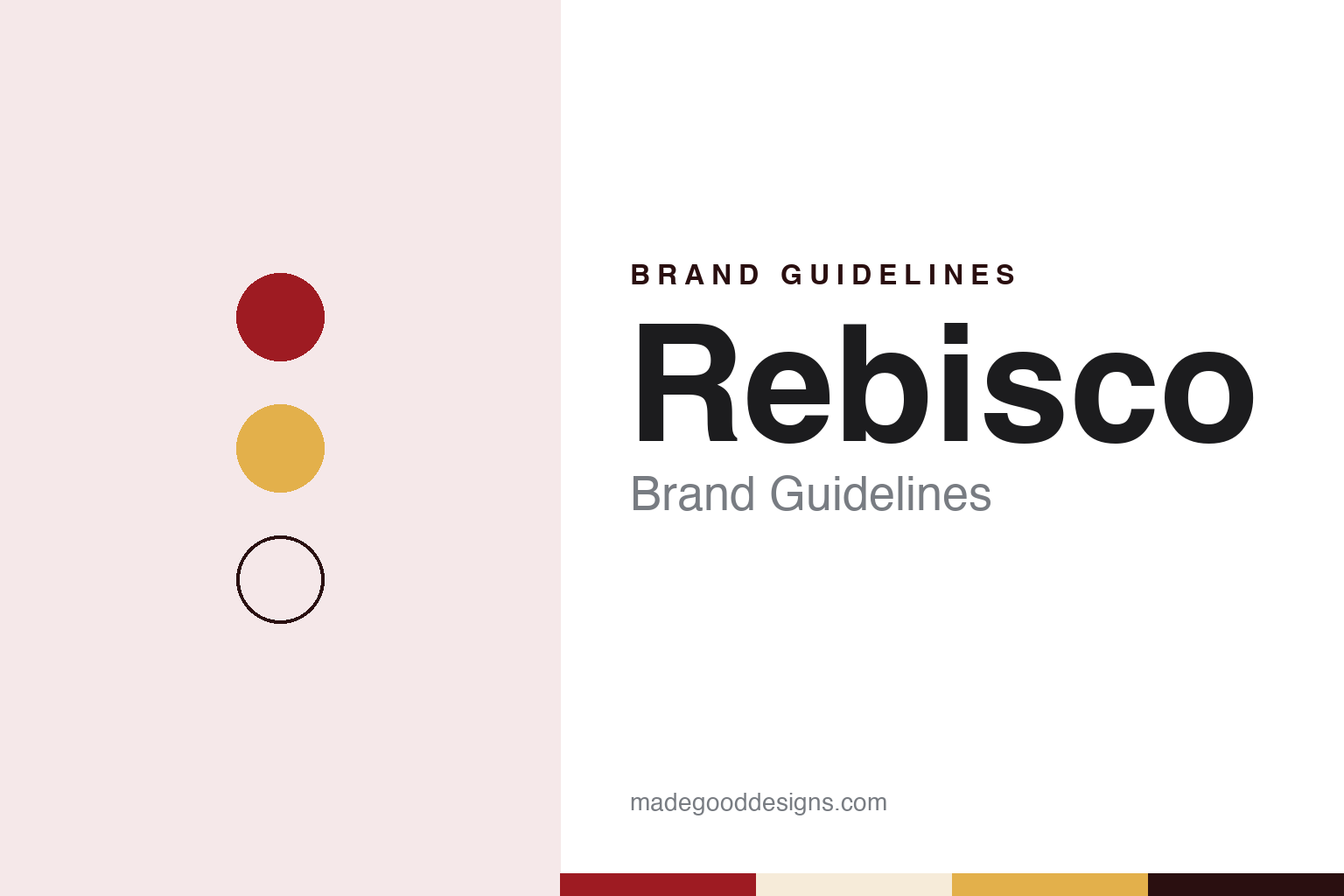
Two constants: a Rebisco biscuit red, cream and gold palette and a Rounded sans register. Abstract homage — not a Rebisco product or mark; no pack, logo or wordmark is reproduced.
England Biscuit Factory
A rented bakery in San Juan.
Rebisco is the trading name of the Republic Biscuit Corporation, a privately held Philippine snack-food company with its head office in Ortigas Center, Pasig, in Metro Manila. English Wikipedia says it was founded on 15 August 1963 by Jacinto L. Ng Sr., and that the name Rebisco is an acronym of the company’s legal name.
It did not start under that name. The company says its “humble ventures” began in a neighbourhood bakeshop in old San Juan, Metro Manila, in 1963, trading as England Biscuit Factory, and that the bakeshop was “backed up by an English-type rotary oven which was considered top-of-the-line then.” English Wikipedia describes the premises as a tiny, rented, second-hand bakery in what was then the municipality of San Juan, started with about US$5,000.
Its first products were a cream-filled cracker and a plain cracker called Sodatine. English Wikipedia spells the cream cracker Krema; the company spells it Crema and calls it “the first cream sandwich,” a claim we give as the company’s own. The business later moved to a larger factory in Novaliches, Quezon City, where the company still lists an office.
In 1972 England Biscuit Factory became the Republic Biscuit Corporation. The company describes that year as the moment it “acquired a new image and name, becoming the REBISCO that we know today”; English Wikipedia likewise says the firm adopted a new image along with the new name. In 1983, according to English Wikipedia, the cream cracker was relaunched as Rebisco Cream Sandwich, which became the company’s flagship product.
Colour
A family of sister companies.
Rebisco grew by setting up sister companies, each aimed at a different part of the snack market. English Wikipedia lists JBC Food Corporation in 1989, Suncrest Foods in 1995, Multirich Foods in 1999 and Pinnacle Foods in 2000; Pinnacle was folded into Suncrest in 2016. Tagalog Wikipedia sorts the group’s brands by subsidiary, placing nut and pea snacks such as Dingdong under JBC and cakes such as Fudgee Barr under Suncrest.
Its most direct link to European confectionery came in 2003, when it acquired Storck Products Inc., a company that had made sweets in the Philippines under licence from the German confectioner August Storck; the business was renamed SPI Corporation, English Wikipedia says. In 2006 Rebisco launched its own chocolate bar brand, Choco Mucho.
The company has since spread into neighbouring categories. In 2009 it moved its corporate office to the Joy-Nostalg Center in Ortigas and set up the Rebisco Foundation, which the company says was incorporated in April 2009 as its corporate social responsibility arm. In 2012 it formed Rebisco Vietnam, whose first product was Rebisco Extreme biscuits, and in 2015 it opened a factory in Ho Chi Minh City, its first outside the Philippines, according to English Wikipedia. Also in 2015 it set up Agripacific Corporation for flour milling and oil, and entered ice cream by acquiring Creamline Dairy Corporation, later renamed SFI Multimix. In 2018, its 55th anniversary year, it opened its first Snacks To-Go shop, and in 2022 it became the official Philippine importer of the Thai beverage company Ichitan.
On where its products are made, English Wikipedia lists factories in Quezon City, Caloocan, Valenzuela, Marilao in Bulacan, Calamba in Laguna, Clark in Pampanga and Tanza in Cavite, plus Ho Chi Minh City, and says the company was present in 48 countries as of 2023. The company’s own website speaks of “a growing global presence” and describes Rebisco as “a recognized pioneer in the Biscuit industry.”
Its brand names have also reached Philippine sport. The Premier Volleyball League teams the Creamline Cool Smashers and the Choco Mucho Flying Titans are Rebisco teams, as is the Criss Cross King Crunchers side in Spikers’ Turf, according to English Wikipedia.
Typography
Design and documentation.
The seven brands in this group are all Filipino food brands: Datu Puti, Silver Swan, Mang Tomas, Lucky Me!, Rebisco, Magnolia and Century Tuna. Food brands in the Philippines in general sit at many different points in the trade, from family firms that still carry a founder’s vision to names that now belong to much larger food groups, and a single brand can be sold everywhere from a neighbourhood sari-sari store to a supermarket shelf.
A food brand’s identity is usually carried less by a single product than by a pack, a name and the meal or snack it promises, because the company behind the name may have changed hands, moved its factory or grown far beyond the place where it started. That makes the questions behind each name worth asking plainly: who started it, who owns it now, and where its products are actually made and packed.
Each guide separates what independent sources record from what the company says about itself — its founding story, its owners over time, where its products are made and how its packaging has changed — and marks plainly what rests only on the company’s own word.
Aa
A rounded sans — REBISCO in capitals. (Specimen set in Rubik, a sans STAND-IN; NOT the Rebisco logo.)
Rebisco
One mark for many brands.
Rebisco’s visual identity has been rebuilt with outside help. On 21 February 2011, English Wikipedia records, the agency Y&R Philippines won Rebisco’s branding work, tasked with creating a new global brand for the company, including a new logo and a unified packaging mark to identify its wide range of products. Rebisco’s own website styles the company name in capitals, REBISCO, when it tells its history.
The portfolio that mark has to cover is broad. English Wikipedia lists biscuits, crackers, cookies, wafers, cakes, breads, candies, chocolates, nuts, ice cream, beverages, cooking oils, flours and baking mixes among its products. The company’s website currently features lines including Choco Mucho, Frootees, Mrs Goodman and Brownie Break alongside the original Rebisco crackers, and says each brand “is designed to give you and your family a unique and pleasurable experience.” Its stated vision is “to be a well-loved food company, built on family values.”
The company has remained private, and English Wikipedia describes Jacinto L. Ng Sr. as its founder and head as of 2023. The company’s website opens its own history with the words “For over 60 years.”
For a design guide, Rebisco shows how a company can stretch one biscuit name across dozens of sub-brands and then commission a single mark to hold them together. Compare Werther’s Original, a brand of the German confectioner whose Philippine licensee Rebisco bought, and Magnolia, another Manila food name with a long history. For this guide we use a biscuit red, cream and a toasted gold with a sans, an unofficial interpretation; no product or logo is reproduced.
Explore & save
Keep Rebisco’s identity on hand — save it to a board in the Made Good inspiration library.
Rebisco identity set
Pin the Rebisco biscuit red, cream and gold palette and the Rounded sans register to your own board.