Roku Brand Guidelines
Suntory’s six-sided Japanese gin.
Aa
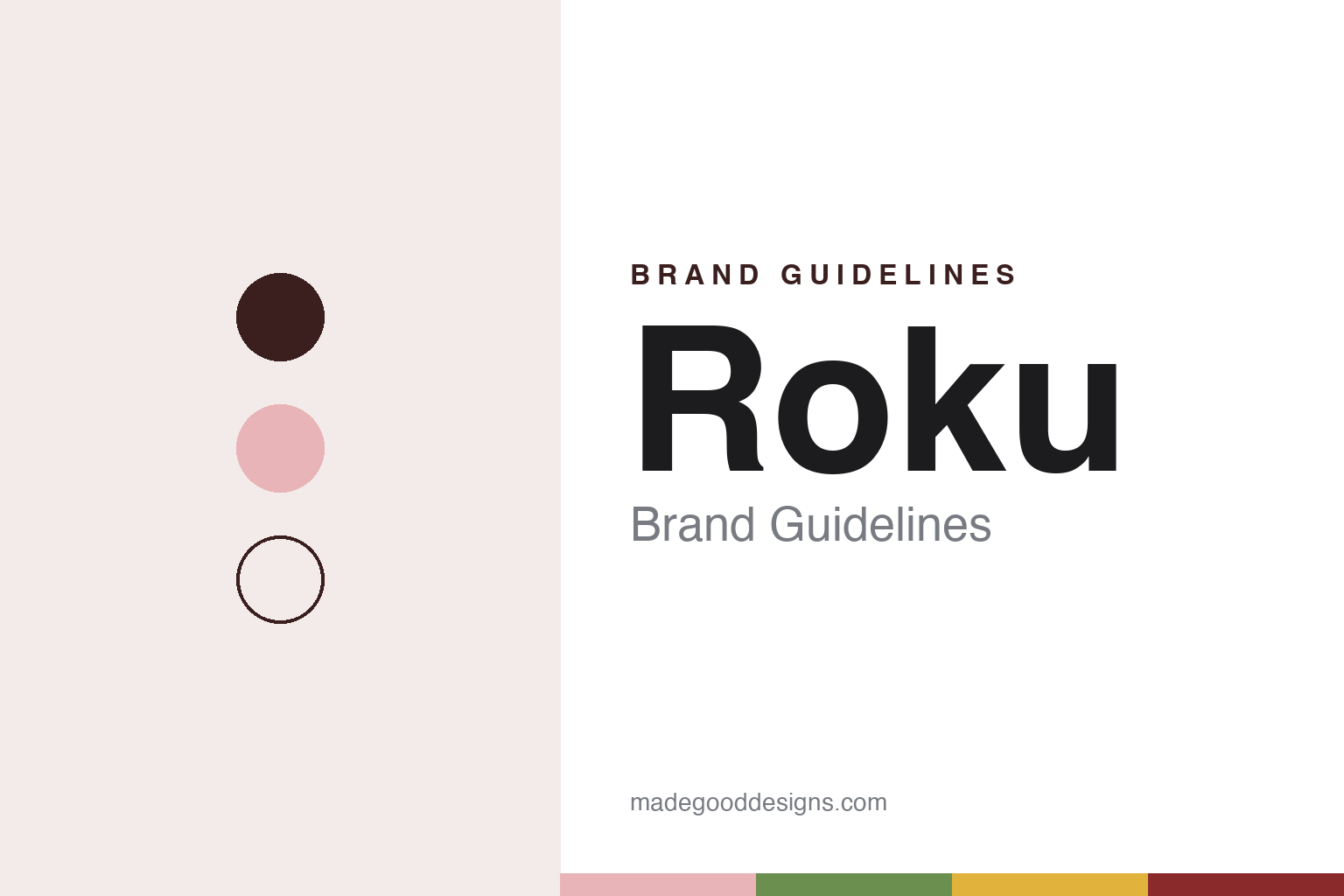
Two constants: a Roku seasonal palette of blossom, tea and citrus and a mincho serif register. Abstract homage — not a Roku product or mark; no bottle, logo or label is reproduced.
Six
A Japanese gin from a whisky house.
Roku is a Japanese gin made by Suntory, the Osaka drinks group better known for whisky. Suntory released it in Japan on 4 July 2017, the Tokyo-based spirits blog Nomunication reported later that month; the Japanese bottling was 47% alcohol, and the version for export, which Beam Suntory began rolling out from September 2017 in Germany, Taiwan and Southeast Asia, was 43%. The Drinks Business reported Beam Suntory’s confirmation of a global launch the same July. A travel-retail Select Edition followed.
Roku is the Japanese word for six, and the name refers to the six Japanese botanicals in the gin. Suntory groups them by season: sakura flower and sakura leaf for spring, sencha and gyokuro teas for summer, sansho pepper for autumn and yuzu peel for winter. Trade and retail descriptions add eight traditional gin botanicals, juniper among them, for fourteen in all.
Suntory says Roku is crafted at its Osaka distillery, where each botanical is given its own distillation technique; trade descriptions name the site as Suntory’s Liquor Atelier and describe the botanicals being distilled separately in different pot stills before blending. In the UK, Roku was first introduced in around fifty bars, with Maxxium UK as distributor, SLTN reported. By May 2018 the streetwear and culture site Hypebeast was reporting the gin as available in Asia and Europe.
The gin came from a company with a long Osaka history. Suntory traces itself to the shop Shinjiro Torii opened in Osaka in 1899, and to the Yamazaki distillery, Japan’s first malt whisky distillery, which began operating in the 1920s. Its Japanese whiskies made the name abroad; Roku was presented as the company’s Japanese craft gin, and the company describes its botanicals as harvested at their seasonal peak.
Colour
A hexagon, embossed botanicals and washi.
Roku’s design turns its name into a shape. The bottle is hexagonal, one side for each Japanese botanical, a link Suntory itself draws on its website, and trade and retail descriptions say each facet is embossed with one of the botanicals. Before the launch, The Spirits Business described the hexagonal bottle with the six botanicals engraved on it.
The label is printed on washi, traditional Japanese paper, and carries the kanji for six with bold calligraphy across it, according to retailer descriptions of the gin. In August 2026 BeverageDaily described the packaging of a limited edition in the same terms — embossed botanicals and a textured washi label on a hexagonal bottle — and quoted Roger Chen, Roku’s Southeast Asia marketing director: “Every detail reflects our appreciation for Japanese craftsmanship, precision and seasonality.”
The design has been recognised by the drinks trade. At The Spirits Business’s Design & Packaging Masters in 2017, Beam Suntory’s Roku was awarded a Master medal, the top tier, in the gin category.
Limited editions have extended the seasonal idea. The Sakura Bloom Edition, described as the brand’s first limited-edition gin and the first of a seasonal series, made its travel-retail debut at Singapore’s Changi Airport in February 2024 before rolling out to airports in Europe, Asia and the Middle East, The Moodie Davitt Report and GTR Magazine reported. The summer Noryo Tea Edition, built around the sencha and gyokuro botanicals, followed, BeverageDaily reported in August 2026.
The trade coverage of those editions ties them to shun, the Japanese idea of enjoying an ingredient at the height of its season, the same idea Suntory uses for the core gin’s four seasonal pairs of botanicals. For the Sakura Bloom launch, a pop-up at Frankfurt Airport run with the retailer Gebr. Heinemann in spring 2024 was decorated with pink blossom displays evoking the hanami flower-viewing festivals, The Moodie Davitt Report reported.
Typography
Design and documentation.
The seven brands in this group are all whisky, gin, grappa, calvados and rosé names: Tomatin, Jura, Edinburgh Gin, Roku, Poli, Boulard and Minuty. Spirits and wine brands in general sit at many different points in the trade, from family houses that still carry a founder’s name to labels that now belong to much larger drinks groups, and a single brand can be sold everywhere from a corner shop to a restaurant list.
A spirit or wine brand’s identity is usually carried less by a single bottle than by a label, a name and the place it promises, because the company behind the name may have changed hands, moved its production or grown far beyond the place where it started. That makes the questions behind each name worth asking plainly: who started it, who owns it now, and where its spirit or wine is actually made and bottled.
Each guide separates what independent sources record from what the company says about itself — its founding story, its owners over time, where its spirit or wine is made and how its labels have changed — and marks plainly what rests only on the company’s own word.
六
A mincho serif — the brush-and-paper register of the label. (Specimen set in Shippori Mincho, a serif STAND-IN; NOT the Roku logo or calligraphy.)
Roku
A gin inside a global spirits group.
Roku sits inside one of the world’s larger spirits businesses. Suntory’s international spirits arm, formed after Suntory Holdings bought Beam Inc. in 2014, traded as Beam Suntory when Roku launched; on 1 May 2024 it was renamed Suntory Global Spirits, Suntory announced. Roku is now presented under The House of Suntory, the group’s Japanese spirits banner, alongside its whiskies; the website lists the Kasane Edition and the Minori Select Edition among its current bottlings.
Roku shares its owner with other gins. Sipsmith, the London distillery founded in 2009, was bought by Beam Suntory in December 2016 and is part of the same group, and Suntory’s Japanese portfolio also includes whiskies made at Yamazaki and Hakushu. The Roku name has nothing to do with Roku, Inc., the American maker of streaming devices.
For a design guide, Roku shows how a single number can carry a whole identity — six botanicals, six sides and the kanji for six on paper made by a Japanese craft. Compare Suntory, the Osaka group behind it, and Sipsmith, a London gin in the same group. For this guide we use a dark red with blossom pink, tea green and yuzu yellow and a serif, an unofficial interpretation; no product or logo is reproduced.
Explore & save
Keep Roku’s identity on hand — save it to a board in the Made Good inspiration library.
Roku identity set
Pin the Roku blossom, tea and citrus palette and the mincho serif register to your own board.