Ron Abuelo Brand Guidelines
The Varela family’s aged rum from a 1908 sugar mill in Pesé.
Aa
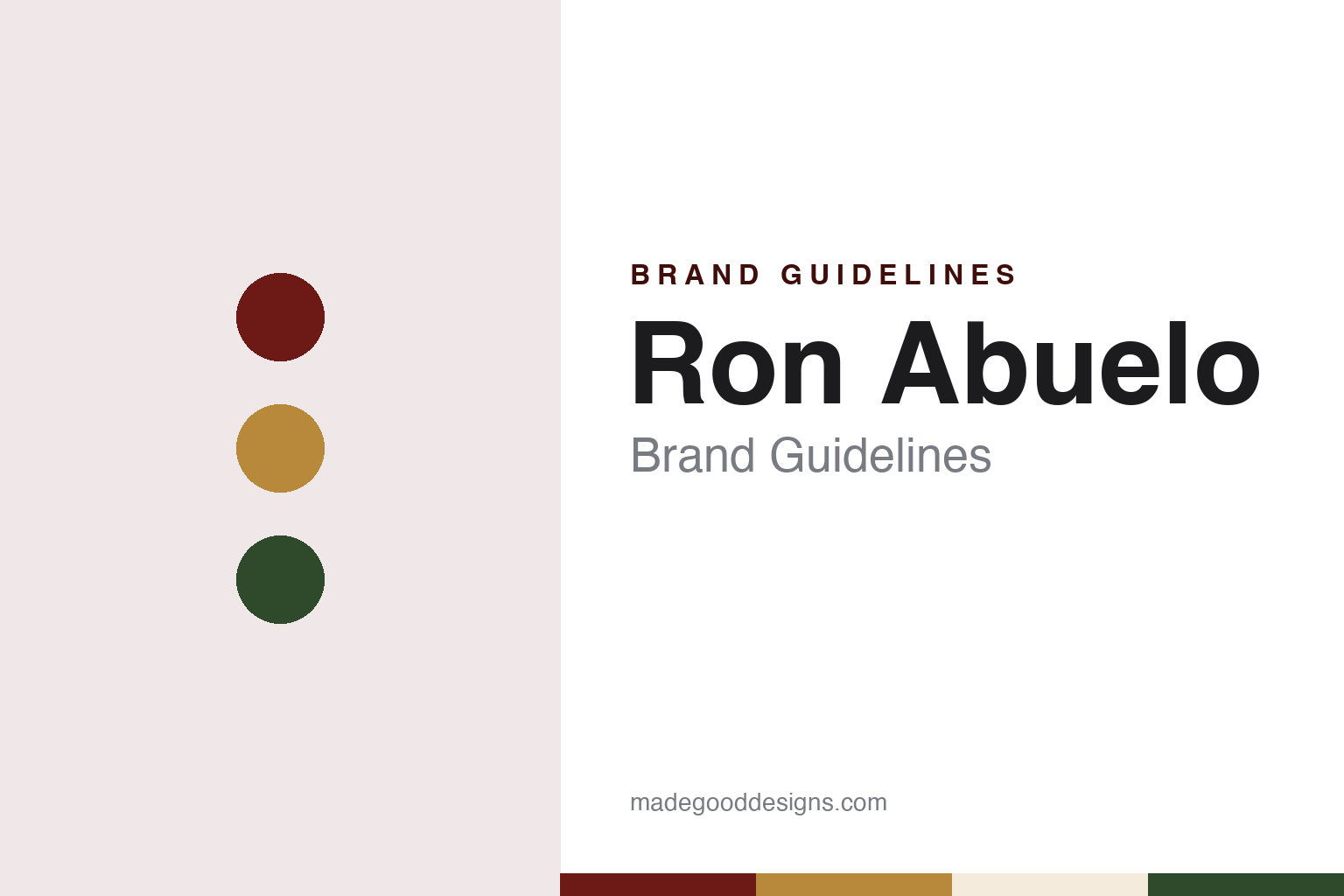
Two constants: an oxblood, barrel gold and cane green palette and an old-style serif register. Abstract homage — not a Ron Abuelo product or mark; no label, logo or bottle is reproduced.
A sugar mill in the new republic
From cane sugar in Herrera to a family of aged rums.
Ron Abuelo is the aged rum of Varela Hermanos, a family drinks company in Panama; the brand’s website states that it is owned by Varela Hermanos, S.A., of Panama City. The name is the Spanish word for grandfather, and the grandfather in question is the company’s founder, José Varela Blanco, whom the brand calls Don José.
The company tells his story in a dated timeline. It says he came from Galicia in Spain, set sail for the Americas in 1891 at the age of 18, and arrived in Panama in 1893, settling in Pesé, a town in the central province of Herrera. In 1908, the company says, he established the Ingenio San Isidro, which it describes as the first sugar mill in the recently formed Republic of Panama; the country had declared its independence from Colombia in 1903. Spanish Wikipedia’s article on Pesé also dates Varela Hermanos to 1908 and says the business began by producing sugar before the founder’s sons turned it into a drinks producer.
The company dates that turn to 1936, when, it says, Don José’s sons persuaded him to start distilling sugar cane. Its timeline places the first production of Seco Herrerano, the clear cane spirit that is the family’s best-known domestic brand, in 1950, while English Wikipedia’s article on Seco Herrerano dates that brand to 1908. The company says the first bottle of Ron Abuelo was produced in 1960. Zamora Company, the Spanish drinks group that distributes the rum in Iberia, says the business is now run by the third generation of the Varela family.
Colour
A family name on the bottle and a slow move abroad.
For four decades Ron Abuelo was a Panamanian rum sold in Panama. The company’s timeline records that the brand was given what it calls “a new, refined look” in 1997, and that it went global in 2001, when the first bottles were exported and sold outside the country. By 2020, the company says, Ron Abuelo was available in 44 international markets.
The range grew in step with that expansion, and its names do much of the brand’s storytelling. The company says Ron Abuelo 7 Años was introduced in 2005 and 12 Años was added in 2008, joining the core Añejo. In 2010 came Centuria, which the company describes as its first solera-aged rum and the family reserve, created to mark a century of the business. In 2015 the Finish Collection followed, a set of finished rums named Oloroso, Napoleon and Tawny; the company says the collection was inspired by the family’s journeys to Europe. In 2019 it launched Two Oaks, which it calls “the world’s first charred-oak rum.”
The brand’s website tells the founder’s story as a dated timeline, year by year, and gives separate pages to the place, the ingredients and the process. It describes the annual harvest, the zafra, as one for which more than 150 workers from Pesé join the company each year.
Place is the other constant. The company says that more than a century after it began in 1908, it is still based at the same hacienda in Pesé, and that Ron Abuelo “can only be made in one place.” Spanish Wikipedia’s Pesé article describes a Ruta del Ron, or rum route, in the town that takes visitors to the Varela family’s colonial house, now a museum, and by ox cart to the Hacienda San Isidro, where the spirit is made, ending in a tasting room.
Typography
Design and documentation.
The seven brands in this group are all mezcal, rum and whisky names: Del Maguey, Montelobos, Ilegal, Don Q, Ron Abuelo, Cruzan and Forty Creek. Spirits brands in general sit at many different points in the trade, from family houses that still carry a founder’s name to labels that now belong to much larger drinks groups, and a single brand can be sold everywhere from a corner shop to a cocktail bar.
A spirits brand’s identity is usually carried less by a single bottle than by a label, a name and the place it promises, because the company behind the name may have changed hands, moved its production or grown far beyond the place where it started. That makes the questions behind each name worth asking plainly: who started it, who owns it now, and where its spirit is actually distilled, aged and bottled.
Each guide separates what independent sources record from what the company says about itself — its founding story, its owners over time, where its spirit is made and how its labels have changed — and marks plainly what rests only on the company’s own word.
Aa
An old-style serif for a family name and a dated story. (Specimen set in Cormorant Garamond, a serif STAND-IN; NOT the Ron Abuelo logo.)
Ron Abuelo
Cane, column stills and barrels in one Panamanian town.
The company presents Ron Abuelo as a rum made from field to bottle in one place. It says it grows all of its own sugar cane in the land surrounding its distillery, gathering more than 1,600 hectares each year, and Zamora Company’s release says the business processes about 95,000 tonnes of cane a year. The company’s account of its process describes two sets of traditional column stills producing two foundation rums, which are then blended and aged.
Ageing is where the brand places most of its emphasis. The company describes two systems: a “Vintage Pallet” method, in which barrels are refilled every two years with rum of the same age, and a solera, in which its oldest reserves, from 12 to more than 40 years, are blended to become the heart of Centuria. Zamora Company says the family keeps more than 120,000 American white oak barrels.
The parent company also frames the business around its farm. Varela Hermanos said in January 2024 that it had become the first sugar mill in Panama to certify the sustainable production of its sugar cane. On its own website the company says it has spent more than 110 years in the production, distribution and wholesale of spirits.
For a design guide, Ron Abuelo shows how a single word, a dated family timeline and one town in Herrera can carry a rum from a sugar mill founded in a new republic to shelves in dozens of countries. Compare Flor de Caña, the Pellas family rum from Nicaragua, and Zacapa, the aged rum from Guatemala. For this guide we use oxblood, barrel gold and cane green with a serif, an unofficial interpretation; no product or logo is reproduced.
Explore & save
Keep Ron Abuelo’s identity on hand — save it to a board in the Made Good inspiration library.
Ron Abuelo identity set
Pin the Ron Abuelo oxblood, barrel gold and cane green palette and the old-style serif register to your own board.