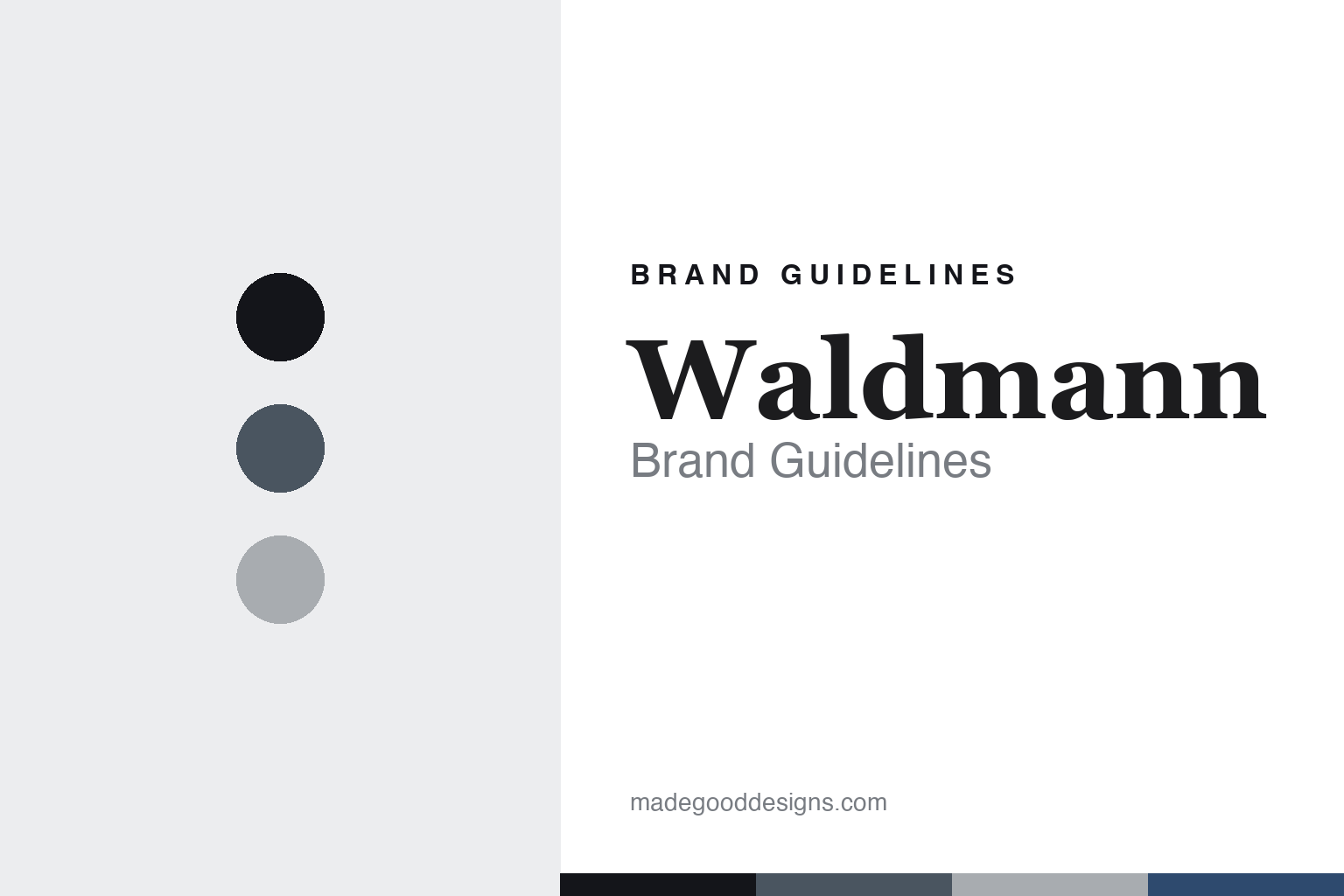
Waldmann Brand Guidelines
Silver & engraving.
Aa
Two constants: a slate-and-silver palette and an heirloom serif register. Abstract homage — not the Waldmann pen or packaging.
Silver & engraving
Waldmann works sterling silver into heirloom writing instruments.
Waldmann is a lesson in a material as identity. Founded in 1918 in the Pforzheim jewelry region of Germany — the country’s traditional precious-metals district — it makes writing instruments as silver heirlooms.
Its identity is 925 sterling silver: solid silver is the core material of its pens, worked with finely engraved, engine-turned surfaces — fine lines and pinstripes — and finished as “timeless,” heirloom objects of German silversmithing. Its lines carry names like the Tuscany (inspired by Mediterranean cypress trees) and the Commander (with a spring-loaded tie-bar clip).
(Honest notes: Waldmann was founded in 1918 in the Pforzheim jewelry region — we describe it that way rather than asserting a specific municipality. Its founder (reported as Adolf Waldmann) and current ownership are not something we confirmed. The sterling-silver focus is the verified core; the specific named guilloché patterns are described generically. And the silver-plus-engine-turning identity is a shared signature of the Pforzheim district — it overlaps with houses like Otto Hutt rather than being unique. There’s no official brand hex, so these tones are an unofficial interpretation. This is design commentary and does not promote any product.)
Colour
Waldmann lives in a slate-and-silver palette. Click a swatch to copy the hex.
Waldmann’s identity is silver, heirloom and German — a slate, an ink, a silver, a sapphire, and a chalk. The palette pairs a slate with a silver — the register of engraved sterling silver and the jeweler’s district. It signals precious metal and heritage rather than colour. The honest caveat: with no published brand hex, these tones are an original, unofficial interpretation, not first-party values.
The lesson is a slate with a silver signals a sterling-silver, heirloom brand. Waldmann’s world is an engraved silver pen. For designers, it is a reminder that a cool, metallic palette reads as precious and enduring — right for a silversmith’s house. The takeaways: make the material the identity (925 silver); engrave the surface; keep the palette metallic; and treat any single hex as unofficial.
Typography
The register is an heirloom serif — precious, classic, timeless.
Waldmann’s identity carries a precious, classic, timeless spirit — engraved silver and heirloom intent. A refined heirloom serif captures the mood: it is elegant and traditional, the register of a jeweler. Set in a slate-and-silver palette, the heirloom serif feels precious and classic — exactly the personality Waldmann carries. It is timeless rather than trendy, mirroring an heirloom object. (Waldmann’s real pens and wordmark are works we describe but do not reproduce, and the exact typeface is not ours to use.) Because it is not ours to use, the honest description is “an heirloom serif spirit,” shown here in a stand-in. The type behaves like the brand: precious, classic and timeless.
Aa
An heirloom serif spirit — precious and classic. (Specimen set in Cormorant Garamond, a delicate literary serif STAND-IN; NOT the Waldmann packaging.)
A material as identity
Waldmann stands for sterling-silver heirlooms.
Waldmann is a lesson in making a material the identity. A slate-and-silver palette, an heirloom serif and 925 sterling silver make a material the whole brand — precious, classic, timeless. The material is the differentiator. The differentiator is a sterling-silver, heirloom identity.
For designers and brand-builders, Waldmann offers a clear takeaway: let a precious material carry the brand. The lessons: commit to a material (925 silver); engrave the surface; keep the palette metallic; and be honest about the region and gaps. It is also a reminder to stay accurate: it’s a 1918 Pforzheim-region house, its silver-and-guilloché identity is shared across the district, and the palette here is an unofficial interpretation. Waldmann made sterling silver the brand — proof that a material can be the difference.
Explore & save
Keep Waldmann’s identity on hand — save it to a board in the Made Good inspiration library.
Waldmann identity set
Pin the slate-and-silver palette and the heirloom-serif register to your own board.