Zoku Brand Guidelines
The Amsterdam home-office hybrid built around a raised-bed loft.
Aa
Two constants: a Zoku green, oak and linen palette and a grotesque sans register. Abstract homage — not a Zoku product or mark; no interior, logo or sign is reproduced.
A home-office hybrid
Two founders and a loft in Amsterdam.
Zoku is a Dutch hospitality brand that puts a hotel, an apartment and a workplace in one building. It was created by Hans Meyer, a co-founder of citizenM, and Marc Jongerius, according to the interiors magazine Hospitality Interiors, which reported the concept in May 2015. The magazine said the name, taken from Japanese, means “family, tribe or clan,” and described Zoku as a “home-office hybrid” with the services of a hotel and the sense of community of a busy neighbourhood. The concept was shaped through research and crowdsourcing with the futures consultancy The Future Laboratory, and the interiors were designed with the Dutch interior design and architecture firm Concrete.
The Amsterdam property opened in 2016 in the city’s Eastern Canal District, according to a guest column by the brand consultant Youri Sawerschel published by Hotel Designs in July 2017. In 2015 Hospitality Interiors had given the plan for that building as 133 Zoku Lofts and about 500 square metres of social space for guests. Sawerschel wrote that at its opening Zoku hosted attendees of the Startup Fest Europe conference and organised learning and networking events for them, and he quoted Meyer as saying that “beta” was the brand’s most important value, which Sawerschel compared to the habits of a technology start-up.
Zoku’s own account of its origin says the team interviewed 150 people who travelled often for work before it chose a name or designed a single room. Two complaints came up most often, the company says: feeling disconnected from friends and routines when away from home, and hotel rooms that were hard to cook, work or invite someone over in. The company sums up its answer as a building that is “private downstairs and social upstairs.”
Colour
The Loft and the rooftop.
The unit at the centre of the brand is the Zoku Loft. In 2015 Hospitality Interiors described it as a room that moves the focus from the bed to the living space: a four-person table in the middle for working, dining or meeting, a fully equipped kitchen with plenty of storage, an alcove desk with office supplies, and an elevated, loft-style sleeping place reached by a retractable staircase. Furniture came from the Danish brand Muuto, and guests could choose their own artwork. Sawerschel wrote in 2017 that the room design drew on the functional Asian micro-apartment and fitted living and working areas into about 25 square metres.
Shared space sits at the top of the building rather than at street level. Zoku’s website describes rooftop “Social Spaces” in place of a traditional lobby, with coworking areas, quiet corners, meeting rooms, a bar called Kindred Spirits and a restaurant called The Living Kitchen, and a team it calls “Sidekicks” who welcome guests and make introductions. Its tagline reads “One Place. All Sides of You.” Hospitality Interiors reported in 2015 that Lofts could be rented for five nights or for several months; the current website offers hotel stays, extended stays, group bookings and team offsites.
The room plan has travelled from city to city. When the Copenhagen property opened, the travel publication Globetrender reported in August 2021 that it had again been designed with Concrete, with Lofts in five sizes from 22 to 40 square metres, pull-up rings for exercise, raised beds hidden behind a sliding door, steps that retract to free floor space, and furniture from the Danish brand HAY. Guests could still choose the artwork for their walls. The coworking and dining areas, branded WorkZoku and Living Kitchen, were placed on the fifth-floor rooftop, repeating the Amsterdam arrangement of private rooms below and shared rooms above.
Typography
Brand families and operators.
Aparthotel and serviced-apartment operators sell a stay that sits between a hotel room and a rented flat: a studio or apartment with a kitchen, let by the night or the month. Their brands are seen on building signs, booking pages, key cards and apps, and in the lobbies and shared rooms that trade titles describe when a brand is launched or refreshed.
Many of these companies present themselves as brand families rather than single names. A listed group may run several brands at once, each with its own name on the door, while the group name appears on corporate pages and investor statements. Others run one core brand and add a second, more premium name for newer, purpose-built buildings. Property, unit and city counts appear in company statements and dated press reports, and they change often as buildings open, close or switch operator.
Ownership varies widely across the category. Some operators are arms of listed property groups; some are founder-led companies that began with a handful of flats; others are backed by investors or have changed hands through acquisitions. Many do not own their buildings at all, but lease them from developers, pension funds or other landlords, so the brand on the façade belongs to the operator while the building belongs to someone else.
When these operators describe a brand change, they often talk about spaces as much as graphics: a reception desk combined with a café, a lounge turned into a coffee bar, a shared kitchen that doubles as a meeting room, or studios fitted for longer stays. This guide sets out what can be checked about each brand, who founded it, who owns it and how it is organised, and marks plainly what rests on the company’s own word.
Aa
A grotesque sans for a loft-and-rooftop brand. (Specimen set in Space Grotesk, a sans STAND-IN; NOT the Zoku logo.)
Zoku
Four cities, one room plan.
Expansion beyond the Netherlands began with two signings announced in November 2018 and reported by Sleeper and Serviced Apartment News. In Copenhagen, Zoku took a site on Amager island, close to the city centre, for 160 lofts — more than the Amsterdam building — in a building to be shared with an organic supermarket and the coworking operator Woods; the reports said the city council had chosen Zoku for the site, and Jongerius named NREP and Tetris as the Copenhagen partners. In Vienna, the brand took 131 lofts in the Prater Glacis complex of IG Immobilien, a subsidiary of the Austrian National Bank, in the Leopoldstadt district. Both were then due to open in 2020.
Both opened in 2021. Globetrender reported that Zoku Copenhagen opened in May 2021 and Zoku Vienna in June 2021, the Vienna Lofts measuring 24 to 28 square metres in four types, some with balconies, and its rooftop on the seventh floor looking towards the Prater park. Skift reported in April 2023 that Zoku’s fourth property, in Paris, would open on 31 May that year, in the Clichy area facing the Renzo Piano-designed Tribunal de Paris. Zoku’s website now lists the same four cities: Amsterdam, Copenhagen, Paris and Vienna. A company interview published in September 2025 still presents Meyer and Jongerius as its co-founders.
For a design guide, Zoku shows how a hotel brand can be built around a room plan: a raised bed, a big shared table and a rooftop for everyone, repeated from city to city. Compare citizenM, the hotel brand Hans Meyer co-founded before Zoku, and The Social Hub, another Amsterdam-founded mix of hotel, workspace and community. For this guide we use a forest green, warm oak, concrete grey and linen with a sans, an unofficial interpretation; no product or logo is reproduced.
Explore & save
Keep Zoku’s identity on hand — save it to a board in the Made Good inspiration library.
Zoku identity set
Pin the Zoku green, oak and linen palette and the grotesque sans register to your own board.
Source & notes
Frequently Asked Questions
What font can I use to match the Zoku look?
This guide describes Zoku’s type as “A grotesque sans for a loft-and-rooftop brand”. Its type specimen is set in Space Grotesk from Google Fonts as a stand-in; Space Grotesk is not Zoku’s own lettering.
What colours are in the Zoku palette?
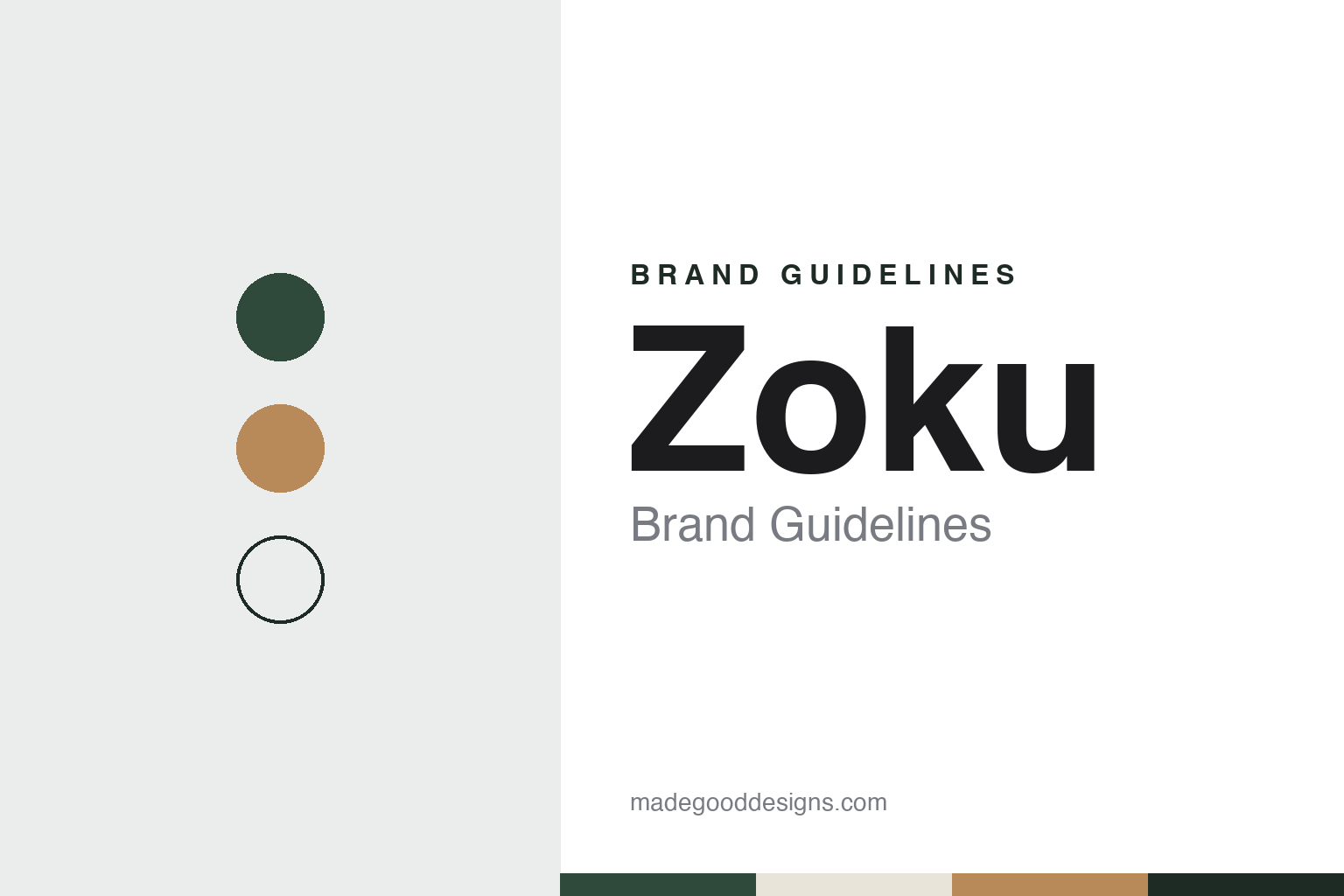
This guide’s Zoku palette is Forest green #2F4A3A, Night moss #1E2B24, Warm oak #B88A5A, Concrete grey #9A9A94 and Linen #F4F1EA. The tones are the guide’s own unofficial interpretation, not official Zoku hex codes.
When was Zoku founded?
Zoku was founded in 2016 (opening), in Amsterdam, Netherlands. Zoku is known for Zoku Loft, rooftop Social Spaces.
Who founded Zoku?
Zoku was founded by Hans Meyer and Marc Jongerius in 2016 (opening).