Outfitters Brand Guidelines
The Western-wear chain built for Pakistan’s city youth.
Aa
Two constants: an indigo, ink and chalk palette and a street-ready sans register. Abstract homage — not an Outfitters product or mark; no garment, logo or shop sign is reproduced.
A Chain From a House
Western clothing for Pakistan’s urban young.
Outfitters opened in 2003. The company’s own website says it was “established in 2003” as a fashion brand for “the spirited youth of Pakistan,” and the business magazine Profit, part of Pakistan Today, set out its story in January 2017. Profit named the founder as Kamran Khursheed and wrote that he started the company in his house.
The idea was Western clothing for young, middle-class Pakistanis in the big cities. Profit described it as the third local chain selling its own brand of Western clothing, after Leisure Club in 1997 and Crossroads in 2002. From the start, its menswear sold far more than its womenswear, the founder told The Express Tribune in 2011, as Profit later quoted him.
Two more labels followed. Outfitters Junior, the children’s line, arrived in 2008, Profit reported. In 2011 the company launched Ethnic, a separate brand of Pakistani-style womenswear, to reach shoppers who wanted eastern clothes rather than Western ones. Profit named the holding company for both brands as Outfitters Stores.
By January 2017, Profit counted 60 Outfitters stores in 17 Pakistani cities and one in Dubai, plus 27 Ethnic stores; 34 stores had opened over the previous five years, half of them Ethnic. In May 2021 the same magazine put Outfitters, including Ethnic, at about 100 outlets.
Colour
Made in its own units, sold in its own stores.
What sets the business apart, in Profit’s 2017 account, is how much it does itself. Its chief operating officer told the magazine that more than 80 percent of manufacturing and logistics was done in-house, leaving out only the haul from factory to shop. The products it did not make itself were heavier jackets and woven sweaters, which were made for it in China.
The chain also kept its shops close. Profit reported that Outfitters franchised a few outlets early on, then stopped, and that the franchised outlets still open were owned by the franchisee but run and managed by Outfitters. Store sizes grew in the same years: the typical shop of about 2,000 square feet was giving way to larger units of around 6,000, with some flagships of about 20,000 square feet, often in malls.
The range today, as the company describes it, covers men, women and juniors, from trend pieces to athleisure, casual clothes and basics, with footwear, accessories and fragrances alongside. It says it now has “100+ stores across 20 cities in Pakistan” and an online store; that count is the company’s own. Profit reported in 2017 that it also sold through its own website and through the online marketplace Daraz.
Advertising has drawn a line between the two main brands. In 2017 Profit noted that Outfitters campaigns used foreign models while Ethnic campaigns used Pakistani models. Ethnic has since pushed the store itself as a stage: in December 2022 it opened a large “Creative Studio” shop at Dolmen Mall in Clifton, Karachi, which Profit described in January 2023 as its experiential store.
Typography
Shop signs, look-books and colour.
Pakistani and Bangladeshi fashion and retail brands present themselves through a few recurring touchpoints: the shop sign over a mall unit, the logo on a carrier bag, the seasonal look-book and the corporate page that names a founder or a parent company. Some marks point back to craft — Khaadi, for example, says the hands in its logo symbolise its heritage in handloom craft — while others set a short name in plain capitals, as Sapphire does.
The formats vary widely. Some of the brands in this group began as a single shop and grew into mall flagships at home and abroad; others are the retail arms of textile mills, and can draw on a parent’s own spinning, weaving and printing before cloth reaches a store, as Sapphire describes. Alongside them sit supermarket chains, craft-led lifestyle stores and online marketplaces, each with its own way of showing a name on a shopfront, a shelf or a screen.
Collections are named in the companies’ own terms. Lawn, prêt and unstitched fabric appear again and again in their catalogues, and the balance between them has shifted: Profit by Pakistan Today reported in 2017, from Pakistan Bureau of Statistics data, that ready-made clothes took 13 percent of household clothing spending in 2002 and 33 percent in 2016, while unstitched cloth and accessories fell from more than 68 percent to 50 percent.
Ownership is set out plainly in each guide: family-owned, founder-owned, mill-owned or group-owned, with dates where a dated source gives them. Each guide separates what independent press and official filings record from what the company says about itself, and the palettes and type pairings shown are an unofficial interpretation rather than a reproduction of any brand’s colours or marks.
Aa
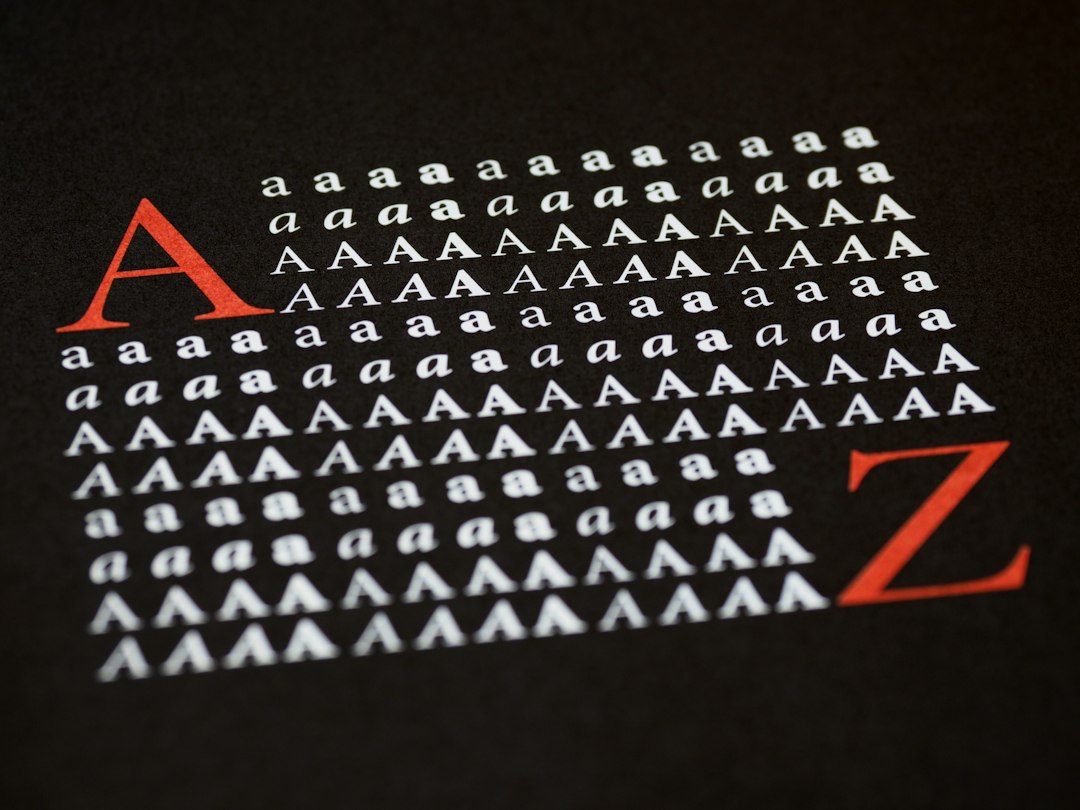
A wide, street-ready sans for a Western-wear chain. (Specimen set in Archivo, a sans STAND-IN; NOT the Outfitters logo.)
Outfitters
One house, Western and eastern.
Outfitters is a useful case of one company running two clear identities side by side. The Western-wear brand speaks to young city shoppers in men’s, women’s and children’s lines; Ethnic, from the same holding company, speaks to women buying ready-to-wear eastern clothes. Profit reported in 2021 that the company only became relevant to women shoppers once Ethnic arrived, and grouped Ethnic with other ready-to-wear names as part of a wider move away from unstitched cloth.
That move matters for anyone designing for Pakistani fashion retail. Profit wrote in 2021 that ready-made clothes made up 37 percent of consumer spending on clothing in Pakistan in 2019, against 13 percent in 2002, when unstitched cloth took more than two-thirds. A chain built on ready-made Western clothes started at the near edge of that shift. Its shop formats moved with it, from small street units to large mall stores, which puts more weight on the sign, the window and the fitting room than on a printed catalogue.
The children’s line shows the same logic at a smaller scale. Profit listed three audiences in 2017, men, children through Outfitters Junior, and women, each with its own line in the shops. A children’s label that keeps the parent name lets one shop front carry three audiences, while the separate Ethnic stores carry a fourth. In a mall, that becomes a row of related doors rather than a single sign.
The company’s own copy leans on youth and change. Its website frames Outfitters around “style, music, technology or social networking” and describes a model that adapts during a season and turns trends into wearable clothes quickly; those are its own words. The brand names are short and plain, with the parent word reused for Outfitters Junior, while Ethnic stands on its own name. The palette below is our own reading of a denim-and-concrete street register, not the company’s scheme, and the typeface is a stand-in chosen for its plain, wide letters.
For a design guide, Outfitters shows how a fast-fashion chain can build a family of names from one house: a Western-wear core, a children’s line that borrows the parent name, and an eastern-wear brand with its own name and models. Compare Khaadi, another Pakistani fashion retailer, and Bonanza Satrangi, a family firm that added a women’s line under a second name. For this guide we use a washed indigo, ink, concrete grey and chalk with a sans, an unofficial interpretation; no product or logo is reproduced.
Explore & save
Keep Outfitters’s identity on hand — save it to a board in the Made Good inspiration library.
Outfitters identity set
Pin the Outfitters indigo, ink and chalk palette and the street-ready sans register to your own board.
Source & notes
Frequently Asked Questions
What font can I use to match the Outfitters look?
This guide describes Outfitters’ type as “A wide, street-ready sans for a Western-wear chain”. Its type specimen is set in Archivo from Google Fonts as a stand-in; Archivo is not Outfitters’ own lettering.
What colours are in the Outfitters palette?
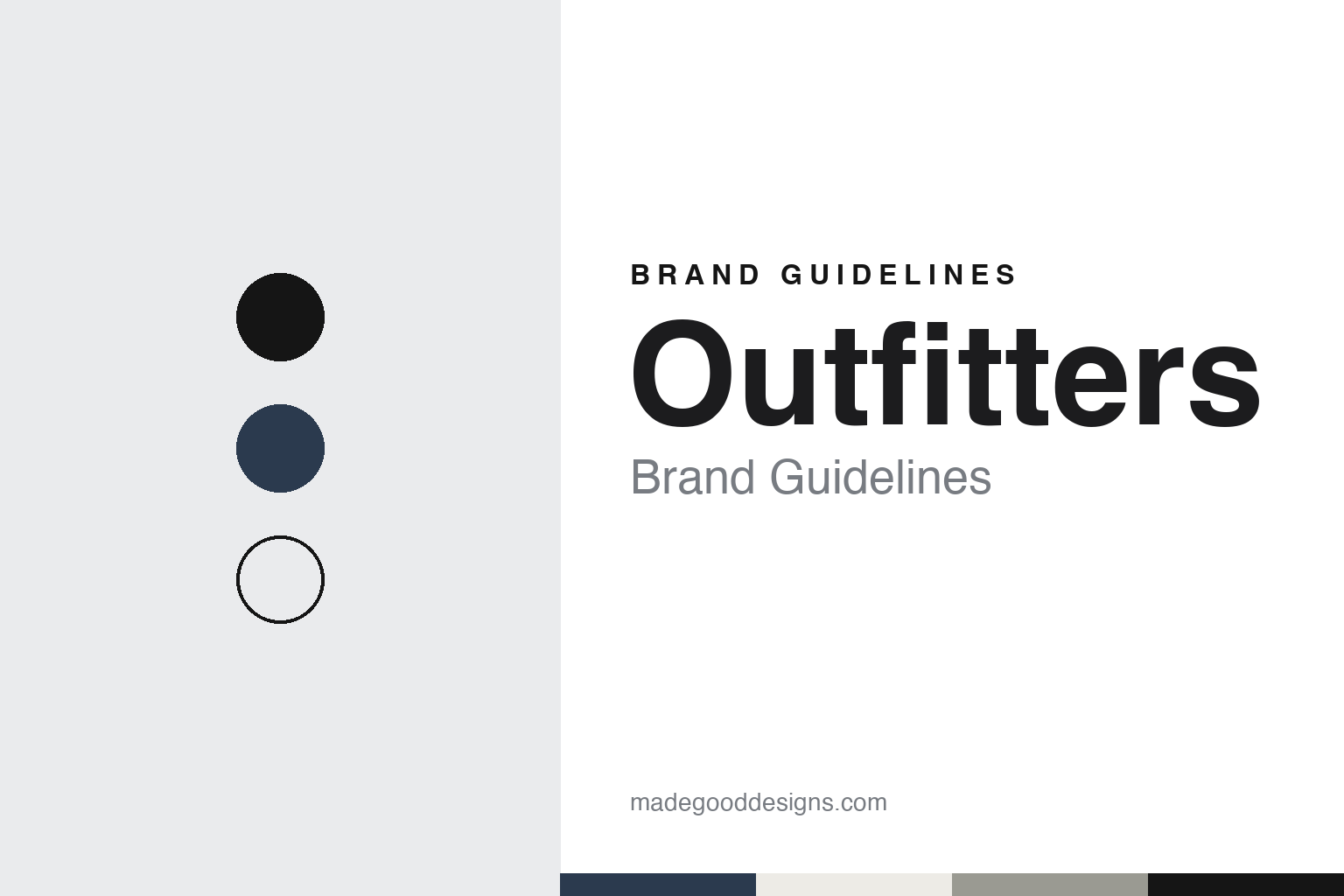
This guide’s Outfitters palette is Washed indigo #2B3A4E, Ink #151515, Concrete #9A9A92, Chalk #EDEBE6 and Paper #F8F7F4. The tones are the guide’s own unofficial interpretation, not official Outfitters hex codes.
When was Outfitters founded?
Outfitters was founded in 2003, in Pakistan. Outfitters is known for Western wear, Outfitters Junior, Ethnic.
Who founded Outfitters?
Outfitters was founded by Kamran Khursheed in 2003. Outfitters is known for Western wear, Outfitters Junior, Ethnic.