Bauli Brand Guidelines
The Verona pandoro maker that bought Motta and Alemagna.
Aa
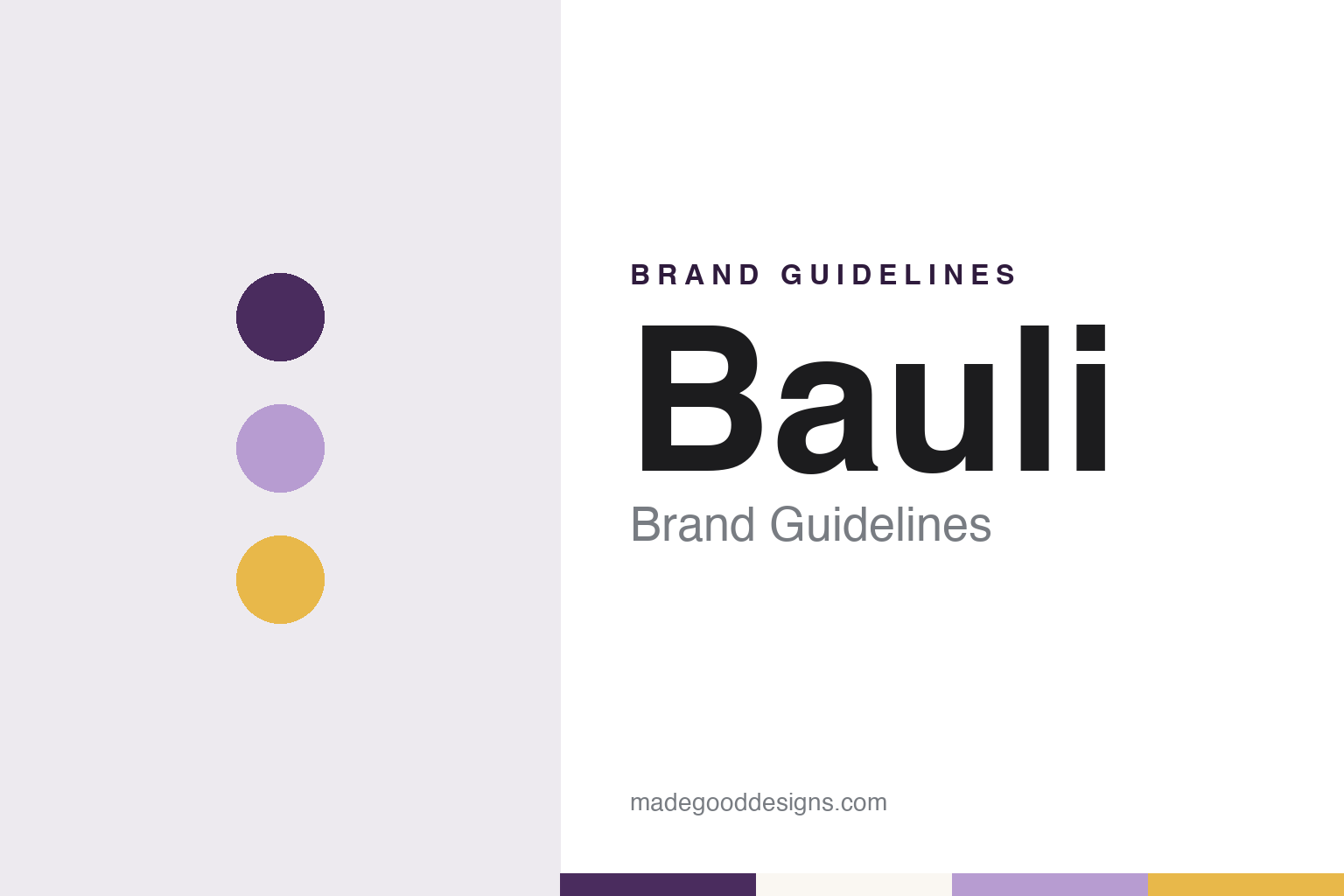
Two constants: a lilac, deep plum and pandoro gold palette and a festive display serif register. Abstract homage — not a Bauli product or mark; no pack, logo or cake is reproduced.
An oven in Verona
A pastry cook, a shipwreck and a return home.
Bauli began in Verona in 1922, when the pastry cook Ruggero Bauli opened his first oven in the city. Italian Wikipedia, drawing on a 1994 profile in L’Unità titled “Bauli, dal naufragio al pandoro,” says he had learned the pastry trade in the early 1910s and served in the trenches of the Carso during the First World War. The company today calls that first business a small artisan bakery that became known for its pandoro, the tall, star-shaped yeast cake of Verona that is eaten at Christmas. The Treccani Dizionario di Economia e Finanza also dates the firm to Verona in 1922 and describes it as founded and run by the family that gave it its name.
The story did not run straight. In 1927 Ruggero Bauli emigrated to Argentina, and on the way he survived the sinking of the Italian liner Principessa Mafalda off the coast of Brazil, according to the same L’Unità account cited by Italian Wikipedia; the company tells the same episode in its own history. Having lost his equipment in the wreck, he worked for some months as a taxi driver before going back to pastry in Buenos Aires, Italian Wikipedia says. The company says he set up a successful pastry shop there.
He came home in 1937. Back in Verona, Italian Wikipedia says, he married and, with help from an uncle, opened an artisan workshop in the centre of the city where he began making his pandoro; the company describes it as a bakery with a shop attached. After the Second World War, in the 1950s, the business moved into industrial production, and both Italian Wikipedia and the company date that step to the same decade. In 1960, the company says, Ruggero passed the business to his sons Alberto, Adriano and Carlo.
Colour
Lilac packs, jingles and an old Milanese M.
For most Italian shoppers Bauli is a Christmas name, and its identity has been built around the season. Italian Wikipedia says the brand has always tied itself to the lilac colour of its packs, and it lists the advertising lines people remember: a long-running campaign with the jingle “Ba-ba Bauli,” the slogan “È Natale, è Bauli” (“It’s Christmas, it’s Bauli”) and, from 2005, the Christmas song “A Natale puoi” (“At Christmas you can”), followed in 2008 by a new song, “Prenditela morbida.” The same article gives the brand slogan as “Fatti col cuore” — made with the heart. Beyond the festive cakes the range grew, the company says, into croissants and chocolate Easter eggs in the 1990s, alongside the colomba, the dove-shaped Easter cake.
The 2009 purchase from Nestlé brought Bauli a second, older visual history. Motta was founded in Milan in 1919 by the pastry cook Angelo Motta, and its panettone was its best-known product, Italian Wikipedia says. Its original mark was a capital M drawn with the spires of Milan Cathedral, standing for both Motta and Milano; Italian Wikipedia, citing La Gazzetta dello Sport, says it was designed in 1934 by the poster artist Severo Pozzati, known as Sepo, at the request of Motta’s advertising chief Dino Villani. Under later state ownership the mark gave way to a two-pointed banner, red for baked goods and blue for ice cream, and Italian Wikipedia says that after Bauli bought the bakery brands the old M returned for them. The Motta ice-cream business was never part of the deal: it stayed with Nestlé and passed in 2016 to Froneri.
Bauli has also taken its name abroad and onto the high street. In November 2017 it opened its first factory in India, at Baramati, to make croissants, the Verona news site VeronaSera reported at the time, and the company says it opened a commercial branch in Singapore in 2018. It also runs Minuto Bauli cafés; the company says there are 13 in northern Italy and one in Vienna.
Typography
Design and documentation.
The seven brands in this group are food brands, and all of them come from Spain or Italy: Fontaneda, Carbonell, Hojiblanca, Galbani, Star, Ponti and Bauli. Spanish and Italian food brands in general sit at many different points in the trade, from family firms that still carry a founder’s surname to names that now belong to much larger food groups, and a single brand can be sold everywhere from a village shop to a supermarket shelf abroad.
A food brand’s identity is usually carried less by a single product than by a pack, a name and the meal or occasion it promises, because the company behind the name may have changed hands, moved its factory or grown far beyond the town where it started. That makes the questions behind each name worth asking plainly: who started it, who owns it now, and where its products are actually made and packed.
Each guide separates what independent sources record from what the company says about itself — its founding story, its owners over time, where its products are made and how its packaging has changed — and marks plainly what rests only on the company’s own word.
Aa
A festive display serif for a Christmas cake maker. (Specimen set in Playfair Display, a serif STAND-IN; NOT the Bauli logo.)
Bauli
A family group built from Verona outward.
Bauli is a family business that grew by buying other people’s brands. It bought the bakery FBF, with its Casalini brand, in 2004, and in 2006 the Treviso biscuit maker Doria, known for Bucaneve, Atene and Doriano, Italian Wikipedia says; English Wikipedia cites the local paper Oggi Treviso for the purchase.
The largest step came in 2009. On 31 July 2009 Bauli signed to buy from Nestlé the bakery products sold under the Motta and Alemagna names, together with Tartufone Motta, Trinidad and Gran Soffice, and the factory that made them at San Martino Buon Albergo, near Verona, the Corriere del Veneto reported that day; Il Sole 24 Ore had reported the planned sale in June. Italian Wikipedia says the deal took effect on 1 August 2009. Both brands had come a long way to reach Verona. Alemagna, another Milanese confectioner, was regarded as Motta’s traditional rival; the state holding company SME took control of Motta in 1968 and half of Alemagna in 1970, merged them in 1976, and in 1993 sold the bakery brands to Nestlé, Italian Wikipedia says.
More purchases followed. On 9 February 2013 Bauli took over the Bistefani group, maker of Krumiri biscuits, the news agency ANSA reported; Italian Wikipedia notes that Bistefani had earlier bought Motta’s everyday snack cakes, so the deal brought the Motta bakery lines back under one owner. In March 2016 Bauli closed the former Bistefani factory in Piedmont, La Stampa reported. The company lists further deals since: Fête Latine in France in 2011, a majority of the gluten-free baker Alpipan in 2018, a majority of the Slovak firm MaxSport in 2019 and a majority of Dacasto Gran Pasticceria in 2021.
The group is still controlled and run by the family, with Michele Bauli as president, Italian Wikipedia says, and its head office is at Castel d’Azzano, just south of Verona. Where its cakes are made is mostly a matter of the company’s own account: it lists Italian production sites at Castel d’Azzano, Orsago, Romanengo, San Martino Buon Albergo and Guarene, plus the plant at Baramati in India.
For a design guide, Bauli shows how a single seasonal cake and a single pack colour can carry a family firm from a Verona workshop to a group of brands with older histories than its own. Compare Doria, the Treviso biscuit maker it bought in 2006, and Balocco, another Italian panettone and biscuit maker. For this guide we use lilac, a deep plum and a pandoro gold with a serif, an unofficial interpretation; no product or logo is reproduced.
Explore & save
Keep Bauli’s identity on hand — save it to a board in the Made Good inspiration library.
Bauli identity set
Pin the Bauli lilac, deep plum and pandoro gold palette and the festive display serif register to your own board.