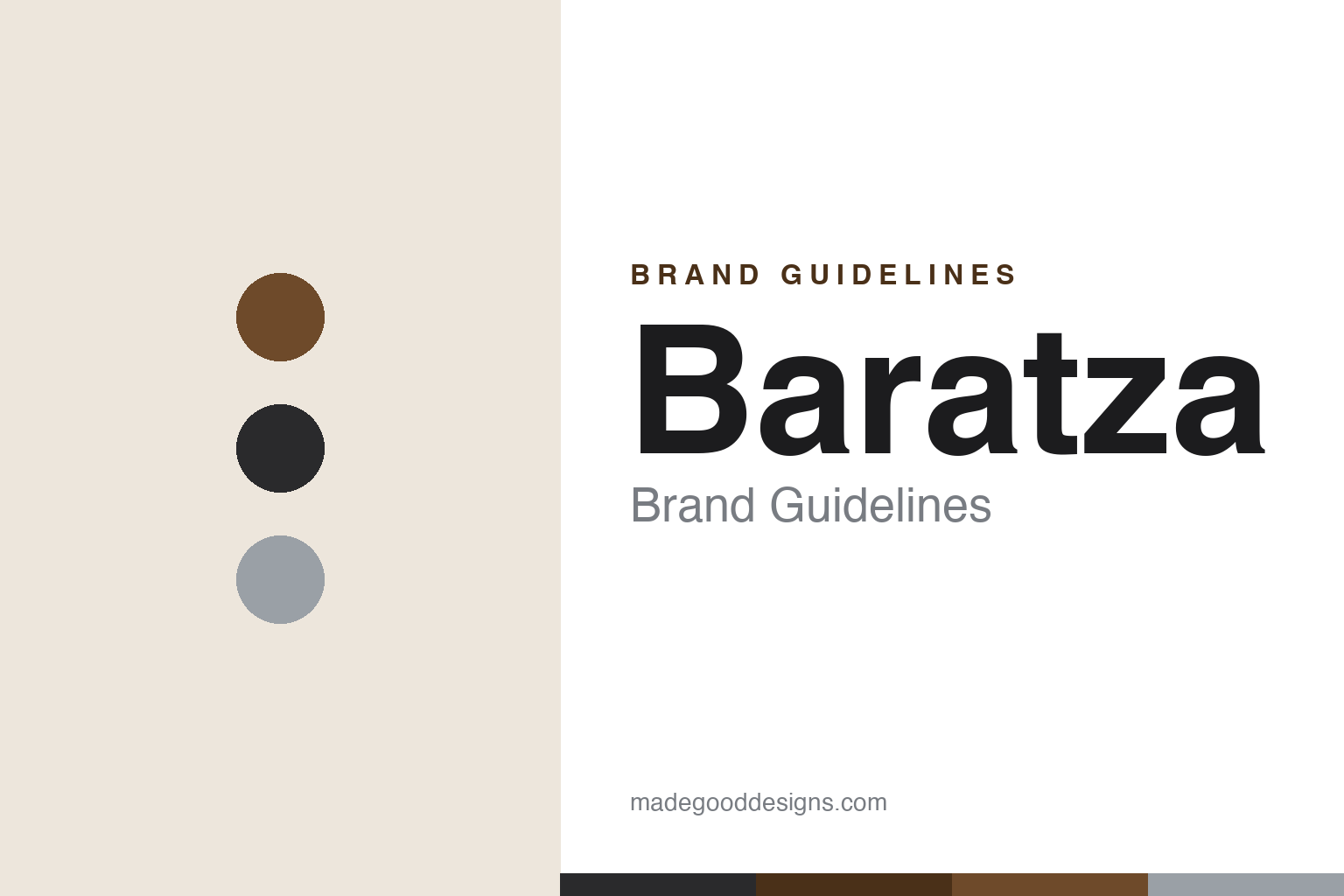
Baratza Brand Guidelines
Don’t dump it, fix it — enthusiast burr grinders built to be repaired, not replaced.
Aa
Two constants: a warm coffee-brown-and-steel palette and a sturdy, technical sans. Abstract homage — not the Baratza wordmark.
Don’t dump it, fix it
Baratza builds grinders to repair.
Baratza is a lesson in repairability as a brand value. It was founded in 1999 by Kyle Anderson and Kyra Kennedy, from Kyle’s home in Bellevue, Washington (the Seattle area) — Kyle being the mechanical/engineering mind. Baratza makes burr coffee grinders for home and specialty-coffee enthusiasts, most famously the Encore — an accessible entry-level burr grinder that became one of the most-recommended home grinders — alongside the Virtuoso+, the Sette line, the Vario, and the prosumer/commercial Forte. (An honest note: Baratza designs and assembles its grinders and sources its precision burrs from specialists, such as Etzinger of Switzerland — so it’s best described as designing precision grinders, not forging its own burrs. Two more: no official brand hex is published, and the wordmark typeface is undocumented.)
What truly sets Baratza apart is its repairability and sustainability ethos — a standout in an era of disposable appliances. In the brand’s own words, its grinders are “not built for obsolescence.” Baratza sells replacement parts on its website, backed by detailed documents, videos and live support, so owners can make their own repairs; it refurbishes and resells used units to keep them out of landfill; and it runs a formal grinder repair program. Its mottos say it plainly: “Don’t Dump It, Fix It” and a founder mission to “keep landfills Baratza-Grinder-Free.” This repair-not-replace philosophy predates the modern right-to-repair movement.
On ownership: in 2020, Baratza was acquired by the Breville Group — the Australian appliance company (ASX-listed, and a sister brand now to Breville itself, reportedly for about US$72.5M). The identity is warm and practical — coffee browns, steel, an engineering-minded, no-nonsense look. Baratza describes itself simply as making “specialty coffee grinders.” (An honest note: the name “Baratza” has no widely-verified meaning — best not to invent one.) Don’t dump it, fix it.
Colour
Baratza lives in warm coffee brown and steel. Click a swatch to copy the hex.
Baratza’s identity leans on warm, practical tones — a coffee brown, charcoal and steel, with white. The palette is fittingly coffee-adjacent and engineering-minded: warm and approachable (the browns of coffee) yet sturdy and technical (the steel and charcoal of a precision machine), matching a brand built for enthusiasts who care about quality grinding and about keeping their gear running for years. It reads as honest, practical and durable rather than flashy — the look of a well-made tool, not a fashion object. The honest caveat: Baratza publishes no official brand hex, so the coffee brown and steel here are an original, unofficial interpretation, not first-party values.
The lesson is a warm, practical palette can suit an enthusiast-tool brand. Baratza’s coffee-and-steel world reads as honest and durable — matching precision grinders built to last. For designers, it’s a reminder that warm, material-honest colour can communicate craft and durability. The takeaways: use warm, practical tones for an enthusiast-tool brand (coffee brown, steel); keep it honest and engineering-minded; and treat specific hexes as unofficial when no brand spec is published.
Typography
The wordmark is a sturdy technical sans — practical and engineering-minded.
Baratza’s identity carries a sturdy, technical, engineering-minded spirit — a solid sans-serif wordmark whose even, mechanical letterforms read as practical, precise and durable. The technical type matches a brand built on precision burr grinders and a repair-not-replace philosophy, and the plainness signals engineering and honesty over decoration. Set against a coffee-brown-and-steel palette, the type feels sturdy and dependable — exactly the practical, enthusiast-tool personality Baratza cultivates. It’s technical and solid rather than delicate or fashionable, mirroring the well-built grinders. Because the exact wordmark face isn’t publicly documented, the honest description is “a sturdy technical sans spirit,” not a named font. The type behaves like the brand: practical, precise and engineering-minded.
Aa
A sturdy technical sans spirit — practical and engineering-minded. (Specimen set in Sarpanch, a sturdy technical sans in the spirit of the Baratza identity; the real face is undocumented.)
Repair as the brand
Baratza made ‘fix it’ the brand.
Baratza is a lesson in repairability as a genuine, differentiating brand value. In a small-appliance world built on planned obsolescence — cheap machines designed to be binned and replaced — Baratza did the opposite and made it the heart of the brand: grinders engineered to be fixed, with replacement parts sold openly, repair guides, videos and live support, refurbished units resold, and mottos like “Don’t Dump It, Fix It.” That ethos is rare, authentic and deeply loyalty-building: it tells customers the company is on their side for the long haul, it appeals powerfully to sustainability-minded and enthusiast buyers, and it turns customer service into a marketing asset rather than a cost centre. Notably, Baratza was doing this well before “right to repair” became a movement. The lesson is that a real, lived commitment — here, repairability and against-obsolescence design — can be a distinctive, defensible brand in a disposable category, earning trust that price and features alone can’t. Stand for “fix it,” and the value becomes the brand.
For designers and brand-builders, Baratza offers a clear takeaway: an authentic, lived value like repairability can be a defensible brand in a disposable category. The lessons: design against obsolescence and mean it (parts, guides, refurbishment); turn support into a brand asset (live help, repair programs); and lead a value before it’s a trend (repairability before “right to repair”). It’s also a reminder to keep the facts precise — Baratza was founded in 1999 by Kyle Anderson and Kyra Kennedy in Bellevue, WA, makes the Encore and other burr grinders (sourcing burrs from specialists), champions “Don’t Dump It, Fix It,” and was acquired by Australia’s Breville Group in 2020. Baratza made “fix it” the brand — proof that an authentic value can differentiate.
Explore & save
Keep Baratza’s identity on hand — save it to a board in the Made Good inspiration library.
Baratza identity set
Pin the coffee-and-steel palette and the technical-sans spirit to your own board.