Beijing Design Week Brand Guidelines
From a former power plant and a hutong district to a permanent design town.
Aa
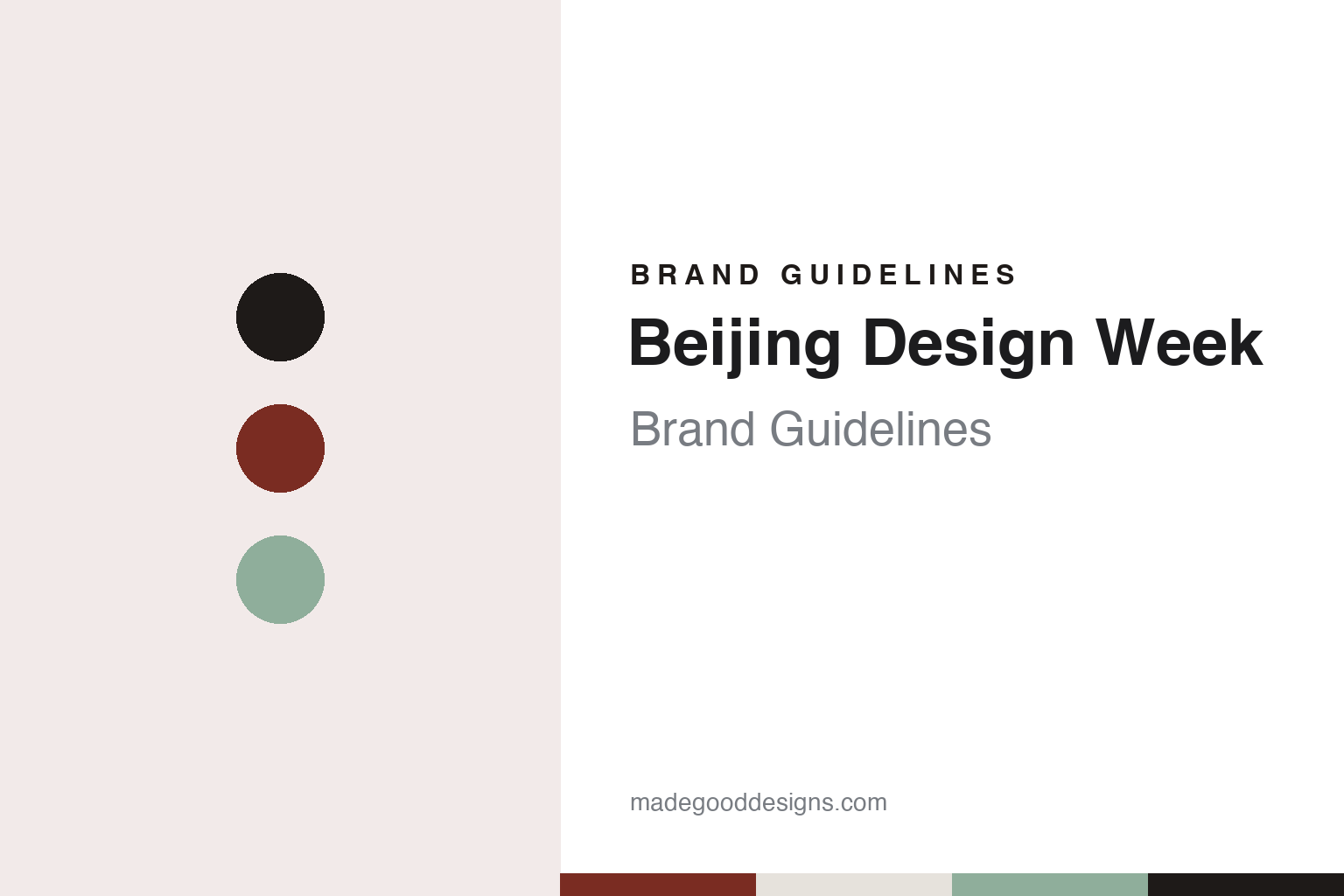
Two constants: a Beijing Design Week brick red, grey and jade palette and a Display serif register. Abstract homage — not a Beijing Design Week work or mark; no logo, poster or campaign image is reproduced.
An autumn festival
Two start dates and a set of organisers.
Beijing Design Week is an annual design festival held across Beijing each autumn. Its Chinese name, 北京国际设计周, translates as Beijing International Design Week, the form also used on the city government’s English-language site. Its start date depends on the source. The festival’s own website says its opening edition took place in 2009 and had been staged sixteen times by 2025. Wallpaper*, writing in October 2011, described the nine-day event held the month before as the inaugural Beijing Design Week, and the list of past editions on the festival’s website begins with 2011.
English Wikipedia describes the festival as an initiative of the national ministries of education, of science and technology and of culture together with the Beijing municipal government, carried out by the Beijing Gehua Cultural Development Group and the Beijing Industrial Design Center. The festival’s website in 2025 names the China Association for the Promotion of Culture and Art Development as host and Beijing International Design Week Co., Ltd. as the executing company, with the Beijing Industrial Design Promotion Association as co-organiser. The company says it is responsible for the festival’s operations, brand management and investment management on behalf of an organising committee, whose office is in the Gehua Building in Dongcheng District.
English Wikipedia also notes that Beijing joined UNESCO’s Creative Cities Network as a City of Design in 2012, and lists the festival’s regular parts: an opening ceremony, a forum whose theme changes each year, a guest city, a design fair and the Design Hop, the exhibition programme spread across different areas of Beijing. It names London, Milan and Amsterdam among past guest cities, and Barcelona for 2014.
Colour
A power plant and a hutong.
From its early years Beijing Design Week used former industrial sites and old streets rather than one hall. In 2011, Wallpaper* reported, its main hub was 751 D·Park, a cluster of disused boiler towers, railway tracks and chimneys that had once served as a gas power plant, where participating countries showed work, among them Dutch exhibitions under the name Dutch Design Generator. The city government’s English site says the 751 factory was established in 1954, shut its gas production lines in 2003 and launched 751D·PARK as a creative cluster for fashion and design in 2006. The same week in 2011 saw the opening of a design centre called Liang Dian, in a renovated eight-storey former computer assembly factory, with studio offices and a gallery, Wallpaper* reported.
Across town, the 2011 festival set up pop-up shops, eateries and exhibitions in Dashilar, one of the city’s hutong districts, in courtyard houses next to existing homes and shops. One of them was Wonderwater, a temporary restaurant conceived by Helsinki Design Week.
By 2013, Wallpaper* wrote, the Design Hop took visitors to Dashilar, the 798 district and 751 D·Park. In Dashilar, the regeneration work of Beijing Dashilar Investment, part of Guang An Holding, was joined by a collaboration with the festival called Dashilar Pilot, which brought local and international designers and architects together to propose ways of restoring and reusing the area’s buildings. The Japanese designer Kenya Hara produced a map, a graphic identity and an app for the neighbourhood, and the architect Zhang Ke of Standard Architecture showed a Micro Hutong of stacked plywood-and-glass rooms. At 751 D·Park, illustrations from books published by Tongji University Press lined the carriages of a train standing inside the former power plant. Core77 reported the same year that the nine-day festival opens in the last days of September, around the national holiday on 1 October.
Typography
Design weeks and biennials.
Design weeks and architecture biennials usually announce themselves with a city and a rhythm. Most take a city name plus “design week,” or “biennial” and “triennale” for events that return every two or three years; a few coin a word of their own, as DesignArt Tokyo did in 2017 by joining design and art into one name, Dezeen reported. The name tells visitors where to go and roughly when, and each edition then adds a year or a number to it.
The organisations behind them vary. DesignArt Tokyo is run by a company set up by a group of Tokyo designers and architects, working through an executive committee for each festival. Beijing Design Week is carried out by a company acting for an organising committee, with a design association among its partners. Elsewhere the same role falls to associations, foundations, museums, city agencies or trade-fair companies, and the organiser often stays in the background while the city takes the title.
Most of these events are spread out rather than gathered in one hall. Visitors follow district trails and showroom maps: Beijing Design Week’s Design Hop has led from the courtyard houses of Dashilar to the former power plant of 751 D·Park, and in 2013 a Japanese designer drew a map and identity for Dashilar, Wallpaper* reported. DesignArt Tokyo places its exhibitions in shop windows, galleries and showrooms from Omotesando to Ginza.
Each edition usually brings a curated theme, a guest city or country, and a catalogue, poster and campaign identity designed anew, so the look of a festival changes from year to year while its name stays fixed. This guide records the dated facts about each event, its organisers, venues and editions, and uses palettes and typefaces of our own; no official logo or campaign image is reproduced.
Aa
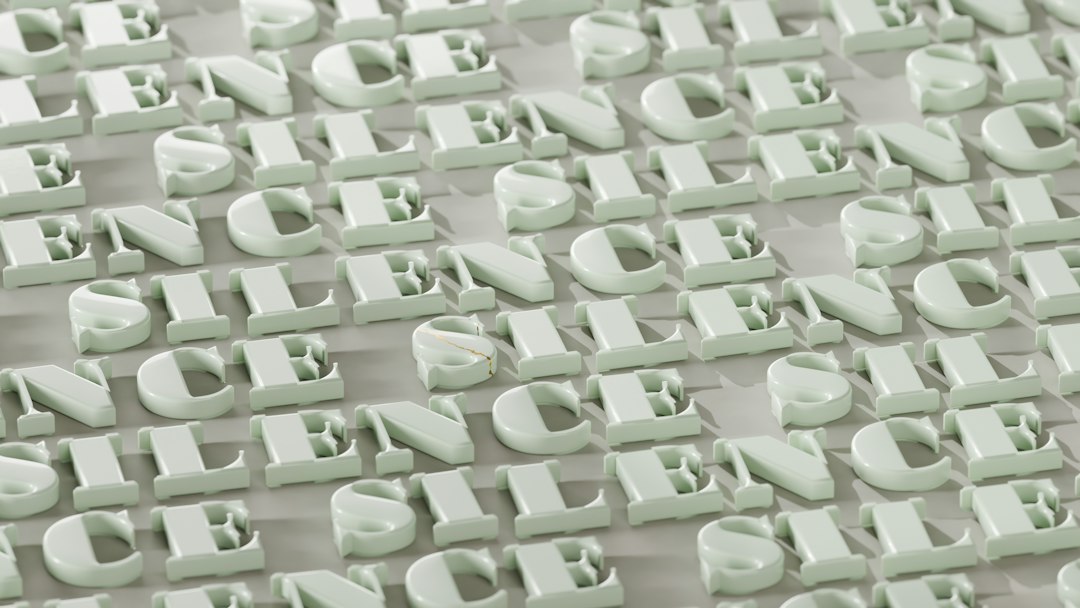
A display serif — a festival defined by its venues. (Specimen set in Noto Serif Display, a serif STAND-IN; NOT the Beijing Design Week logo.)
Beijing Design Week
A permanent site at Zhangjiawan.
The festival later gained a permanent base. The city government’s English site reported that the 2021 programme ran from 23 September to 7 October at venues including Zhangjiawan Design Town, the National Agriculture Exhibition Center, the China Millennium Monument and the Gehua Building, with Helsinki as guest city under the theme “Designing Better Life Together,” presenting a wooden installation and business seminars. In 2023 the festival opened on 21 September, and a permanent site in Zhangjiawan Town, Tongzhou District, was inaugurated the same day; a forum on design thinking in the era of artificial intelligence was held there. The 2024 edition opened on 19 September with nearly 30 sub-venues across Beijing, Tianjin and Hebei and more than 300 events, among them exhibitions, forums, screenings, workshops and creative markets, according to the same site.
A listing on Fuorisalone.it, the Milan design-week site, gave the 2025 dates as 20 to 30 September. The festival’s website gives the 2025 theme as 深度焕醒, roughly “deep reawakening,” and lists strands including an academic unit, the Beijing Design and Art Fair, a guest country, a design night and a children’s design week. Its 2025 theme exhibitions included “Less, but Better,” devoted to the German industrial designer Dieter Rams.
Across these editions the festival has been described through its places and its programme: a former power plant, a hutong district, a guest city each year and, since 2023, a design town of its own, with the Gehua Building as the organising committee’s office.
For a design guide, Beijing Design Week shows how a festival can spread across a city’s industrial sites and old streets, then gather itself into a permanent site while changing its theme and guest each edition. Compare Helsinki Design Week, the 2021 guest city’s own festival, and DesignArt Tokyo, another autumn festival spread across the districts of an Asian capital. For this guide we use a brick red, a hutong grey and a soft jade with a serif, an unofficial interpretation; no product or logo is reproduced.
Explore & save
Keep Beijing Design Week’s identity on hand — save it to a board in the Made Good inspiration library.
Beijing Design Week identity set
Pin the Beijing Design Week brick red, grey and jade palette and the Display serif register to your own board.
Source & notes
Frequently Asked Questions
What font can I use to match the Beijing Design Week look?
This guide describes Beijing Design Week’s type as “A display serif — a festival defined by its venues”. Its type specimen is set in Noto Serif Display from Google Fonts as a stand-in; Noto Serif Display is not Beijing Design Week’s own lettering.
What colours are in the Beijing Design Week palette?
This guide’s Beijing Design Week palette is Brick red #7A2C22, Soot #1E1A18, Hutong grey #E6E2DC, Soft jade #8FAE9B and Paper #F9F7F3. The tones are the guide’s own unofficial interpretation, not official Beijing Design Week hex codes.
When was Beijing Design Week founded?
Beijing Design Week was founded in 2009 (organisers) / 2011 (inaugural, per Wallpaper*), in Beijing, China.
Where is Beijing Design Week based?
Beijing Design Week is based in Zhangjiawan Design Town, Tongzhou (since 2023).