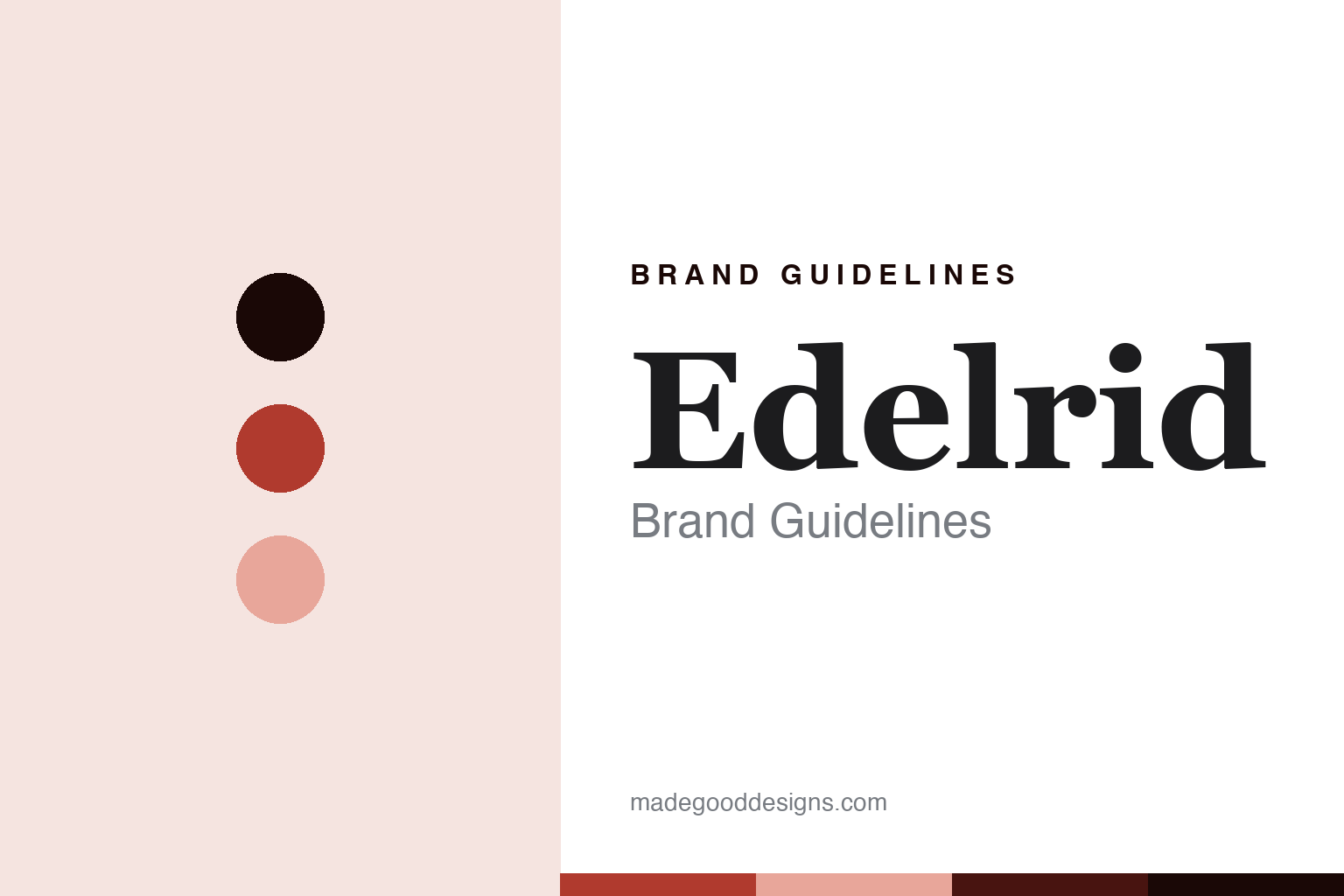
Edelrid Brand Guidelines
The rope that changed climbing.
Aa
Two constants: a rope-red palette and a rope-serif register. Abstract homage — not an Edelrid product or mark.
The rope that changed climbing
Edelrid is the 1863 German braider that invented the kernmantle rope — made in Isny, part of VAUDE.
Edelrid follows Grivel as the rope house — the German braiding factory from 1863 that invented the kernmantle rope, the core-and-sheath design that every modern climbing rope still uses. Edelrid makes ropes and hardware, and its answer to a round about the climbing-gear makers is a single world-changing invention: the rope that changed climbing, still braided in Germany. A rope, with a core and a sheath.
Its identity is the rope that changed climbing. Edelrid’s kernmantle invention, its Isny making and its VAUDE ownership are the story here. A rope, from 1863. The rope that changed climbing.
(Honest notes, so the story stays precise. Edelrid — at edelrid.com — makes climbing ropes, harnesses, carabiners, belay devices and helmets, and braiding is its founding craft. It was founded in 1863 as Schachenmayer & Cie, a braid-and-cord factory in Isny im Allgäu, Germany, that first made things like fishing lines and laces, and in 1953 it developed the first kernmantle, core-and-sheath, climbing rope — a landmark. On where it is made — a theme of this round — Edelrid states that all its ropes and lines are made in Germany, in Isny, about sixty per cent of its value chain, so we say ropes are made in Germany and do not claim the hardware is. On ownership, Edelrid is a family-run independent business within the VAUDE Group, the von Dewitz family’s German outdoor company, since 2006 — bought by Albrecht von Dewitz, VAUDE’s founder, not to be confused with Antje von Dewitz, VAUDE’s current chief executive and his daughter. Notable firsts include the first bluesign-certified rope in 2009 and the OHM assisted-braking device in 2016. Its marks — Edelrid, OHM — are IP we describe but do not reproduce, and there is no official brand hex; these tones are an unofficial interpretation. This is design commentary and does not promote any product.)
Colour
Edelrid lives in a rope red. Click a swatch to copy the hex.
Edelrid’s identity is inventive, made-in-Germany and group-owned — a rope red, an ink, a rose, a deep red, and a paper. The palette leans rope red and rose: a warm, technical register that nods to a climbing rope and a braiding craft rather than a loud palette. It signals the house that changed the rope. The honest caveat: with no published brand hex, these values are an original, unofficial interpretation, not first-party colours.
The lesson is a rope red signals an inventive, made-in-Germany identity. Edelrid’s world is an inventive, made object. For designers, it is a reminder that a warm red and a soft rose can carry a gear brand — the tone of braided rope. Because these tones can fail as small text, keep type dark and let the colour live in the accents, palette and band. The takeaways: own a world-changing invention; make the rope at home; name the group owner; and treat any single hex as unofficial.
Typography
The register is a rope serif — heritage, technical, made.
Edelrid’s identity carries a heritage, technical, made spirit — a 160-year braider, not a fashion. A rope serif captures the mood: old, precise and considered, the register of a house that has braided cord since 1863. Set in a rope-red palette, the rope serif feels heritage and technical — exactly the personality Edelrid carries. It is a braid rather than a logo, mirroring kernmantle rope. (Edelrid’s real wordmark is a thing we describe but do not reproduce, and the exact typeface is not ours to use.) Because it is not ours to use, the honest description is “a rope-serif spirit,” shown here in a stand-in. The type behaves like the rope: heritage, technical and made.
Aa
A rope-serif spirit — heritage and technical. (Specimen set in Cormorant Garamond, a rope-serif STAND-IN; NOT the Edelrid logo.)
The climbing gear makers
Edelrid stands for the rope that changed climbing.
Edelrid follows Grivel as the rope house. A rope-red palette, a rope serif and a kernmantle rope make one thing — the rope that changed climbing — the whole identity: inventive, made-in-Germany and group-owned. The kernmantle invention is the differentiator, and the German making is the meaning. The point is a 1863 braiding factory that invented the core-and-sheath rope in 1953, still braiding rope in Isny.
Put to work, the identity is a world-changing invention told straight, as design. A maker in this spirit would own a genuine invention, make the rope at home, and name the group owner honestly. A reader in this spirit would keep the facts right: it was founded in 1863 as Schachenmayer & Cie in Isny; it invented the kernmantle rope in 1953; its ropes are made in Germany, about sixty per cent of the value chain; and it is a family-run business within the VAUDE Group since 2006, bought by Albrecht von Dewitz. Edelrid sits in the round’s where-made thread at the made-in-Germany end and the owner thread at the group-owned end with Black Diamond, and its kernmantle rope is the round’s single most consequential invention. The honest editorial moves are to credit the 1953 kernmantle, to bound the made-in-Germany claim to ropes, to name VAUDE and the right von Dewitz, and to date the OHM to 2016. The lesson Edelrid teaches is that one invention can define a house for a century, and honesty about the making and the group owner keeps the invention credible.
For designers and brand-builders, Edelrid continues the climbing gear makers: own the invention — and make it at home. The lessons: build on a genuine world-changing invention; make the core product domestically; bound a made-in claim to the line it covers; name the group owner precisely; and never reproduce a logo. It is also a reminder to stay precise: Edelrid is the 1863 German braider that invented the kernmantle rope, made in Isny, part of VAUDE — with the palette here an unofficial interpretation. Read that way, Edelrid is less a rope than an invention: the core-and-sheath design that every climber trusts, braided at home in Germany. The lesson for a brand is that a foundational invention and honest, bounded making reinforce each other, and naming the group owner keeps the invention earned. Edelrid made the-rope-that-changed-climbing the identity — proof that one invention can be a whole heritage.
Explore & save
Keep Edelrid’s identity on hand — save it to a board in the Made Good inspiration library.
Edelrid identity set
Pin the rope-red palette and the rope-serif register to your own board.