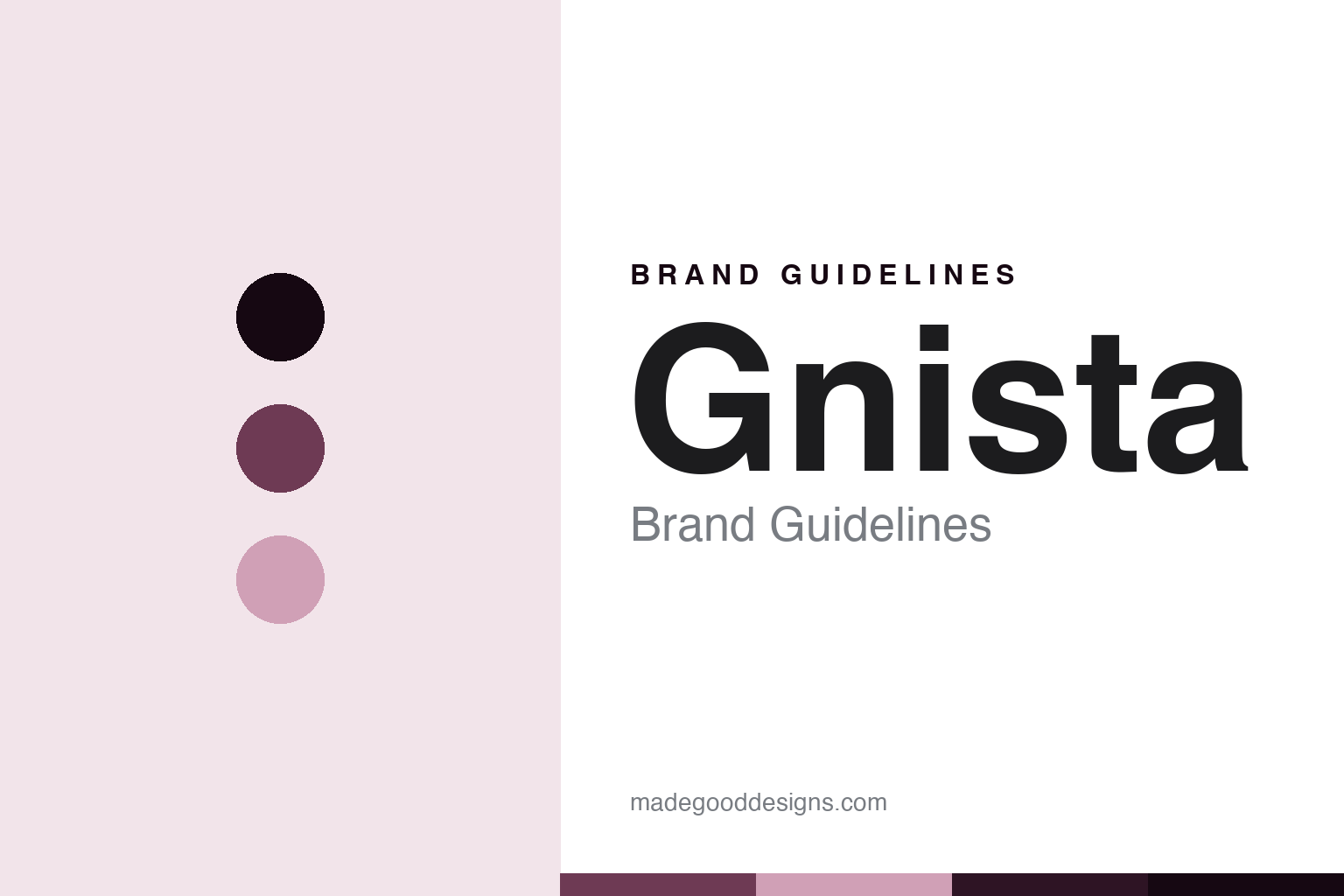
Gnista Brand Guidelines
The Swedish spark, not an imitation.
Aa
Two constants: a Nordic-aubergine palette and a Nordic-sans register. Abstract homage — not a Gnista product or mark.
The Swedish spark, not an imitation
Gnista is the Swedish non-alcoholic spirits house made near Malmö — built on standalone flavour, not imitation.
Gnista brings the round a Nordic point of view — the Swedish non-alcoholic spirits house, made near Malmö, whose complex, bitter, aromatic drinks are presented as standalone flavours, not imitations of alcohol. Gnista makes non-alcoholic spirits and wine alternatives, and its answer to a round about the zero-proof shelf is a made-in-Sweden craft: a bitter, aromatic drink that stands on its own. A brand, a spark.
Its identity is the Swedish spark, not an imitation. Gnista’s standalone flavour, its Swedish making and its Nordic design are the story here. A brand, Swedish. The Swedish spark, not an imitation.
(Honest notes, so the story stays precise, and this is an alcohol alternative, framed as commentary. Gnista — at gnistaspirits.com — makes non-alcoholic spirits and wine alternatives: Barreled Oak in a whiskey style, Floral Wormwood in a vermouth or aperitif style, Crisp, and Pink Ginista, its grapefruit style, spelled Pink Ginista not Pink Grapefruit, plus wine alternatives, and it presents these as complex, bitter, aromatic drinks, not imitations. Its founder is Erika Eklundh, not any other names sometimes cited, and it was developed around 2018, so we say around 2018 and name Erika Eklundh. On where it is made — a theme of this vein — it is made in Sweden, at a small scale just outside Malmö, which is the brand’s own copy that we attribute. On ownership, it is a founder-led independent Swedish brand, which we frame softly, since it is not registry-corroborated. The word gnista is Swedish for spark, which we treat as a translation note, not a site claim. It is a design-forward, minimalist Nordic brand with genuine European critical press. Its name and bottle are IP we describe but do not reproduce; there is no official brand hex; these tones are an unofficial interpretation. This is design commentary.)
Colour
Gnista lives in a Nordic aubergine. Click a swatch to copy the hex.
Gnista’s identity is Swedish, standalone and aubergine-toned — a Nordic aubergine, an ink, a rose, a deep aubergine, and a paper. The palette leans Nordic aubergine and rose: a deep, moody register that nods to a bitter, aromatic drink and a minimalist Nordic bottle rather than a loud palette. It signals a standalone non-alc spirit. The honest caveat: with no published brand hex, these values are an original, unofficial interpretation, not first-party colours.
The lesson is a Nordic aubergine signals a Swedish, standalone identity. Gnista’s world is a Nordic, made object. For designers, it is a reminder that a Nordic aubergine and a soft rose can carry a drink brand — the tone of a bitter aromatic. Because these tones can fail as small text, keep type dark and let the colour live in the accents, palette and band. The takeaways: stand alone; make at home; correct a founder record; and treat any single hex as unofficial.
Typography
The register is a Nordic sans — Swedish, minimal, plain.
Gnista’s identity carries a Swedish, minimal, plain spirit — a standalone non-alc house, not a fashion. A Nordic sans captures the mood: clean, minimal and confident, the register of a Scandinavian brand. Set in a Nordic-aubergine palette, the Nordic sans feels Swedish and minimal — exactly the personality Gnista carries. It is a standalone flavour rather than a logo, mirroring a bottle and a bitter. (Gnista’s real bottle is a thing we describe but do not reproduce, and the exact typeface is not ours to use.) Because it is not ours to use, the honest description is “a Nordic-sans spirit,” shown here in a stand-in. The type behaves like the brand: Swedish, minimal and plain.
Aa
A Nordic-sans spirit — Swedish and minimal. (Specimen set in Libre Franklin, a Nordic-sans STAND-IN; NOT the Gnista logo.)
The zero-proof shelf
Gnista stands for the Swedish spark, not an imitation.
Gnista brings the round a Nordic point of view. A Nordic-aubergine palette, a Nordic sans and a standalone flavour make one thing — the Swedish spark, not an imitation — the whole identity: Swedish, standalone and aubergine-toned. The standalone flavour is the concept, and the made-near-Malmö craft is the meaning. The point is a Swedish house whose bitter, aromatic drinks stand on their own, not as imitations of alcohol.
Put to work, the identity is a standalone Nordic craft told straight, as design. A maker in this spirit would stand alone, make at home, and correct a founder record. A reader in this spirit would keep the facts right: Gnista makes non-alcoholic spirits and wine alternatives, Barreled Oak, Floral Wormwood, Crisp and Pink Ginista; its founder is Erika Eklundh, and it was developed around 2018; it is made in Sweden, near Malmö; and it presents its drinks as standalone, not imitations. Gnista sits in the round’s mimic-versus-functional thread with Lyre’s and Ritual, but distinctively refuses imitation, and its Nordic design is its own. The honest editorial moves are to name Erika Eklundh, to date it around 2018, to say made near Malmö as the brand’s copy, and to treat spark as a translation note. The lesson Gnista teaches is that standing alone can be a whole identity, and correcting the founder record keeps it credible.
For designers and brand-builders, Gnista continues the zero-proof shelf: stand alone — and make at home. The lessons: refuse imitation and stand on flavour; make at a small scale at home; get a founder record right; treat a translation as a note not a claim; and never reproduce a bottle. It is also a reminder to stay precise: Gnista is the Swedish non-alcoholic spirits house made near Malmö, built on standalone flavour — with the palette here an unofficial interpretation. Read that way, Gnista is less a bottle than a spark: a Swedish drink that stands alone. The lesson for a brand is that standing alone and honest making reinforce each other, and naming Erika Eklundh keeps the story earned. Gnista made the-Swedish-spark-not-an-imitation the identity — proof that a spark can define a brand. It’s a reminder that refusing to imitate can itself be the boldest position on a shelf full of look-alikes, and that a small maker’s honesty about where it’s made keeps that refusal earned.
Explore & save
Keep Gnista’s identity on hand — save it to a board in the Made Good inspiration library.
Gnista identity set
Pin the Nordic-aubergine palette and the Nordic-sans register to your own board.