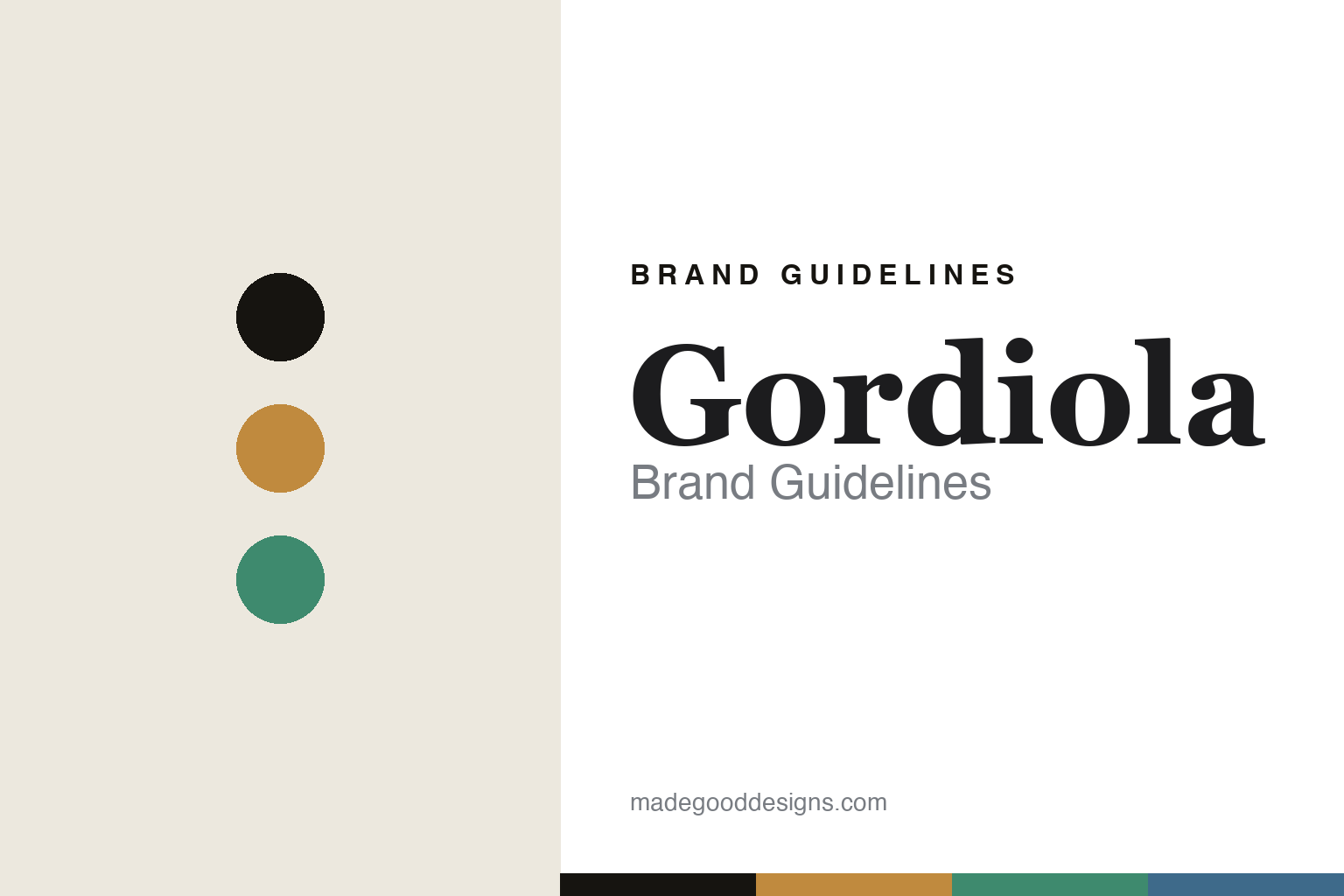
Gordiola Brand Guidelines
The Mallorcan glass.
Aa
Two constants: an amber-and-sea-green palette and a heritage serif register. Abstract homage — not the Gordiola glass or packaging.
The Mallorcan glass
Gordiola keeps Mallorcan glass hand-blown.
Gordiola is a lesson in a long craft, unbroken. According to the company, it has hand-blown glass since 1719, at Algaida on the Palma–Manacor road in Mallorca — one of Spain’s oldest businesses, run by the same family across generations.
Its identity is Mallorcan hand-blown glass. Gordiola makes warm, artisanal, mouth-blown pieces — glasses, jugs, lanterns and decorative work — often in colour (blues, greens, ambers), using centuries-old techniques kept alive by hand. Its landmark factory and museum at Algaida make the craft itself a destination. Warm Mediterranean glass, made the old way.
(Honest notes: the 1719 date and the multi-generation story are the company’s own account (independent sources weren’t reachable, so we attribute them); and while Gordiola is genuinely one of Spain’s oldest businesses, the company itself claims to be the “fourth-oldest business in Spain,” so we say “one of Spain’s oldest,” not “the oldest.” The distinctive factory-and-museum building is described generally. There’s no official brand hex, so these tones are an unofficial interpretation. This is design commentary and does not promote any product.)
Colour
Gordiola lives in an amber-and-sea-green palette. Click a swatch to copy the hex.
Gordiola’s identity is warm, artisanal and Mediterranean — an amber, an ink, a sea green, a Mediterranean blue, and a cream. The palette pairs an amber with a sea green — the register of warm, coloured Mallorcan glass. It signals heritage and craft rather than novelty. The honest caveat: with no published brand hex, these tones are an original, unofficial interpretation, not first-party values.
The lesson is an amber with a sea green signals a Mediterranean hand-blown house. Gordiola’s world is a warm, coloured, hand-made glass. For designers, it is a reminder that a centuries-old craft, kept by hand, can be the whole identity. Because a mid amber can fail as small text, keep type dark and let the colour live in the accents, palette and band. The takeaways: keep the craft (mouth-blowing); use warm Mediterranean colour; make the place a destination; and treat any single hex as unofficial.
Typography
The register is a heritage serif — warm, Mediterranean, artisanal.
Gordiola’s identity carries a warm, Mediterranean, artisanal spirit — a coloured, hand-blown glass. A refined heritage serif captures the mood: it is elegant and historic, the register of a centuries-old house. Set in an amber-and-sea-green palette, the heritage serif feels warm and Mediterranean — exactly the personality Gordiola carries. It is artisanal rather than slick, mirroring hand-blown glass. (Gordiola’s real glass and wordmark are works we describe but do not reproduce, and the exact typeface is not ours to use.) Because it is not ours to use, the honest description is “a heritage serif spirit,” shown here in a stand-in. The type behaves like the brand: warm, Mediterranean and artisanal.
Aa
A heritage serif spirit — warm and Mediterranean. (Specimen set in Cormorant Garamond, a refined serif STAND-IN; NOT the Gordiola packaging.)
A long craft, unbroken
Gordiola stands for centuries-old Mallorcan hand-blown glass.
Gordiola is a lesson in keeping a craft unbroken. An amber-and-sea-green palette, a heritage serif and a warm, hand-blown glass make craft the whole brand — warm, Mediterranean, artisanal. The craft is the differentiator. The differentiator is centuries-old Mallorcan hand-blowing.
For designers and brand-builders, Gordiola offers a clear takeaway: keep a craft alive by hand, in place. The lessons: keep the craft (mouth-blowing); use warm colour; make the place a destination; and be honest about the story. It is also a reminder to stay accurate: the 1719 date and family story are the company’s own account, it’s one of Spain’s oldest (not “the oldest”), and the palette here is an unofficial interpretation. Gordiola made a long craft the brand — proof that unbroken heritage can be the difference.
Explore & save
Keep Gordiola’s identity on hand — save it to a board in the Made Good inspiration library.
Gordiola identity set
Pin the amber-and-sea-green palette and the heritage-serif register to your own board.