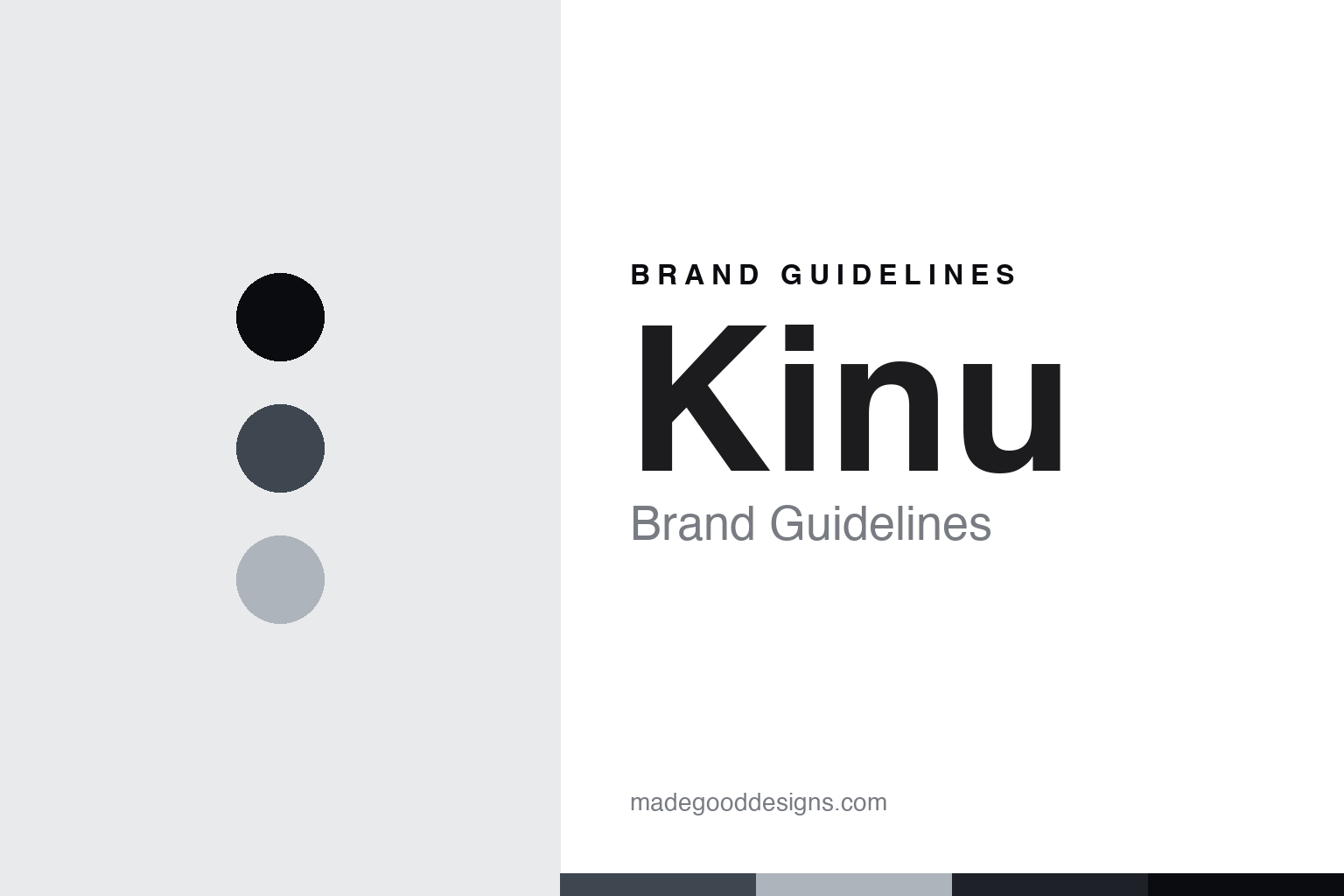
Kinu Brand Guidelines
The German hand grinder.
Aa
Two constants: a gunmetal palette and a precision-sans register. Abstract homage — not a Kinu product or mark.
The German hand grinder
Kinu is the German maker of the M47 precision hand grinder, genuinely engineered and made near Frankfurt.
Kinu is the round’s precision hand grinder — a German maker with a machining background who turned it on coffee. Kinu makes premium manual hand grinders, and it is known for the M47. Its answer to how a maker becomes a name is engineering pedigree: bring a precision-machining firm’s tolerances to a hand grinder, with stepless micrometric adjustment, and make it in Germany. A grinder, engineered near Frankfurt.
Its identity is the German hand grinder. Kinu’s M47, its micrometric adjustment and its German making are the work it is known for. A grinder, made in Germany. The German hand grinder.
(Honest notes, so the story stays precise. Kinu — at kinugrinders.com — makes premium manual hand grinders: the M47 series, with stepless micrometric grind adjustment and a 47-millimetre conical burr, is the signature, and it has since added tabletop grinders. There is a nice date nuance: the parent precision-engineering firm, run by the Biernatek family, dates to 1991, while the Kinu grinder brand launched in 2016; a special edition limited to 1,991 units nods to that founding year. On where it is made — the point of this round — Kinu runs its own precision-manufacturing facility in Rodgau, near Frankfurt, so this is genuinely made in Germany, not a German-branded import; it is one of the round’s made-at-home makers. On ownership, it is independent and founder-run. Its name and marks, and the M47’s form, are IP, described but never reproduced, and there is no official brand hex; these tones are an unofficial interpretation. This is design commentary and does not promote any product.)
Colour
Kinu lives in a gunmetal palette. Click a swatch to copy the hex.
Kinu’s identity is engineered, made and precise — a gunmetal, an ink, a silver, a deep steel, and a paper. The palette leans gunmetal and silver: the register of machined stainless steel and a precision instrument. It signals a German precision grinder. The honest caveat: with no published brand hex, these values are an original, unofficial interpretation, not first-party colours.
The lesson is a gunmetal palette signals an engineered, made-in-Germany identity. Kinu’s world is an engineered, machined object. For designers, it is a reminder that a cool gunmetal and a bright silver can carry a grinder maker — the finish of machined steel and the exactness of a micrometric dial. Because these tones can fail as small text, keep type dark and let the colour live in the accents, palette and band. The takeaways: bring engineering pedigree; make it at home; measure finely; and treat any single hex as unofficial.
Typography
The register is a precision sans — exact, engineered, made.
Kinu’s identity carries an exact, engineered, made spirit — a precision-machining house, not a mass maker. A precision sans captures the mood: technical, refined and exact, the register of a grinder built to machining tolerances. Set in a gunmetal palette, the precision sans feels exact and engineered — exactly the personality Kinu carries. It is engineering pedigree rather than a logo, mirroring a micrometric adjustment. (Kinu’s real wordmark, and the M47’s form, are things we describe but do not reproduce, and the exact typeface is not ours to use.) Because it is not ours to use, the honest description is “a precision-sans spirit,” shown here in a stand-in. The type behaves like the grinder: exact, engineered and made.
Aa
A precision-sans spirit — exact and engineered. (Specimen set in Space Grotesk, a precision-sans STAND-IN; NOT the Kinu logo.)
The brewing tools
Kinu stands for the German hand grinder, made near Frankfurt.
Kinu is a lesson in how engineering pedigree can be an identity. A gunmetal palette, a precision sans and a micrometric grinder make one thing — the German hand grinder — the whole identity: engineered, made and precise. The precision-machining pedigree is the differentiator, and the German making is the meaning. The point is a German maker whose machining firm predates the coffee brand, and who builds the M47 to instrument tolerances, at home.
Put to work, the identity is engineering pedigree, told straight, as design. A maker in this spirit would bring machining precision to coffee and make it at home — the M47, near Frankfurt. A reader in this spirit would place it clearly in the round’s where-made thread: unlike the US-brand-Taiwan-made scale or the British-designed-overseas maker, Kinu is genuinely made in Germany, in its own facility, one of the round’s made-at-home makers with Fiorenzato and Cafec. Kinu also carries the round’s precision-and-marginal-gain thread, with a grinder whose stepless adjustment lets a drinker chase the finest change. The honest editorial moves are to separate the 1991 machining firm from the 2016 grinder brand, to state the German making plainly, and to keep the engineering pedigree factual. The lesson Kinu teaches is that engineering pedigree can hold an identity: the German making gives it substance, and the micrometric precision keeps it credible. The German hand grinder is the personality, and the M47 is the proof.
For designers and brand-builders, Kinu holds a made-at-home pole in the brewing tools: bring engineering pedigree — and make it at home. The lessons: carry a real machining background; build to tolerances; make it in-country; separate a parent firm’s age from a brand’s launch; and never reproduce a logo. It is also a reminder to stay precise: Kinu is the German maker of the M47 precision hand grinder, genuinely engineered and made near Frankfurt — with the palette here an unofficial interpretation. The German making carries the substance, and the micrometric precision carries the reputation; together they show that a machining background is a real advantage when it is turned on a hand grinder, and that in a round full of brands made overseas, running your own factory at home is itself the story worth telling, and a limited edition that counts out its units by the founding year is a quiet way of wearing that heritage on the sleeve. Kinu made the German hand grinder the identity — proof that a grinder, honestly made, can be the difference.
Explore & save
Keep Kinu’s identity on hand — save it to a board in the Made Good inspiration library.
Kinu identity set
Pin the gunmetal palette and the precision-sans register to your own board.