Mary Brand Guidelines
Mary Delluc’s rue Royale chocolate house, a royal warrant holder since 1942.
Aa
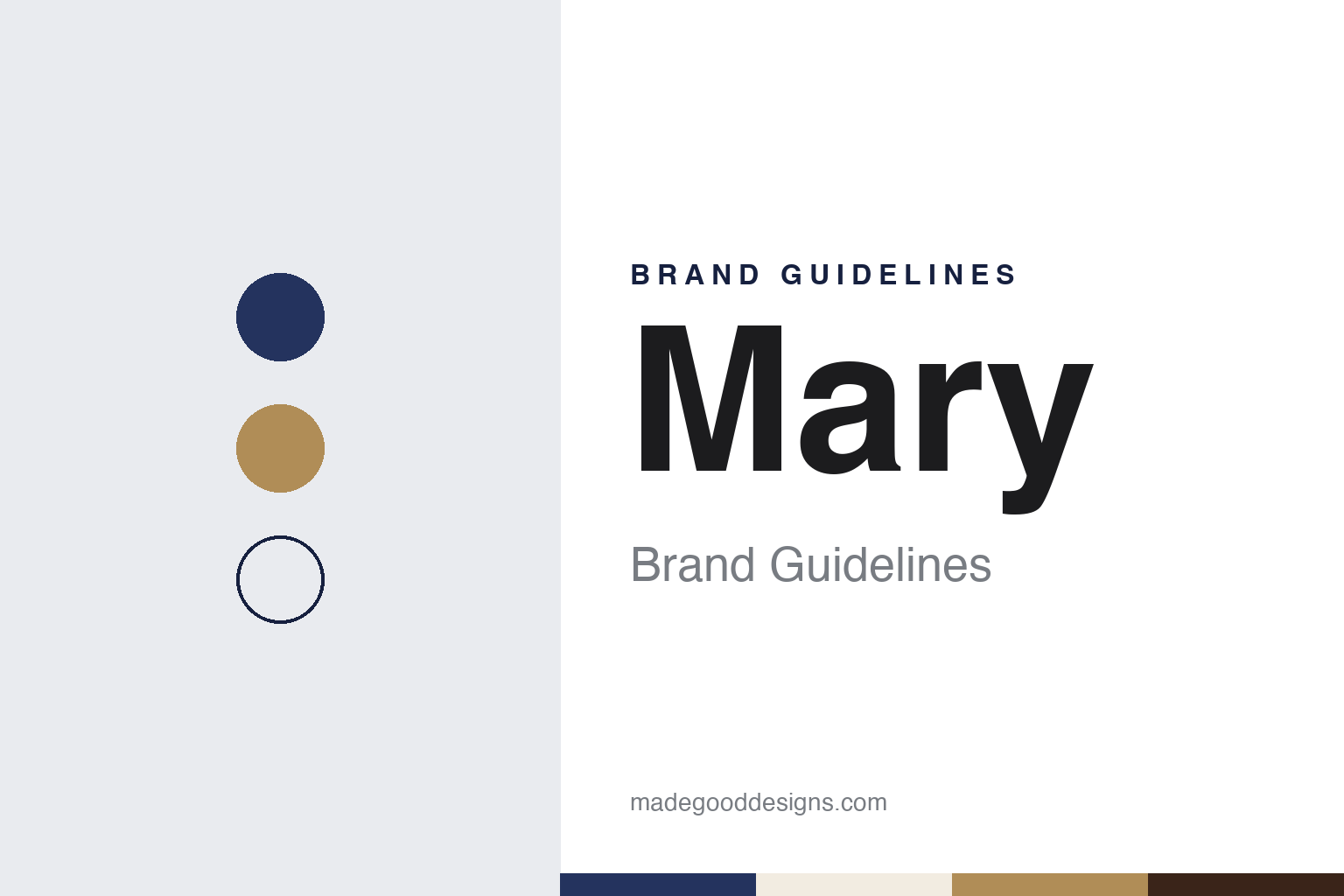
Two constants: a Mary velvet blue, gilt and silk ivory palette and an art deco serif register. Abstract homage — not a Mary product or mark; no chocolate, box, logo or packaging is reproduced.
The rue Royale
Mary Delluc opens a chocolate shop on the King’s road.
Mary began in 1919, when Mary Delluc opened a chocolate shop in Brussels. The company says she chose the rue Royale deliberately: its website, as archived in 2015, describes the street as the main road between the royal palaces at Laeken and in Brussels, travelled by the King every day and popular with “nobles and bourgeois people hoping to meet royal personages.” Its earliest archived website, captured in 2002, gives the first address as 126 rue Royale and calls the founder “Madam Marie Delluc”; the current website uses “Mary” and the same number.
The shop soon became a tea room. The company describes it as fitted out in the art deco style of the period, while its 2002 website described a shop “fashioned in Rococo & Louis XV style with an old-fashioned workshop,” so its own accounts of the first interior differ. Both versions agree on the essentials: a basement workshop, a master chocolatier — aged 60 when he started, the 2002 site says — whose recipes were still in use, and a founder who kept a guestbook of her customers’ favourite chocolates.
The house’s first Belgian royal warrant, the title of “Fournisseur Breveté de la Cour de Belgique,” came in 1942, the company says. Its current website lists renewals in 1990 under King Baudouin, in 1994 under King Albert II and in 2013 under King Philippe; the 2002 website added a further warrant in June 1999. The company also says that Mary shops opened in Ostend, at Le Zoute on the coast, and in Paris, on the rue du Faubourg Saint-Honoré, although it gives no dates for them.
Colour
Four owners after the founder.
Mary did not stay with its founder. According to the company’s 2002 website, in 1950 Hélène Landrain, the shop’s original saleswoman, took over from Mary Delluc, by which time the business was at 180 rue Royale. In 1981 a couple, Monsieur and Madame Lamberty, took over, aiming to keep hand production going and widen the range. In 1990 the house moved to 73 rue Royale, its address today, to gain a more practical workshop and a larger shop; the 2002 site described a small sitting area in gold and blue velvet, kept “to maintain the original style.” In November 1998 Mr and Mrs Boey took over, with the same staff, and set out to build the export trade.
We found no dated public record of any ownership change after 1998, and so we do not name a current owner. The website’s legal notice names the seller as Mary S.A./N.V., registered in Ganshoren, in the Brussels region. As archived in 2015, the website said the “parent company” was still at 73 rue Royale, facing the Congress Column, and that production had moved in 2009 to “the Arsenal site,” among other makers including Belgian fashion names.
The company calls 2011 “a critical year,” when it reworked its shops. Its 2015 website described the result: an art deco style, hammered glass reflected in gilded walls, and a drape, “representing femininity,” repeated in every shop and echoed in the folded tissue paper inside every gift box. At the same time it reissued period boxes, among them the Rosine, the Langues de Chat and a gilded box.
The shop network has grown since then. Mary’s website lists shops in Brussels — on the rue Royale, in the Galerie de la Reine, on the Grand-Place, in the rue du Lombard, in the Galerie de la Toison d’Or and at Woluwe — and in Antwerp and Bruges. In Japan the brand trades as Madame Delluc; the Japanese website says the house is called Mary in Belgium, names a Tokyo company as the seller, and lists shops in Tokyo, Kyoto, Osaka and Takasaki.
Typography
Chocolate houses and their groups.
The seven brands in this group all make chocolate, and they come from three countries: Mary, Dumon and Chocolat Jacques from Belgium, Manner, Mirabell and Hofbauer from Austria, and Sarotti from Germany. Chocolate brands reach shoppers in different ways, from a chocolatier’s own shop counter to a bar or a box on a supermarket shelf.
An old chocolate brand can carry two histories at once. One is the story of a founder, a workshop and a city, which a brand may keep telling on its packs and its website long after the founding family has gone. The other is the story of ownership: who bought the business, who bought it after that, and which group’s factory the chocolate comes from now. The two need not line up: a name tied to one town can be made somewhere else, or by a company based in another country.
Each guide separates what independent sources record from what the company says about itself — who founded it, who owns it now, where its cocoa comes from and where its chocolate is made — and marks plainly what rests only on the company’s own word.
Aa
An art deco serif — a house dressed in gilt and drapes. (Specimen set in Playfair Display, a serif STAND-IN; NOT the Mary logo.)
Mary
Silk boxes and a Mexican plantation.
Packaging has been central to the story from the start, in the company’s telling. Mary Delluc’s boxes, it says, were made by hand in many shapes and sizes and “often covered with plain silk or painted,” and customers kept them after the chocolates had gone. Its current website speaks of “drapés féminins” and “iconic, glamorous boxes” brought back into use, and the range now extends to collaborations such as a box made with the Belgian couture house Natan, sold by 2022, and a cotton scarf carrying the Mary name.
Mary says its pralines — ganaches, pralinés, caramels, fresh creams and marzipan, with hand-rolled truffles — are made by hand every day in its own workshop in Brussels, and that the workshop is certified to ISO 22000. We give that as the company’s statement.
Since 2012, the company says, it has grown its own cocoa at Ticul, in the Mexican state of Yucatán, on a plantation it calls Mary’s Hacienda Maya Cacao Criollo, and it sells dark and milk chocolate bars under that name. It says it buys the beans directly, that they are certified under the Cacao-Trace programme, and that it uses only Criollo beans in its production. We could not confirm the plantation or its size independently, and give those details as Mary’s own.
The press has noticed the house: its 2015 website listed coverage in The New York Times in January 2006, The Wall Street Journal in February 2007 and the Belgian business daily De Tijd in April 2011. We have not read those articles.
For a design guide, Mary shows how a chocolate house can make its packaging and its shops carry as much of the brand as its pralines. Compare Wittamer, another old Brussels house, founded on the Sablon in 1910, and Neuhaus, whose original shop is in the same Galerie de la Reine. For this guide we use a velvet blue, gilt and silk ivory with a serif, an unofficial interpretation; no product or logo is reproduced.
Explore & save
Keep Mary’s identity on hand — save it to a board in the Made Good inspiration library.
Mary identity set
Pin the Mary velvet blue, gilt and silk ivory palette and the art deco serif register to your own board.