Miura Brand Guidelines
The hand-forged iron.
Aa
Two constants: a forge-grey palette and a craft-serif register. Abstract homage — not a Miura product or mark.
The hand-forged iron
Miura is the Himeji forging house of 1957 — hand-forged irons made in Japan, the maker’s maker.
Miura brings the round its purest craft — the Himeji forging house whose hand-forged irons are, by wide agreement, the pinnacle of the forged-iron art, a maker so respected it is called the maker’s maker. Miura makes hand-forged irons, and its answer to a round about club makers is the craft taken to its limit: irons forged by hand in Japan, one at a time. An iron, hand-forged.
Its identity is the hand-forged iron. Miura’s Himeji forging, its family craft and its Japanese making are the story here. An iron, crafted by hand. The hand-forged iron.
(Honest notes, so the story stays precise. Miura — at miuragolf.com — makes premium hand-forged golf irons and wedges, under the line “forged irons, crafted by hand,” widely regarded as the most craft-driven maker in golf. It was founded in 1957 in Himeji, Japan by Katsuhiro Miura, as Miura Giken. On where it is made — the theme of this round — its irons are hand-forged in Himeji, Japan, individually hand-crafted, the genuine article and arguably the most craft-driven manufacture in the game. On ownership, it is a family-owned, independent company; the founder Katsuhiro Miura worked alongside his sons Shinei and Yoshitaka, and it is reported that Katsuhiro Miura passed away in 2025, so we frame the story with his sons carrying the craft forward, and do not imply he is still personally at the anvil. A widely repeated claim that Miura historically forged blanks for other premium brands is reported rather than official. Its marks are IP we describe but do not reproduce, and there is no official brand hex; these tones are an unofficial interpretation. This is design commentary and does not promote any product.)
Colour
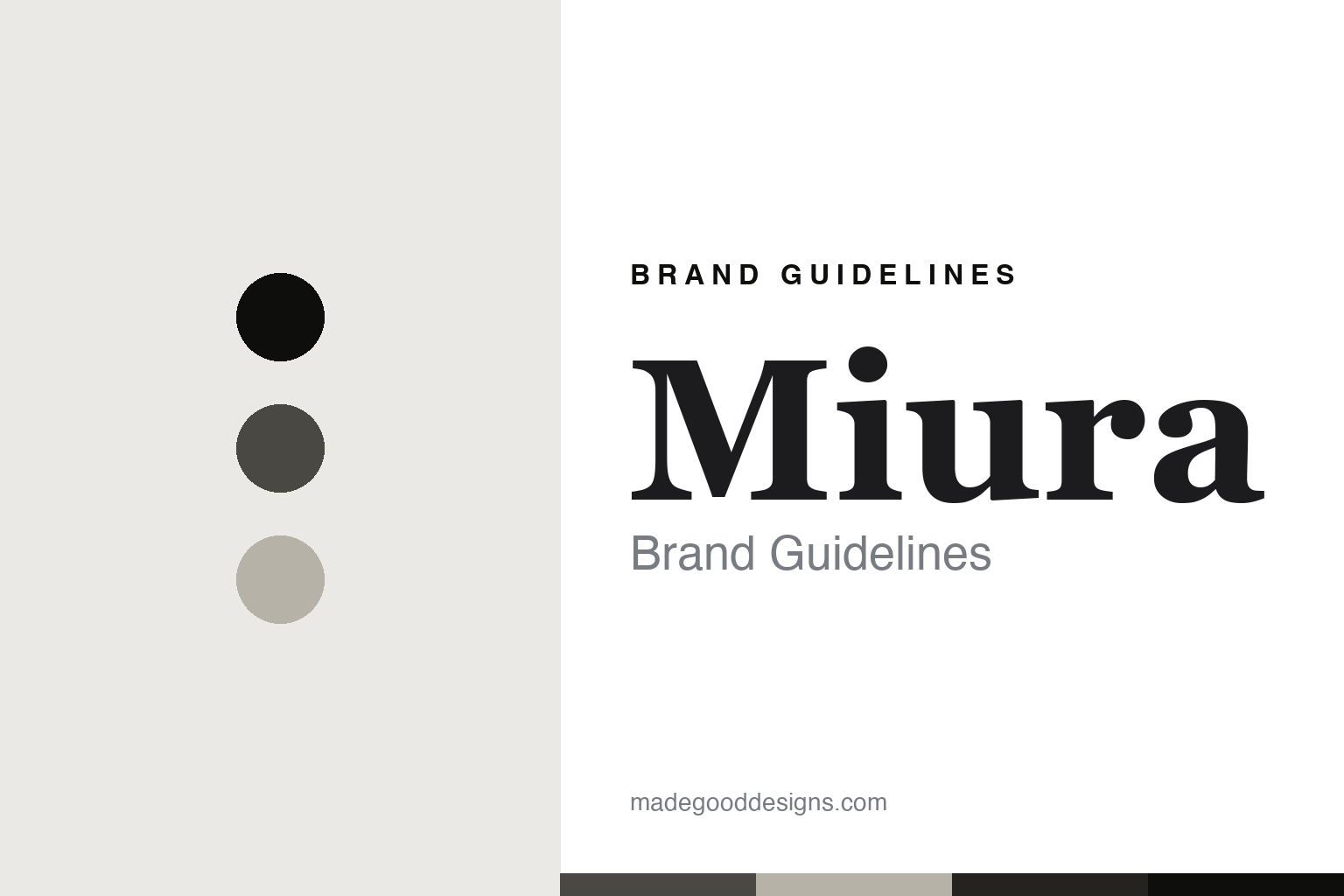
Miura lives in a forge grey. Click a swatch to copy the hex.
Miura’s identity is hand-forged, Japanese and revered — a forge grey, an ink, an ash, a deep grey, and a paper. The palette leans forge grey and ash: an understated, metallic register that nods to billet steel and a master forger’s bench rather than a loud brand palette. It signals the pinnacle of forged craft. The honest caveat: with no published brand hex, these values are an original, unofficial interpretation, not first-party colours.
The lesson is a forge grey signals a hand-forged, craft identity. Miura’s world is a hand-forged, craft object. For designers, it is a reminder that a muted forge grey and a soft ash can carry a club maker — the tone of hot steel and a quiet workshop. Because these tones can fail as small text, keep type dark and let the colour live in the accents, palette and band. The takeaways: forge by hand; keep it in the family; frame a founder’s passing with respect; and treat any single hex as unofficial.
Typography
The register is a craft serif — fine, quiet, hand-made.
Miura’s identity carries a fine, quiet, hand-made spirit — a master forger’s house, not a fashion. A craft serif captures the mood: elegant, restrained and precise, the register of an iron forged by hand, one at a time. Set in a forge-grey palette, the craft serif feels fine and quiet — exactly the personality Miura carries. It is craft rather than a logo, mirroring billet steel and grain. (Miura’s real wordmark is something we describe but do not reproduce, and the exact typeface is not ours to use.) Because it is not ours to use, the honest description is “a craft-serif spirit,” shown here in a stand-in. The type behaves like the iron: fine, quiet and hand-made.
Aa
A craft-serif spirit — fine and quiet. (Specimen set in Cormorant Garamond, a craft-serif STAND-IN; NOT the Miura logo.)
The club makers
Miura stands for the hand-forged iron.
Miura brings the round its purest craft. A forge-grey palette, a craft serif and a hand-forged iron make one thing — the hand-forged iron — the whole identity: hand-forged, Japanese and revered. The Himeji forging is the differentiator, and the family craft is the meaning. The point is a small Japanese house that forges irons by hand, one at a time, to a standard the whole game admires.
Put to work, the identity is a master craft told straight, as design. A maker in this spirit would forge by hand and keep the workshop small and in the family, while honouring a founder’s legacy respectfully. A reader in this spirit would keep the facts right: it was founded in 1957 by Katsuhiro Miura in Himeji; its irons are hand-forged in Japan; it is family-owned; and Katsuhiro Miura is reported to have passed in 2025, with his sons continuing the craft. Miura sits at the deepest end of the round’s where-made thread — the most craft-driven of the seven — beside the forged houses Mizuno and Honma, the three Japanese makers. The honest editorial moves are to credit Katsuhiro Miura, to state the hand-forging in Himeji, to frame his passing respectfully and the sons as continuing, and to keep the OEM-supply claim as reported. The lesson Miura teaches is that craft taken to its limit can be the entire identity: a hand-forged iron, made in Japan, is the brand.
For designers and brand-builders, Miura continues the club makers: forge by hand — and keep it small. The lessons: pursue craft to its limit; keep the workshop and the family close; honour a founder respectfully; frame a reported claim as reported; and never reproduce a logo. It is also a reminder to stay precise: Miura is the Himeji forging house of 1957, hand-forged irons made in Japan, the maker’s maker — with the palette here an unofficial interpretation. Read that way, Miura is less an iron than a hand: a master forger’s craft, carried on by his sons, one iron at a time. The lesson for a brand is that the deepest identity of all can be craft itself — a thing made by hand, in one place, to a standard others cannot match — and honesty about the family behind it keeps the craft human. Miura made the-hand-forged-iron the identity — proof that craft, at its limit, can be a whole brand.
Explore & save
Keep Miura’s identity on hand — save it to a board in the Made Good inspiration library.
Miura identity set
Pin the forge-grey palette and the craft-serif register to your own board.