Ouma Brand Guidelines
The Molteno rusks born at a 1939 church bazaar.
Aa
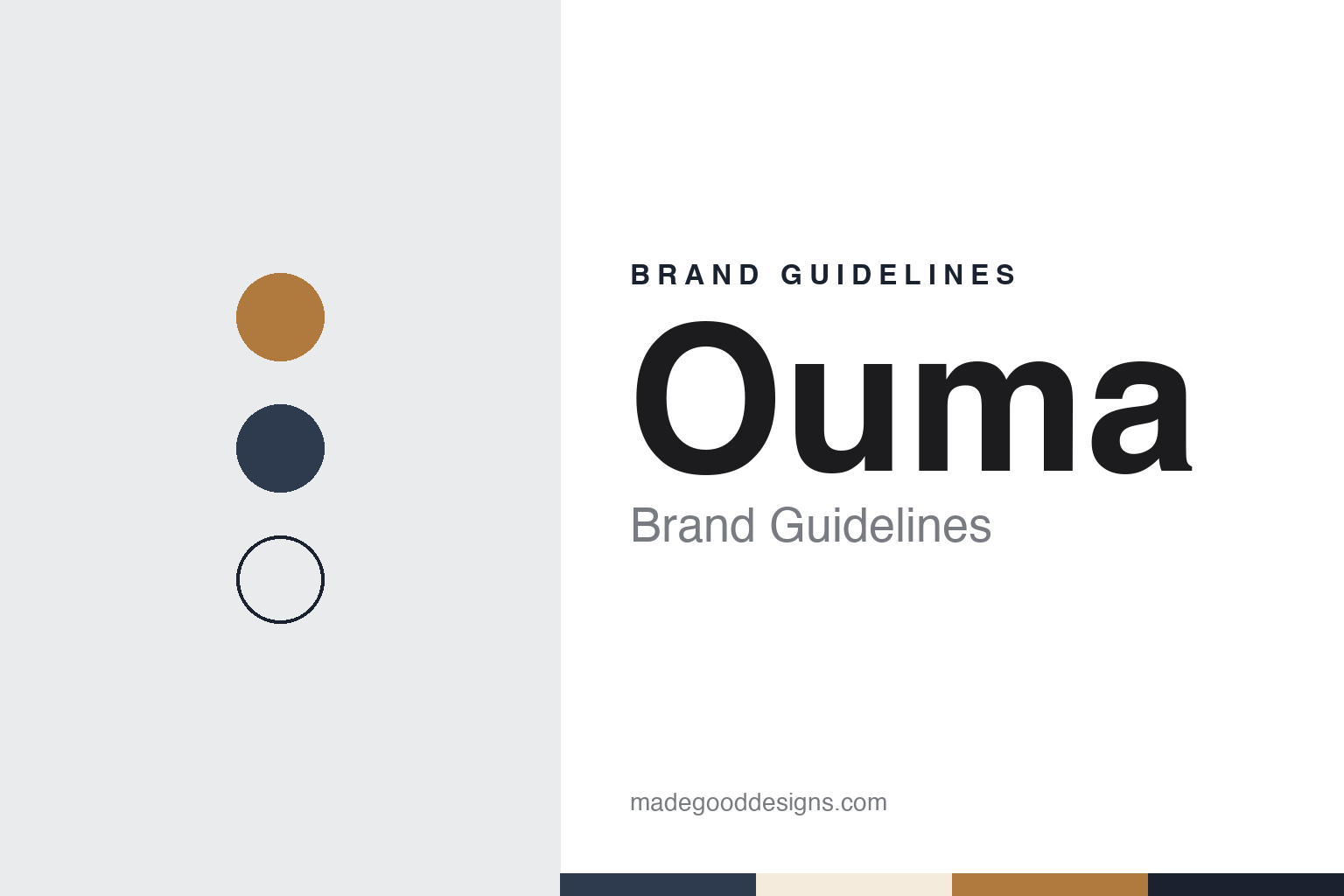
Two constants: an Ouma slate, rusk brown and buttermilk palette and a Farmhouse serif register. Abstract homage — not an Ouma product or mark; no box, portrait or logo is reproduced.
A church bazaar
A dominee’s challenge and a family recipe in the Stormberg.
Ouma rusks began in Molteno, a small town in the Stormberg mountains of the Eastern Cape, in 1939, according to English Wikipedia, the writer Julienne du Toit and the brand’s own website. The story they tell is of the Great Depression. A dominee, or minister, in the town offered women at a church meeting a half-crown each and challenged them to make it grow — inspired, du Toit wrote on the South African news site SAPeople in 2014, by the parable of the talents in Matthew’s gospel.
One of those women was Elizabeth Ann “Nannie” Greyvensteyn, who lived on the family farm outside the town. With the money, du Toit wrote, she bought ingredients and used a family recipe to bake rusks for a church bazaar. They sold out, and orders followed; she sold them at rugby matches, church gatherings and bazaars. IOL, reporting the same story in 2014, called her recipe a boerbeskuit, the traditional farm rusk. English Wikipedia describes Ouma as a rusk made from a traditional buttermilk recipe.
Her name is spelled several ways. Du Toit, the brand’s owner RCL Foods and the Ouma website all write Greyvensteyn; English Wikipedia writes Greyvenstyn. Her husband, Thys Greyvensteyn, held the Ford dealership in Molteno and, du Toit wrote, was the town’s mayor for 21 years. The brand’s owner tells the story in its own words: RCL Foods says she began baking after a church meeting to raise money for missionary work, and the Ouma website says she and her friends were looking for ways to help their community.
Colour
From Uitspan and Outspan to Ouma.
The business grew through the family. Nannie’s son Leon Greyvensteyn, du Toit wrote, took one of the family’s Ford bakkies — pickup trucks — north to test the market, came back with orders, and the family turned the farm’s barn into a rusk factory with homemade dryers and extra clay ovens. In 1941 the newly formed Industrial Development Corporation, the state development lender, made its first loan to the business; English Wikipedia cites the IDC’s own record, and du Toit wrote that the IDC’s archives name “a certain Mrs Greyvensteyn of Molteno” as its first borrower.
The name came later. The rusks were sold first as Uitspan and then Outspan, du Toit wrote; English Wikipedia gives the first name as “Outspan Rusks.” They became Ouma — Afrikaans for grandmother — and Nannie became known as Ouma Nannie. The barn factory burned down in 1952, du Toit wrote, and was rebuilt on the same site. Taystee Wheat breakfast cereal was first made there too, and Leon went on to found the crisp maker Simba, after meeting the American snack-food pioneer Herman Lay in the 1950s; English Wikipedia dates Simba to 1956, and the trade site The Marketing Site describes Leon’s notebook from a 1956 trip to America.
The face on the box is not hers. “The Ouma in the photograph on every box of rusks is not Ouma Nannie,” du Toit wrote in 2014; photographs of the real Nannie in the factory scrapbook, she added, show a youthful woman. The brand’s best-known line is its invitation to dip: IOL recalled advertisements with the slogan “Doop ’n Ouma” — “Dip an Ouma” — and English Wikipedia calls “Let’s go and dip an Ouma” well known in South Africa. The Ouma website today closes with a version of the same line, “Dip ‘n Ouma.”
Typography
Design and documentation.
The seven brands in this group are all food and drink brands, and all of them come from South Africa: Mrs Ball’s, Ouma, Jungle Oats, All Gold, Five Roses, Joko and Iwisa. South African food and drink brands in general sit at many different points in the trade, from names that still carry a founder’s or a family’s story to names that now belong to much larger food groups, and a single brand can be sold everywhere from a corner shop to a supermarket shelf.
A food or drink brand’s identity is usually carried less by a single product than by a pack, a name and the meal or cup it promises, because the company behind the name may have changed hands, moved its factory or grown far beyond the town where it started. That makes the questions behind each name worth asking plainly: who started it, who owns it now, and where its products are actually made and packed.
Each guide separates what independent sources record from what the company says about itself — its founding story, its owners over time, where its products are made and how its packaging has changed — and marks plainly what rests only on the company’s own word.
Aa
A warm farmhouse serif for a grandmother’s rusk. (Specimen set in Fraunces, a serif STAND-IN; NOT the Ouma logo.)
RCL Foods
Fedfood, Foodcorp and a factory that stayed in Molteno.
Ouma left the family in the 1970s. English Wikipedia says it became part of Fedfood — its infobox gives 1977 — and has belonged since 1992 to Foodcorp, the food group formed that year by the merger of Kanhym and Fedfood. In November 2012 Rainbow Chicken, now RCL Foods, announced it would buy a controlling stake in Foodcorp, and in July 2013 it raised its holding to 88.1%, the broadcaster eNCA reported; English Wikipedia lists RCL Foods as Ouma’s owner from 2013. The Ouma website says the rusks are made in South Africa by RCL Foods.
The factory nearly left Molteno. In August 2012 Foodcorp’s chief executive, Justin Williamson, told Engineering News that the company had considered moving rusk production to its site in Randfontein, in Gauteng, after 91 power outages in a year and problems with water and roads; most of its rusk market, he said, lay in and north of Gauteng, about 800 km away. Instead, in a partnership with the Eastern Cape government, the local municipality and the state utility Eskom, Foodcorp began building a new 8,000-square-metre factory on the original farm, due to be commissioned in March 2013, to replace a plant more than 50 years old. Williamson called staying a “moral” decision and said the plant employed 250 people. RCL Foods says it built a new bakery there in 2017, replacing a facility that had stood for more than 50 years.
The farm’s name is not settled. Du Toit called it Friedenheim; RCL Foods and the Ouma website call it the original Friedenburg farm, where, the website says, Ouma is “still proudly produced,” employing 230 people. RCL Foods also says the brand has introduced new variants and updated its packaging over the years; the website lists flavours including buttermilk, condensed milk, muesli and chocolate chip.
For a design guide, Ouma shows how a grandmother’s name, a farm and a dipping ritual can become a national brand while staying in one small town. Compare Lay’s, the American chip brand whose founder Leon Greyvensteyn met before starting Simba, and Jungle Oats, another long-running South African grocery brand. For this guide we use a Stormberg slate, rusk brown and buttermilk with a serif, an unofficial interpretation; no product or logo is reproduced.
Explore & save
Keep Ouma’s identity on hand — save it to a board in the Made Good inspiration library.
Ouma identity set
Pin the Ouma slate, rusk brown and buttermilk palette and the Farmhouse serif register to your own board.