Unibic Brand Guidelines
The Australian cookie name baked in Bengaluru.
Aa
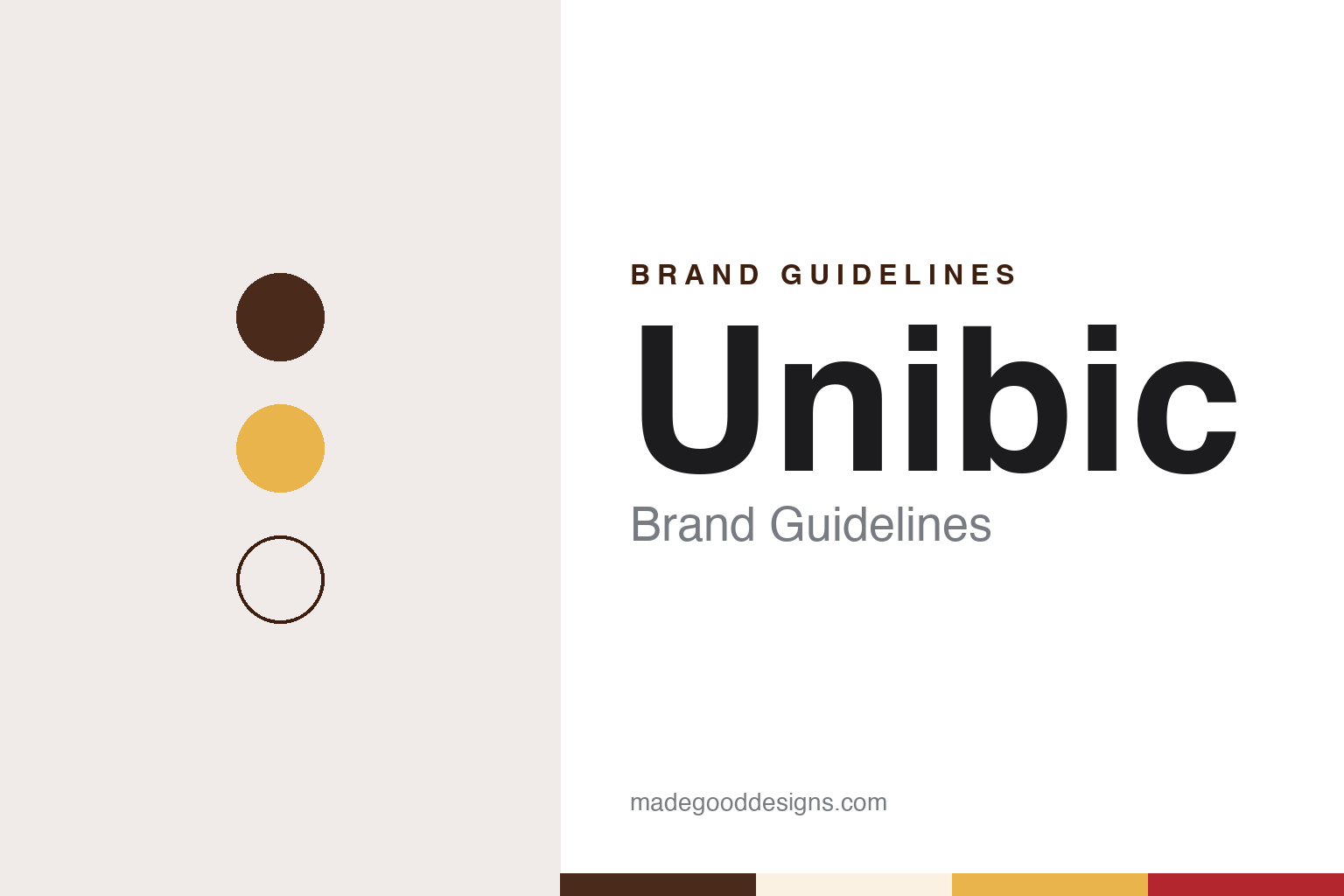
Two constants: a cocoa, butter gold and jam red palette and a rounded friendly sans register. Abstract homage — not a Unibic product or mark; no pack, logo or cookie is reproduced.
From Melbourne to Bengaluru
An Australian cookie name and a Britannia veteran.
Unibic is a cookie brand baked in Bengaluru, but its name came from Australia. In 2012 The Economic Times described Unibic Australia as that country’s fourth-largest cookie maker, a business that had made cookies and cakes since the 1950s. Its Indian offshoot was floated in August 2004, the paper reported in 2011, and began selling cookies in India in 2005. Unibic’s own timeline says it started operations that year as an Australian subsidiary with two products, the Anzac and Bradman Choco Chip cookies, and the company says it “came to India in 2004 with the iconic Anzac and Bradman cookies.”
The Indian business was built by Nikhil Sen, whom the company names as its founder and former managing director. In a 2011 interview with The Economic Times, Sen recalled joining Britannia as a management trainee and rising by 2003 to be second in command there; Unibic says he became Britannia’s chief operating officer. Leaving to start a cookie company, he told the paper, he saw an opening against imported brands that had no manufacturing in India at the time, rather than in the price bands where Britannia and Parle were strongest.
In 2007 The Economic Times named the serial entrepreneurs D.D. Saxena and Michael Quinn as Sen’s co-promoters; Quinn was the managing director of Unibic Australia. At that point Unibic India sold under the Bradman, Anzac and Unibic names, its retail business was confined to three southern states, and it baked cookies sold under the Café Coffee Day name. It had also begun exporting to Australia, including a deal with the supermarket chain Coles.
Colour
Investors, a sale that never happened, and independence.
Unibic’s ownership has changed several times. In April 2007 The Economic Times reported that the American private equity firm Lighthouse Capital was taking a minority stake. In January 2011 the paper reported that Marico, the maker of Parachute hair oil, was negotiating to buy a controlling 51% stake in the Indian company; in May 2011 it reported that the talks had ended, with an unnamed executive saying the two sides could not agree on valuation. At that time, the paper said, Michael Quinn was the majority shareholder, with Sen and Lighthouse Capital the other investors.
The Australian parent then ran into trouble. In March 2012 The Economic Times reported that Unibic Australia, after a period of debt and management restructuring, had been bought by a consortium of private investors. Sen told the paper that the Indian company was unaffected because Unibic Australia no longer held shares in it: the private equity firm Lazard had bought them in 2011. The Indian company, he said, paid only a nominal royalty to Unibic Australia for the use of the brand. By then it also baked cookies under alliances for PepsiCo’s Quaker, Future Group’s Tasty Treat and Café Coffee Day.
In July 2021 The Economic Times summarised the arrangement this way: Unibic began its India business in collaboration with Unibic Australia in 2004 and became a 100% independent Indian entity in 2012, backed by investments from Peepul Capital. That article reported the appointment of Naveen Pandey, formerly head of Marico’s new foods unit, as chief executive, succeeding Srini Vudayagiri, a Peepul Capital partner, and quoted the chairman, Sandeep Reddy. The company’s website now names Ajay Vijay Bathija, a former Coca-Cola executive, as chief executive and still cites Peepul Capital as its investor.
Typography
Design and documentation.
The seven brands in this group are all Indian snack and Mexican food names: Balaji, Kurkure, Sunfeast, Unibic, Tajín, Marinela and De la Rosa. Indian snack and Mexican food brands in general sit at many different points in the trade, from family firms that still carry a founder’s name to names that now belong to much larger food groups, and a single brand can be sold everywhere from a corner shop to a supermarket shelf.
A food brand’s identity is usually carried less by a single product than by a pack, a name and the snack or meal it promises, because the company behind the name may have changed hands, moved its production or grown far beyond the place where it started. That makes the questions behind each name worth asking plainly: who started it, who owns it now, and where its products are actually made and packed.
Each guide separates what independent sources record from what the company says about itself — its founding story, its owners over time, where its products are made and how its packaging has changed — and marks plainly what rests only on the company’s own word.
Aa
A rounded friendly sans for a brand that sells itself on soft, rich cookies. (Specimen set in Fredoka, a sans STAND-IN; NOT the Unibic logo.)
Unibic
Wire-cut cookies and a mascot called UBU.
Unibic’s own timeline is a list of launches. It dates a jam tart cookie, Choconut and Butter cookies to 2007; Choco Kiss, which it calls India’s first centre-filled chocolate cookie, to 2009; a Scotch Finger shortbread to 2011; and Chilli Butter cookies to 2012. Between 2015 and 2017, it says, the UBU mascot made its first appearance. Later years brought snack bars and digestive cookies in 2018, wafers in 2019, Snappers crackers in 2021, the #Qubz wafer cubes and a first range of cakes in 2022, and Pop Crisp in 2024. The company now claims more than 40 variants.
All of this, the company says, is made in one plant in Bangalore, which it calls the largest integrated cookie manufacturing plant in the country, with five production lines and a capacity of 30,000 tonnes a year. Unibic also says it was the first in India to make cookies by wire-cutting soft dough rather than moulding it. In October 2017 The Economic Times, quoting Sen, reported that a fifth line had just been added, taking capacity to 100 tonnes a day; that close to 60% of sales came from southern India; and that Unibic exported to 12 countries, which made up about 5% of revenue.
For a design guide, Unibic shows how a borrowed foreign name can become a local brand: it kept the Australian name and its first Anzac and Bradman cookies, then added a mascot, UBU, and a long run of new flavours. Compare it with Sunfeast, which entered the Indian biscuit market at almost the same moment, with Britannia, and with Australia’s Arnott’s. For this guide we use cocoa, butter gold and jam red with a rounded sans, an unofficial interpretation; no product or logo is reproduced.
Explore & save
Keep Unibic’s identity on hand — save it to a board in the Made Good inspiration library.
Unibic identity set
Pin the Unibic cocoa, butter gold and jam red palette and the rounded friendly sans register to your own board.