Sabritas Brand Guidelines
The Mexico City chip maker that PepsiCo kept under its own name.
Aa
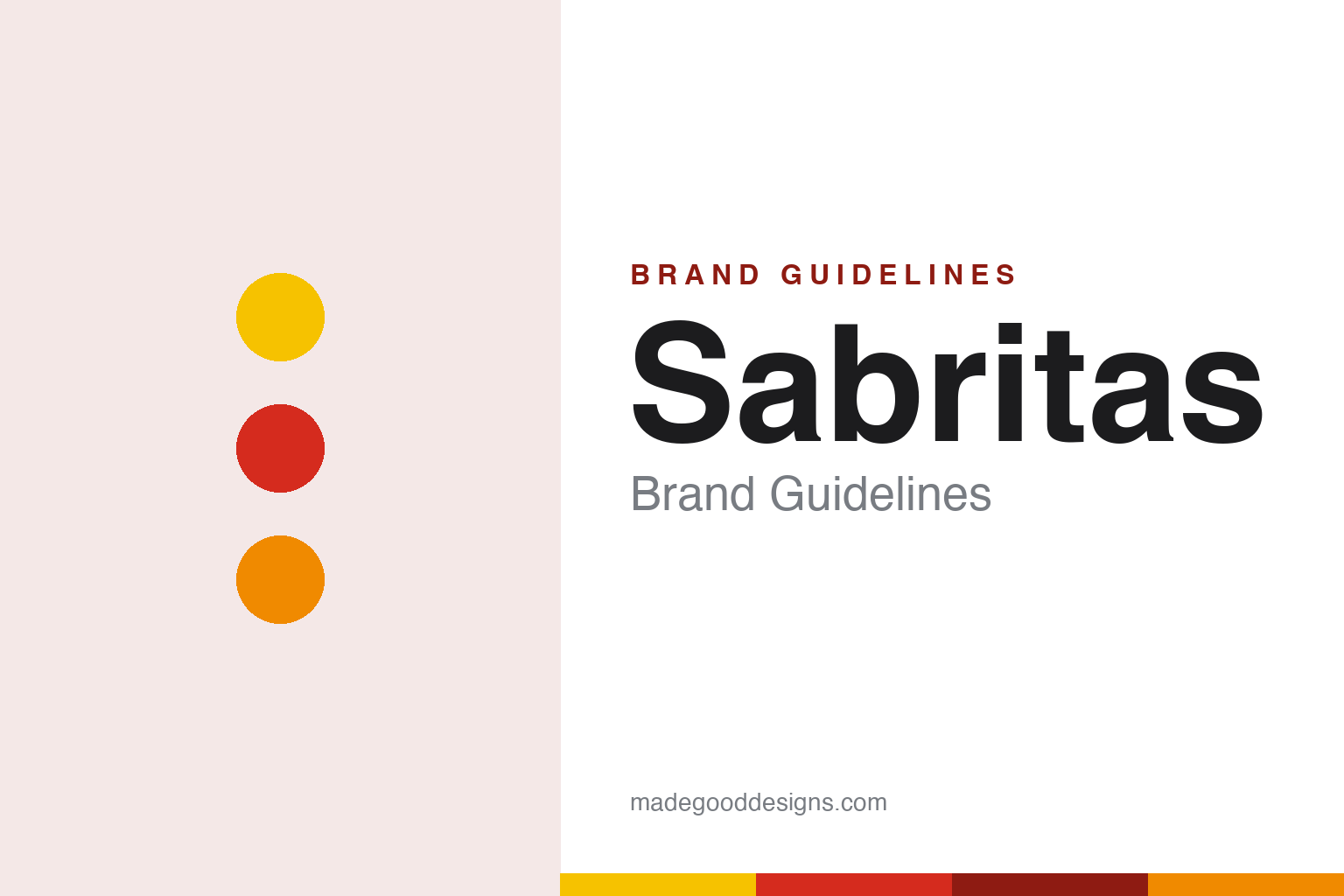
Two constants: a Sabritas yellow and red palette and a rounded sans register. Abstract homage — not a Sabritas product or mark; no bag, logo or smile is reproduced.
Sabrosas y fritas
A kitchen, bicycles and a contracted name.
Sabritas traces its origins to Mexico City and to Pedro Marcos Noriega, whom the company names as its founder. The company’s own accounts of the start differ on the date. Its website in 2012 and 2014 said that in 1943 Marcos Noriega founded Golosinas y Productos Selectos in Mexico City, a snack company with local distribution, and English and Spanish Wikipedia give the same year. A version of the company history archived in January 1999 told it differently: in 1948, it said, Don Pedro started a small business called Productos Conde, making fried potatoes, chickpeas and broad beans, and only later renamed the firm Golosinas y Productos Selectos and called its chips Sabritas.
The early business was small and close to home. The company’s archived chronology, dated 2006, describes bags of broad beans and chickpeas prepared in a modest kitchen, and a recipe for “sabrosas botanitas” — tasty little snacks — that gave Sabritas its name. Later company pages and Wikipedia explain the name as a contraction of sabrosas and fritas, “tasty” and “fried.”
Distribution was simple. By 1953, the chronology says, the first sellers were riding bicycles across Mexico City delivering chips, charritos, chickpeas and beans. The 1999 history adds that the riders bought the product directly from Don Pedro to sell around the city, and that as the business grew scooters and then vans took over, while production moved out of the owner’s kitchen into a first small factory.
The chronology credits the same period with the arrival of automatic fryers and with Charritos Cheli, which it calls the company’s first food made in large quantities under strict quality standards. It also says the family built a small factory from which products were delivered by van.
Colour
PepsiCo, plants and a smile.
The turning point came in 1966. PepsiCo, formed the year before by the merger of the Pepsi-Cola Company and Frito-Lay, bought the business, according to English Wikipedia and to the company’s 1999 history, which says PepsiCo bought Don Pedro’s company and changed its corporate name to Sabritas S.A. de C.V. The company’s 2012 and 2014 pages put it slightly differently, saying PepsiCo acquired a firm that by then was already called Sabritas. Today the business is Sabritas, S. de R.L. de C.V., a PepsiCo subsidiary, and English Wikipedia describes Sabritas as the name under which PepsiCo sells Frito-Lay products in Mexico, among them Cheetos, Fritos, Doritos and Ruffles.
The brand’s best-known sign dates from that change, by the company’s account. Its archived chronology says the 1966 investment gave rise to a line of snacks identified by the Sabritas “carita feliz” — the little happy face. In the United States, Spanish Wikipedia notes, equivalent potato chips are sold under the Lay’s name.
Factories followed. The company dates its first plant, in the Industrial Vallejo district of Mexico City, to 21 March 1968; a second, in Guadalajara, to 1972, when it says it introduced Doritos, Fritos and Sabritones; a plant in Saltillo, Coahuila, to 15 November 1980; and plants in Ciudad Obregón and Mexicali in 1991. In 1996 it opened its first plant in the United States, at Mission, Texas; in 1999 a large plant at Ixtaczoquitlán, Veracruz; and in 2003 a second Mexicali plant, which it said would serve the North American market.
Sabritas also branched out. The company says it created the Sonric’s sweets business in 1986 and the Alegro Internacional division in 1987, and acquired the Mafer peanut brand in 2002. Its 1999 history adds that PepsiCo bought the biscuit maker Gamesa in 1990.
Typography
Design and documentation.
The seven brands in this group are all food brands, and all of them come from Mexico and the United States: Goya, Herdez, Bimbo, Maseca, Jumex, Sabritas and Gamesa. Food brands in general sit at many different points in the trade, from family firms that still carry a founder’s surname to names that now belong to much larger food groups, and a single brand can be sold everywhere from a corner shop to a supermarket shelf.
A food brand’s identity is usually carried less by a single product than by a pack, a name and the meal or snack it promises, because the company behind the name may have changed hands, moved its factory or grown far beyond the town where it started. That makes the questions behind each name worth asking plainly: who started it, who owns it now, and where its food is actually made and packed.
Each guide separates what independent sources record from what the company says about itself — its founding story, its owners over time, where its food is made and how its packaging has changed — and marks plainly what rests only on the company’s own word.
Aa
A rounded sans for a cheerful snack brand. (Specimen set in Fredoka, a sans STAND-IN; NOT the Sabritas logo.)
A que no puedes
A dare of a slogan, pop stars and Tazos.
Sabritas’s advertising has leaned on a dare. During the 1980s, the company said on its website in 2012, it coined the slogan “A que no puedes comer sólo una” — roughly, “bet you can’t eat just one” — which it described as still alive in Mexicans’ minds. English and Spanish Wikipedia list it among the brand’s slogans, alongside later lines such as “Te quiere ver sonreír” and “La vida necesita sabor.”
Celebrities carried the message. From the 1980s onward, the company said, Sabritas teamed up with performers to sell its chips: Luis Miguel in that decade, Alejandra Guzmán and Manuel Mijares in the 1990s, and Lucero in 2003.
Its most famous promotion sat inside the bag. The company dates the first Tazos — small collectable plastic discs packed with its snacks — to 1994, and its 2006 chronology called them its most successful promotion, lasting more than a year at launch; in 2004 it marked ten years of Tazos. English Wikipedia compares Tazos to the POGs sold in the United States, and Spanish Wikipedia lists collections over the years built on cartoon characters, comic heroes and video games.
The company has also leaned on its own history. In 2003 its chronology celebrated sixty years of “travelling the roads of our country,” and by 2014 its website said Sabritas had been in Mexican homes for more than sixty years. The company’s chronology also records that in 2004 it began making its Salsabritas line of sauces at the Vallejo plant, and that PepsiCo later grouped Sabritas’s business in Mexico, Central America and the Caribbean into what it called the Sabritas Region.
For a design guide, Sabritas shows how a local name, a smile and a slogan can survive six decades inside a global group. Compare Lay’s, its US counterpart under the same owner, and Doritos, which Sabritas has sold in Mexico since the 1970s. For this guide we use chip yellow, banner red and a deep red with a rounded sans, an unofficial interpretation; no product or logo is reproduced.
Explore & save
Keep Sabritas’s identity on hand — save it to a board in the Made Good inspiration library.
Sabritas identity set
Pin the Sabritas yellow and red palette and the rounded sans register to your own board.